Filling, capping, labeling, and sealing machines work as a system. A choice at the filler affects the capper, and a wet or cold bottle affects the labeler. These guides explain how each machine type works and how it connects to its neighbors.
They are written for people preparing to talk to equipment suppliers. Each ends with questions to ask and with the items that need a sample trial or a drawing before you commit.
Who this section is for
Equipment buyers comparing machine types before requesting quotes
Production and maintenance teams planning a line change
Engineers who need a neutral explanation of operating principles
What it covers
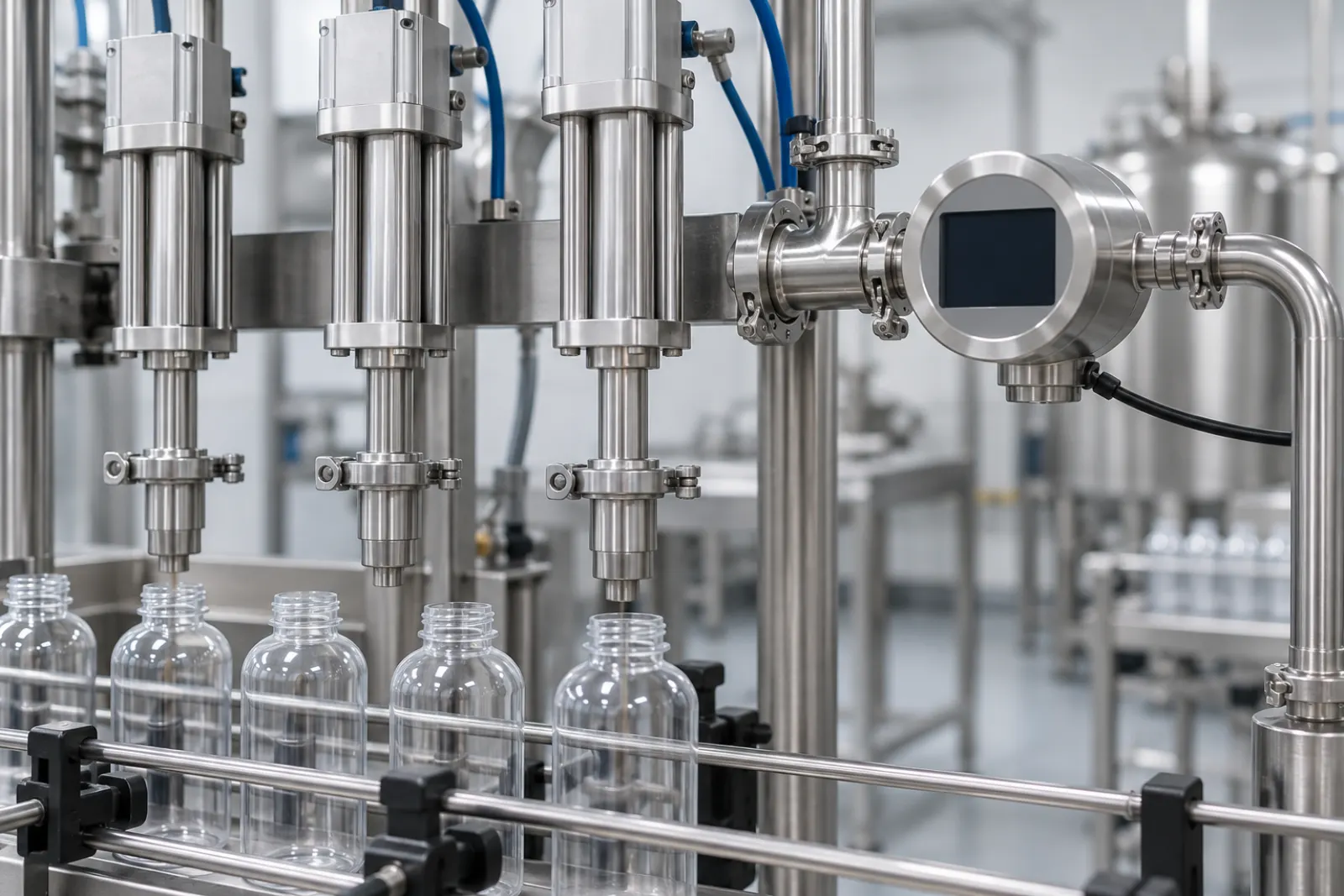
Liquid filling machine selection and filling methods
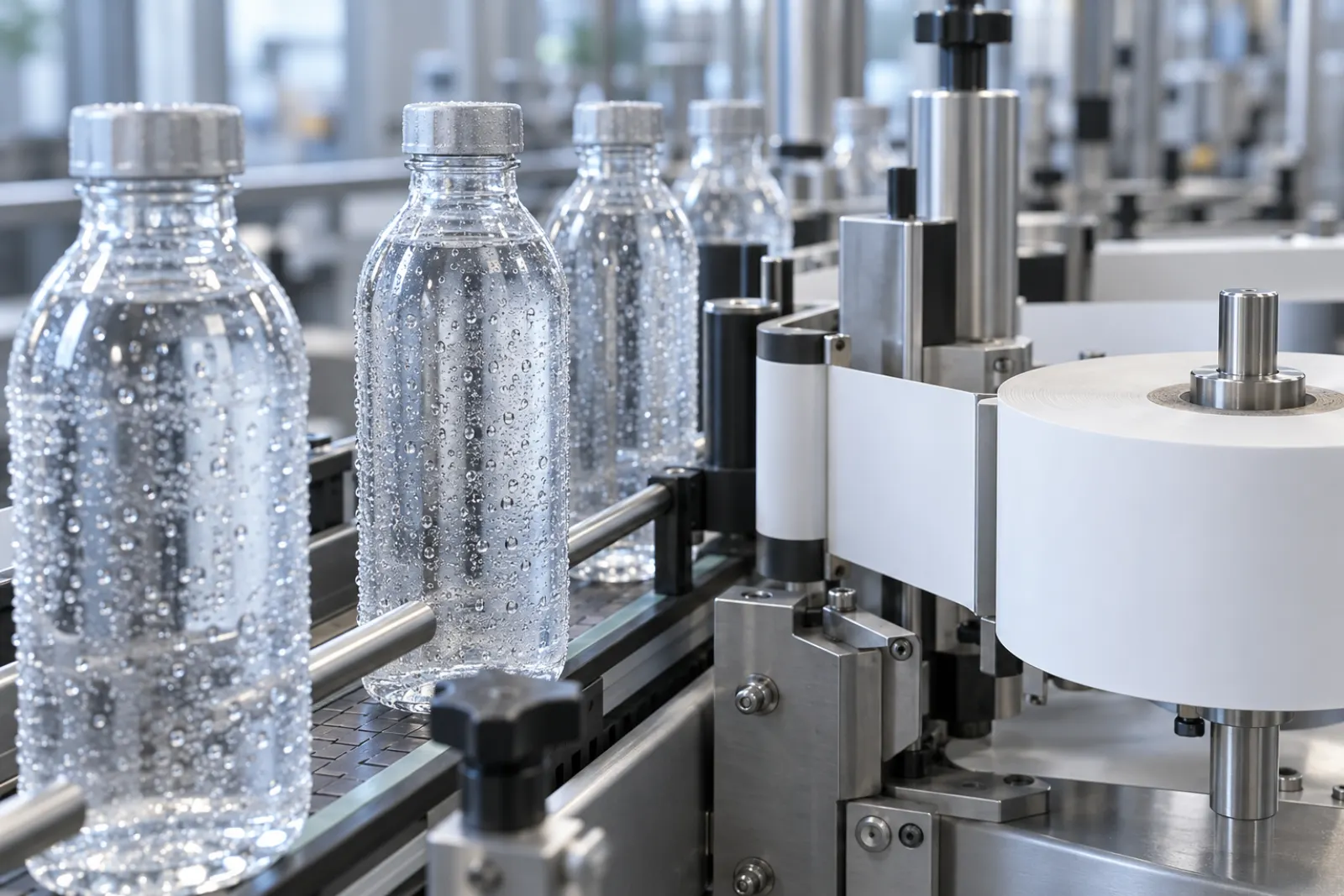
Bottle capping and cold or wet bottle labeling
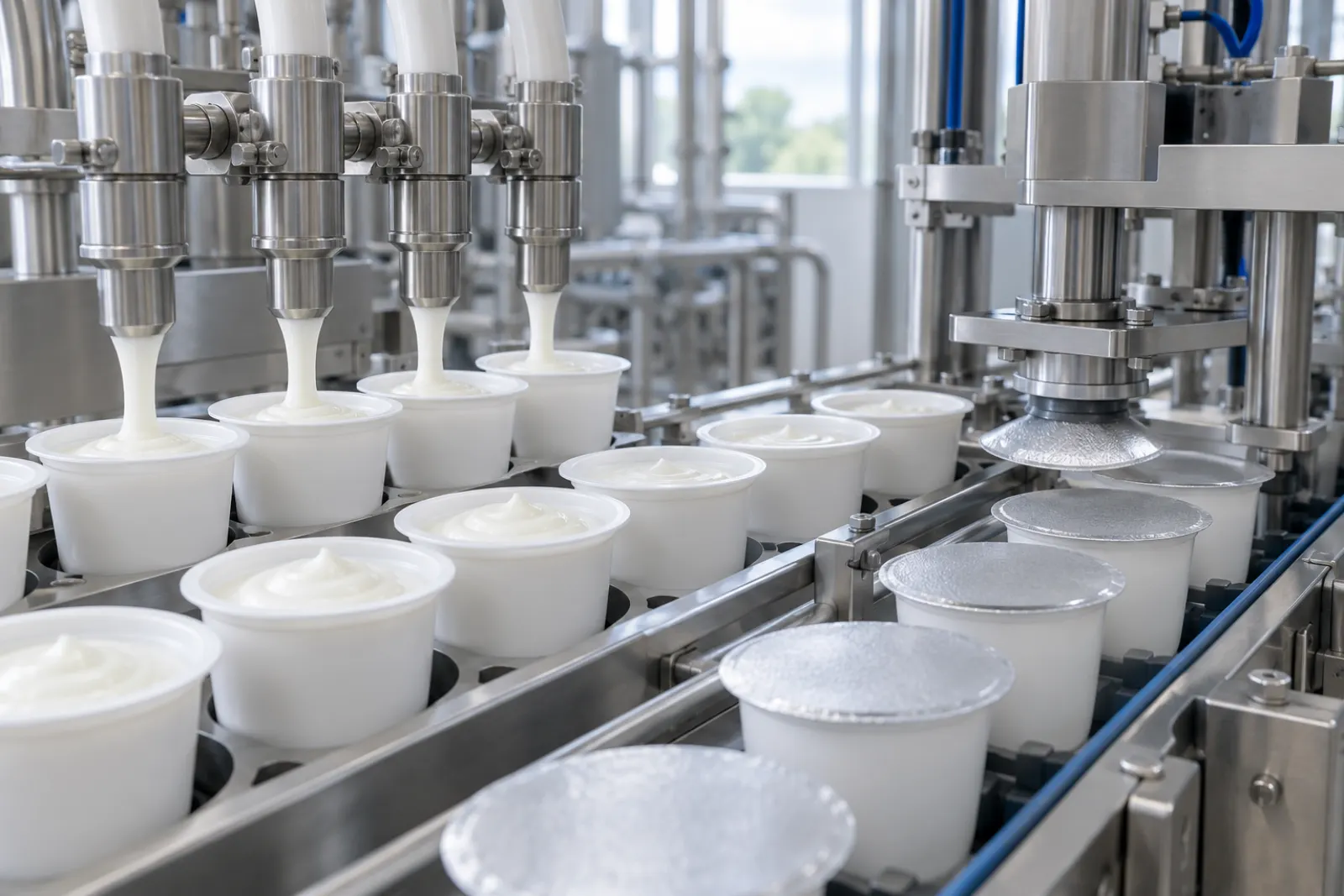
Cup filling and sealing for yogurt and similar products
What it does not cover
Machine brand rankings or supplier recommendations
Prices, speeds, or accuracy figures without a cited source
A packaging machine is rarely bought alone. The filler sets the container handling for the capper, a wet or cold bottle changes what the labeler can do, and a cup sealer inherits the product state the filler delivers. Treating each machine as an isolated purchase tends to push problems into the gaps between suppliers. The guides in this section explain how each machine type works, then repeat one question: what does this machine need from its neighbors, and what does it hand to them?
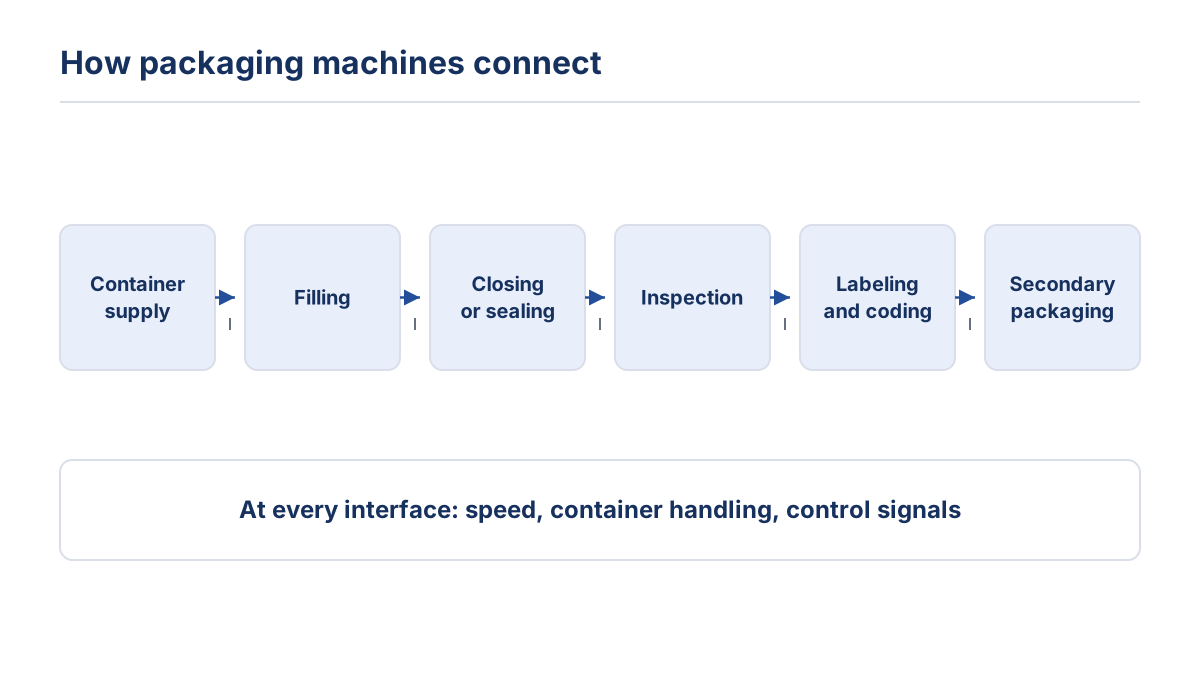
A generic packaging line and the three things to confirm at every interface. Illustrative diagram, not a layout for any specific project.
At each interface in the diagram, there are three things to confirm. Speed means the assumptions behind each machine’s rated output, since a line delivers what its slowest station and its stoppages allow. Container handling means how bottles, cups or pouches are presented, supported and transferred. Control signals means how machines tell each other to run, slow, stop and reject. None of the guides gives speed or accuracy figures of its own, and each one ends with items that need a drawing, a document or a sample trial before you commit.
Food packaging machine types by function
“Packaging machine” covers very different equipment. Sorting by the job the machine does, rather than by product or brand, shows which guide answers which question and where this section stops.
Scroll horizontally for any hidden columns →
Function
Machine types
What it does
Where to read
Filling
Time or level fillers, piston fillers, flowmeter fillers, in inline or rotary layouts
Meters a set amount of liquid or paste into a container
The last two rows have no dedicated guide here. For form-fill-seal machines, Viking Masek’s “How do Vertical Form Fill Seal Machines Work?” describes the principle: film is pulled from a roll, folded around a forming tube, sealed lengthwise, filled through the tube and then closed with horizontal jaws that make the top seal of one bag and the bottom seal of the next before a knife separates them. That is one machine doing what a bottle line spreads across container supply, filler and capper, which is why a change between bottles and pouches changes the whole line rather than one station.
Manual, semi-automatic and automatic
Suppliers use these words loosely, so the guides in this section use a working definition based on what the operator does for each package, not on how much the machine costs.
Scroll horizontally for any hidden columns →
Level
Who presents the container and starts each cycle
What the operator still does
Manual or tabletop
The operator, by hand, with a simple tool or device
Places, fills or closes each package, inspects by eye
Semi-automatic
The operator places the container and triggers the cycle; the machine meters, caps or seals
Loads and unloads every package and keeps pace with the machine
Automatic
Conveyors or indexing systems feed containers and the machine cycles without a per-package action
Supplies containers and materials, monitors, clears stops, runs changeovers and cleaning
The definitions describe a station, not a line. A plant can run an automatic filler with a semi-automatic capper and hand labeling, and many small lines grow that way. When two quotes use the same word for different things, ask each supplier to describe the operator’s task per package and per shift, and compare those descriptions.
Sizing equipment for small-batch production
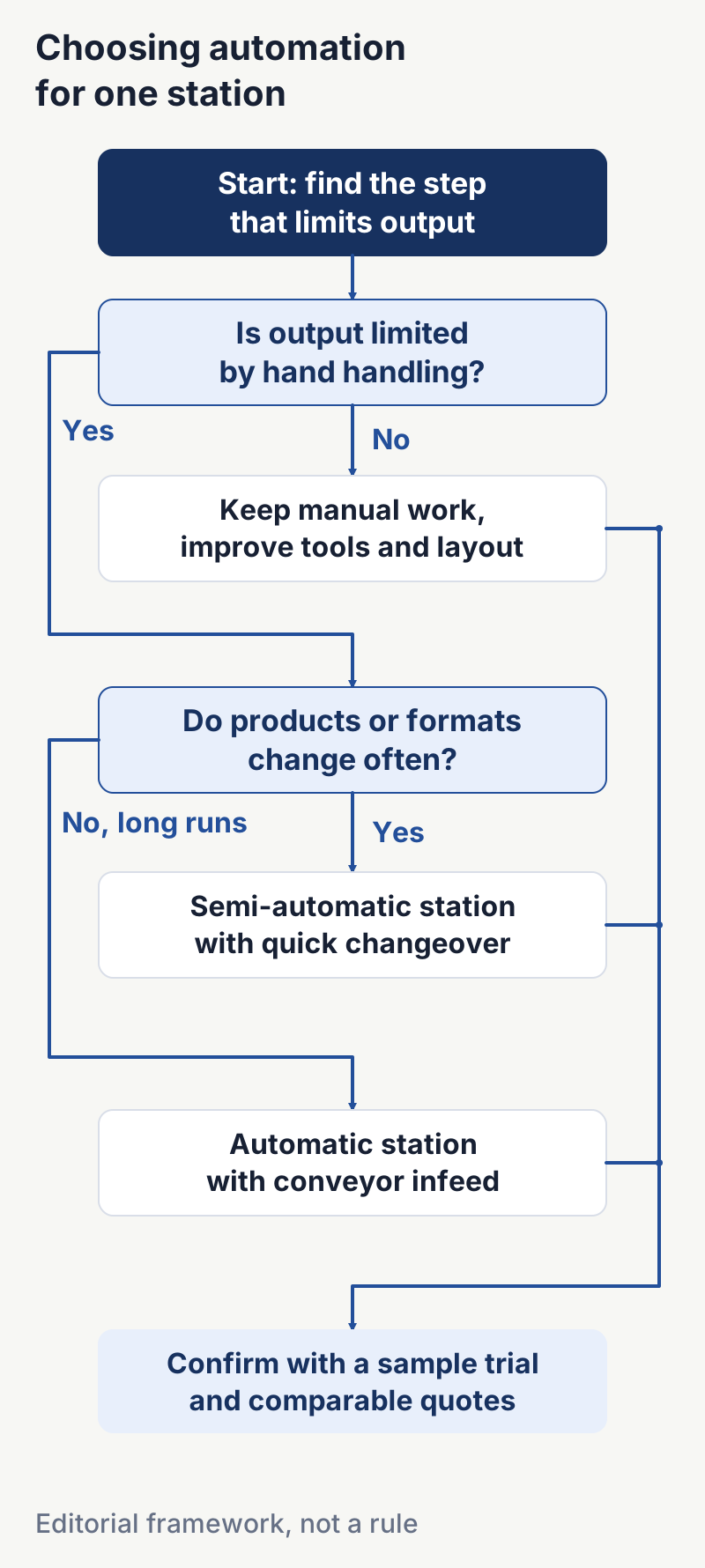
Small food producers asking which packaging machine to buy often start from a catalog of small machines. The more useful starting point is the bottleneck: which step in your current packing, by hand or by machine, limits the output you need, and what happens to that limit when you change products. The diagram turns that into a sequence of questions.
A question sequence for choosing the automation level of one station in small-batch production. Editorial framework, not a rule; outcomes still need a sample trial and quotes.
Fix the product and container range first. List every product, fill size, container and closure the machine must handle in the next few years, and mark which are certain. A machine sized for one bottle and later asked to run three costs change parts and changeover time, as the packaging line cost guide explains.
Write output as a range per shift, after cleaning and changeovers. A rated speed is a machine figure; what you need is finished packages per shift with your staff, your stops and your cleaning routine. Record how output is measured so quotes can be compared.
Count changeovers. Many products in short runs favor equipment that changes quickly and cleans easily over equipment that is fastest once running. Ask how each changeover is done: by hand, with tools, or automatically.
Automate the limiting station first. If capping by hand is what holds the line back, a faster filler will not help. Moving one station from manual to semi-automatic is often a smaller step than buying a complete automatic line, and it keeps the other stations as they are.
Leave room to grow. Ask whether a semi-automatic machine can later take conveyor infeed, how it signals a neighboring machine, and which parts of the frame, controls or change parts would carry over.
Check the site. Floor space, ceiling height, power, compressed air and drains often set limits before the machine does. A machine that cannot be cleaned within your routine is the wrong choice whatever its output.
Trial with your own product. Send product, containers and closures for a sample trial, and treat any result as valid only for the conditions tested.
Questions to put to suppliers of small machines:
What does the operator do for each package, and how many operators does the machine assume?
What output was the stated rate measured with, on what product and container, and over what period?
How long does a changeover take between my formats, and which parts are changed?
How is the machine cleaned, and which parts must be removed?
Can the machine be connected to conveyors or neighboring machines later, and what would that require?
Which items in the quote are options, and which do I need for my products?
To turn the answers into a request that several suppliers can price on the same basis, use the RFQ checklist, and plan acceptance with the FAT checklist.
What information does a filler selection depend on?
The filler selection guide defines six inputs: product, container, fill volume and accuracy, output, process conditions, and cleaning and changeover. It advises writing them as ranges, marking which are fixed, building a shortlist of approaches, and running a sample trial with your own product and containers. It also asks you to settle the hygiene and cleaning requirement early.
Why do filling quotes use different terms?
Because three separate categories get mixed. The filling methods guide separates the metering principle (time or level, piston, flowmeter), the product feed method and the machine structure (inline or rotary), and suggests asking every supplier to state all three in the same order. It adds that hygienic class is a separate matter from all of them.
What does a capping machine actually need to know?
The closure as well as the bottle. According to the capping guide, cap, bottle finish and capping head form one matched system. The guide explains that application torque and removal torque are different things, and that changeover and change parts are part of the purchase and should be timed at the factory acceptance test.
How should a labeling trial be run on cold bottles?
The cold and wet labeling checklist groups checks into container surface, label stock, adhesive and machine, and states that the trial that matters is one on production-condition bottles, not room-temperature dry samples. It recommends measuring bottle temperature, room temperature and humidity at the labeling station.
Where to go next
When the machine types are clear, the practical work is documentation. The buying guides cover how to write a request for quotation, budget the whole project and plan acceptance testing.
For an announced aseptic-carton platform, the SIG Neo review separates catalog output from the food, pack-format and process checks needed for a line assessment.
A buyer's framework for choosing a liquid filling machine: project inputs, filling approaches compared, what to validate with samples, and supplier questions.
Compare liquid filling methods by metering principle, product feed and machine structure: gravity, overflow, piston and flowmeter systems and their limits.
How to match a capping machine to the closure and bottle finish: cap types, application vs removal torque, heads, change parts and pre-purchase validation.
A technical checklist for labeling cold, condensing bottles: container surface, label stock, adhesive and labeler settings, plus a trial on production bottles.
A buyer's checklist for yogurt cup filling and sealing machines: stations, cup and lid compatibility, seal checks, cleaning, and questions to put to suppliers.
A technical guide to selecting food tray sealers: manual vs inline automation, vacuum MAP gas flush technology, tray and lidding compatibility, and seal integrity validation.
Read SIG’s new carton-filler announcement through food category, pack format, catalog-speed baselines and the validation records still needed for a project.