
Editorial Policy
How Naturally Iowa Packaging Review chooses topics, uses sources, labels evidence, handles bylines, dates, historical material, images and corrections.
Updated October 2026
This policy describes how Naturally Iowa Packaging Review, operated by DeltaSpark, prepares and maintains its content.
How an article is produced
Every article follows the same sequence.
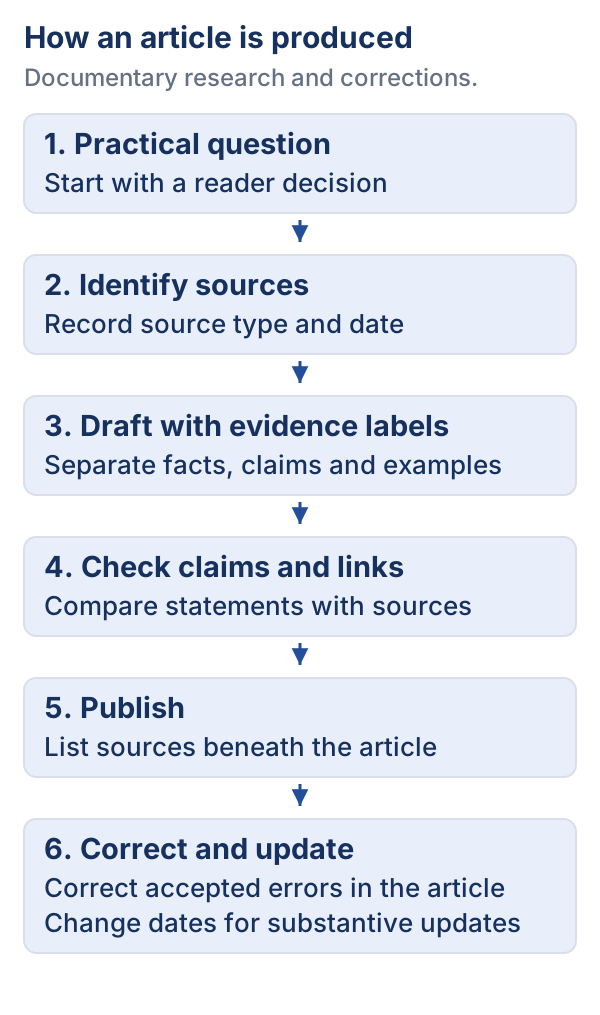
- Start with a practical question. Topics begin with a decision a reader has to make, such as how to prepare a request for quotation or how closure torque is specified.
- Identify sources. Technical documentation, published research, industry reporting, standards, and regulatory guidance are collected and their dates noted.
- Draft with evidence labels. Each statement is written so the reader can tell whether it is a sourced fact, a supplier statement, an illustrative calculation, or something not verified.
- Check claims and links. Statements are compared with the sources they cite, and the cited links are checked.
- Publish. The article goes live with its sources listed beneath it.
- Correct and update. Later corrections and substantive updates are made in the article itself.
Scope of coverage
We publish guides on food and beverage packaging materials and the equipment directly related to them: filling, sealing, capping, labeling, and packaging-line planning, along with buying and acceptance checklists. Our main readers are equipment buyers, plant teams, business owners, and technical staff.
We do not act as a testing body, certification body, or food process validation service. Nothing on this site validates a specific product, process, or machine.
Sources we use
Articles are developed from identifiable sources: technical documentation, published research, industry reporting, and relevant standards or regulatory guidance. Where a statement depends on a source, the article aims to identify it and give its date. Older sources are described as older sources and are not treated as current technical conclusions.
How we label evidence
Technical articles distinguish the kind of evidence behind a statement.
Scroll horizontally for any hidden columns →
| Evidence type | Standard phrase or treatment |
|---|---|
| Sourced fact | “The published specification states…” |
| Supplier claim | “According to the supplier’s documentation…” |
| Illustrative calculation | “Illustrative calculation: not a measured result.” |
| Not verified | “This has not been independently verified.” |
| Actual test | The equipment, samples, conditions, method, date, and source of the records are stated. |
Historical reports can support the statement that something was described in a certain way at the time. They do not by themselves show that a machine or package meets the same conditions today.
Labels in use
These patterns appear in published articles. In Bottle Capping Machine Selection, a torque test method is introduced with “According to the supplier documentation reviewed here,” so the reader knows the account comes from a supplier and is not our own measurement. The Bottle vs Pouch Packaging guide uses the same attribution when it describes what premade pouch equipment is associated with. The Packaging Line Cost guide shows an illustrative calculation: a formula with unnamed variables, introduced by the line “Illustrative calculation—not a measured result.” The variables have no values, so nobody can mistake it for a quote.
How sources are chosen
We prefer sources that can be identified and dated: a standard, a regulator’s guidance, a published study, a trade publication, or a manufacturer’s technical document. A source that cannot be identified is not used to support a technical statement. Where sources disagree, the article says so instead of choosing silently.
Supplier documentation is acceptable as a source for what that supplier says about its own equipment or method. It is attributed in the text. It is not treated as independent confirmation of performance, and an article does not recommend a purchase on supplier documentation alone. Where a point rests mostly on one supplier’s material, the article presents it as that supplier’s description.
How numbers are handled
Numbers are given with their source and context: what was measured, on what, and when. A figure from a supplier’s example, such as a torque range for one cap size, is presented as that example, never as a general rule. Calculations that show a method use placeholders or are labeled as illustrative. We do not publish prices, lead times, or performance figures as if they apply to your project, because they depend on your product, container, and site. Where a guide excludes specific figures, its scope box says so.
How historical claims are handled
Historical statements are tied to a dated source and described as what that source said at the time. A press report from one year does not establish that a package or machine meets the same conditions today. The history pages mark what is confirmed by a dated record and what remains unconfirmed; the overview at Naturally Iowa, Dairy and PLA Packaging is the most complete example.
What counts as a substantive update
An update is substantive when it changes what a reader would understand or do: a corrected statement, a replaced source, a changed recommendation, or a new section. Fixing a typo, repairing a broken link, or adjusting formatting does not count.
No hands-on test claims
Unless an article states otherwise and describes a real test as set out above, our guides are based on documentary research. We do not claim that we tested machines, that a laboratory verified results, or that a method was proven in customers’ factories. A guide that compares options or provides a checklist is not a test report.
Bylines and review
Article headers should show the substantive update date rather than a default editorial-team byline. Existing individual author attribution may be retained; it does not imply a professional qualification. Any review claim must identify a real review and its scope, and must not be added by default. Publication responsibility is explained on the About page.
Dates
The article-header format is Updated <Month Year>, using the date of the latest substantive change. Historical event years, evidence dates and the historical period discussed remain separate: they describe the sources and events, not when we revised the article.
An update date changes only when a revision changes what a reader would understand or do. A typo or layout adjustment alone does not reset it. Source lists retain a source’s own date where known; replacing evidence in a way that changes a conclusion is substantive.
Policy revision record
8 October 2026: revised the date and byline rules, retained historical and source dates, and clarified the substantive-update rule.
Historical material
History articles are newly researched and written in the third person from identified sources. They are separate from the current About page and do not represent the dairy business historically associated with this domain. We do not restore old website text. Licensed historical material, where it is used, is labeled as historical and is not presented as a picture of DeltaSpark or of current products.
Media coverage of the historical business is described as coverage of that business in a given year. It is not an endorsement of this publication or of our current content.
Images and diagrams
Cover images and diagrams are illustrations created for this publication, including AI-assisted images. They do not depict specific products, suppliers, facilities, or historical events. Covers on history articles are illustrations, not historical photographs.
Commercial relationships
DeltaSpark is a commercial organization. Relationships that apply to specific content are disclosed with that content. See Commercial Disclosures.
Corrections and updates
To report an error or send source material, use the Contact page. Please give the article URL, the exact statement, and a supporting source if you have one.
We review the request against available sources. Accepted corrections are made in the article itself.