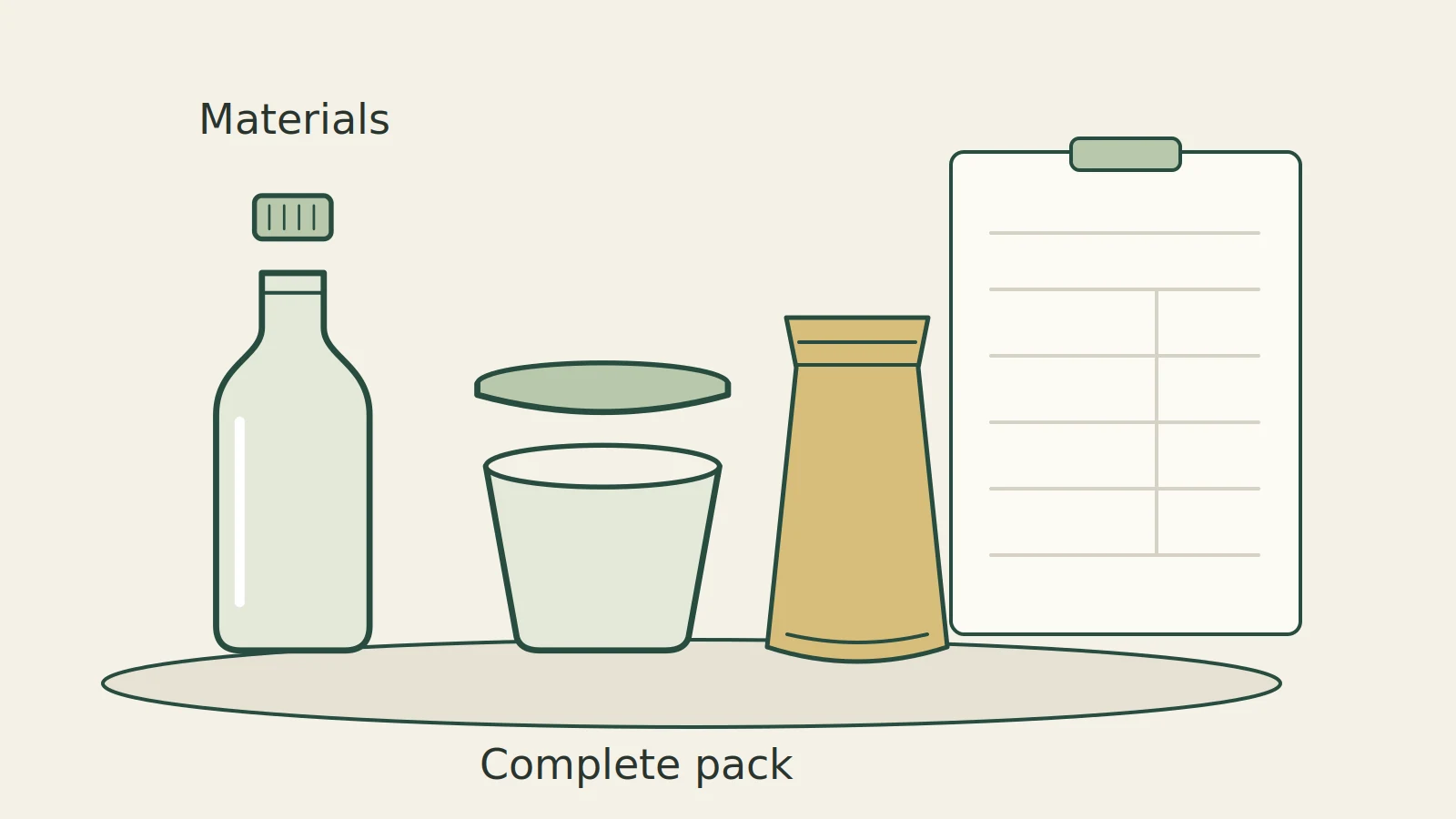
Buying packaging equipment is mostly a documentation problem. Quotes are only comparable if every supplier answered the same questions, and a line is only accepted if the tests were agreed beforehand. These guides give you structures you can adapt.
The checklists are web pages you can copy from. They do not give prices or payback periods, because those depend on your project.
Who this section is for
Procurement staff writing requests for quotation
Plant managers responsible for budgets and acceptance
Business owners weighing a change of package format
What it covers
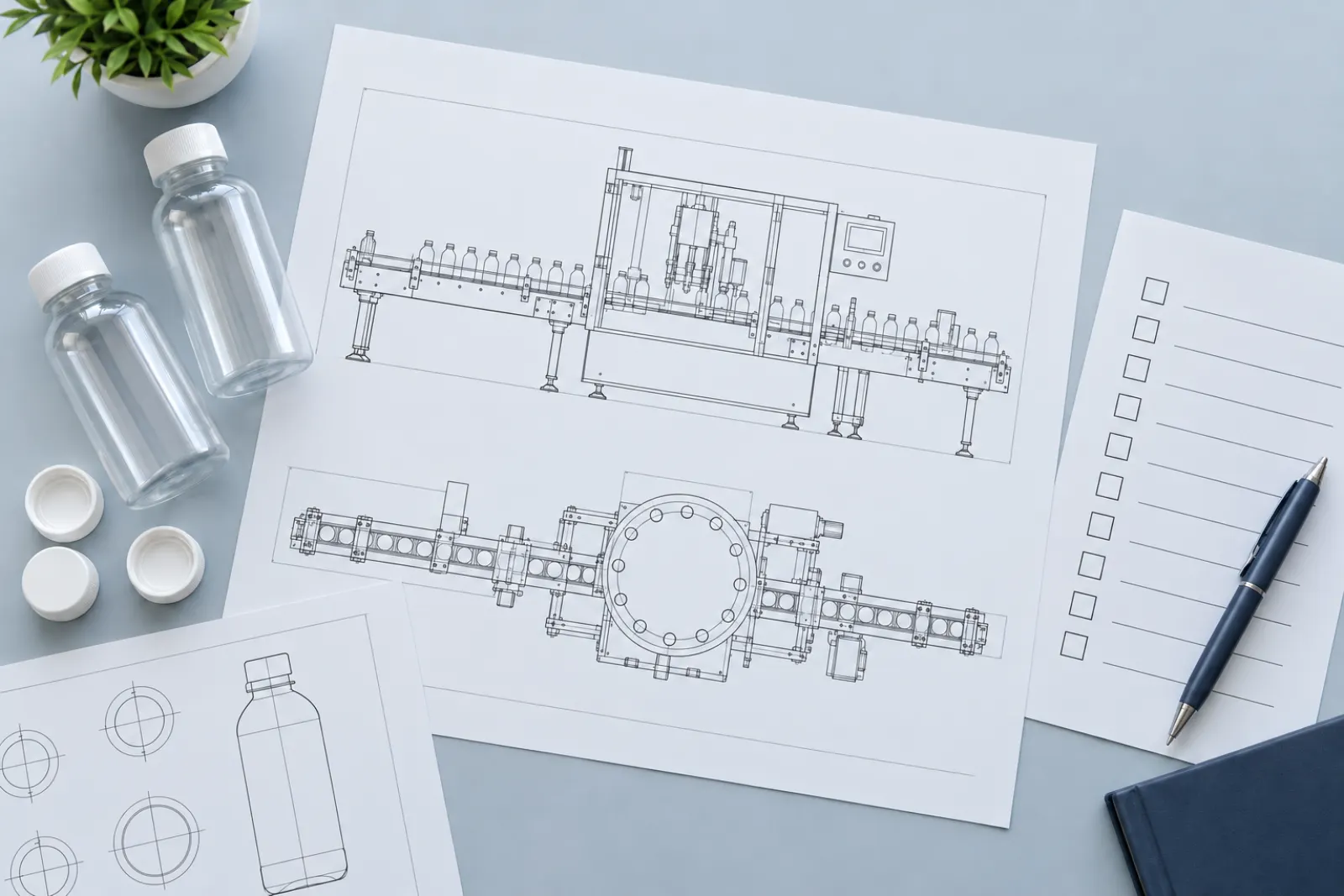
RFQ structure and how to make quotes comparable
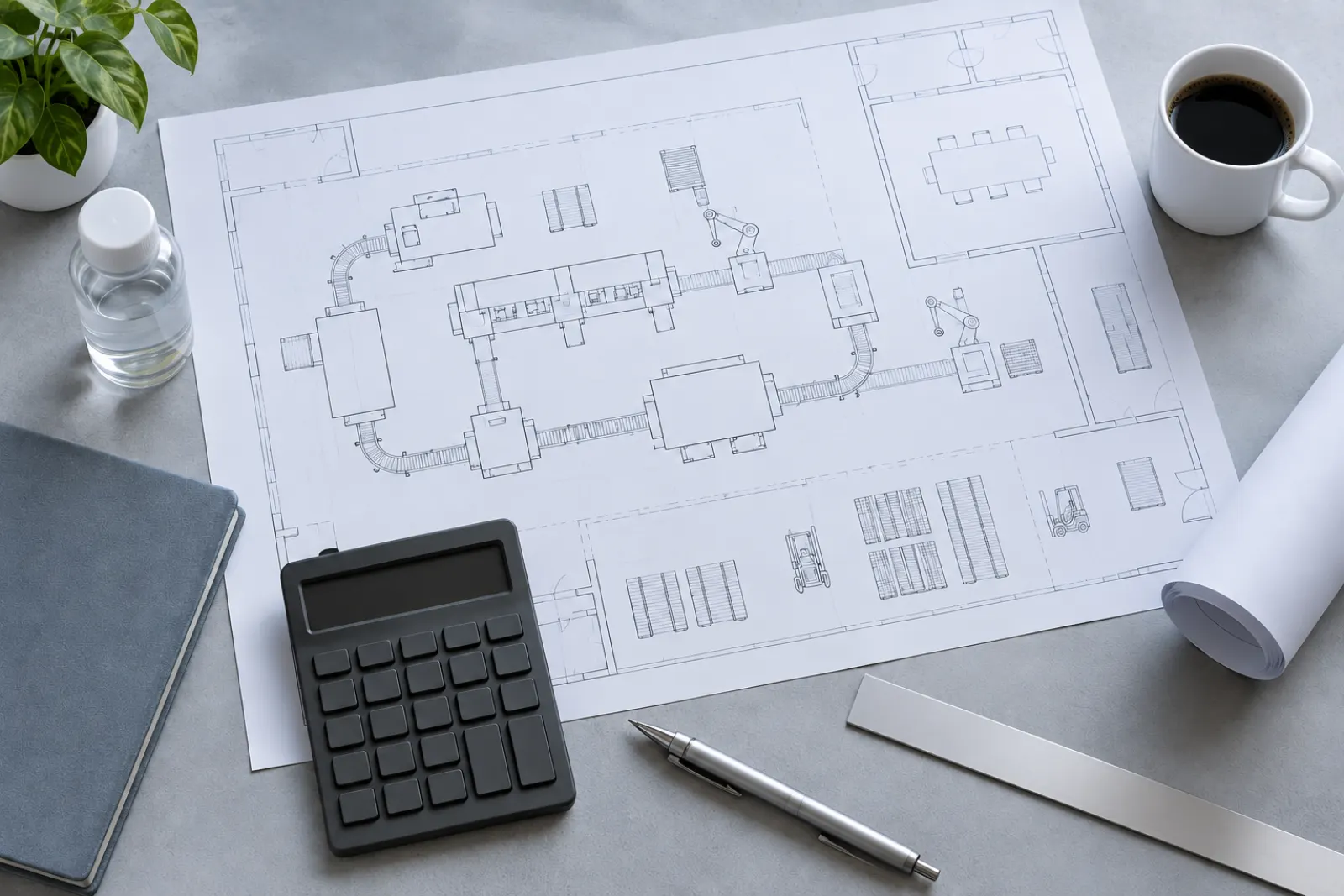
What a packaging line budget includes beyond the machines
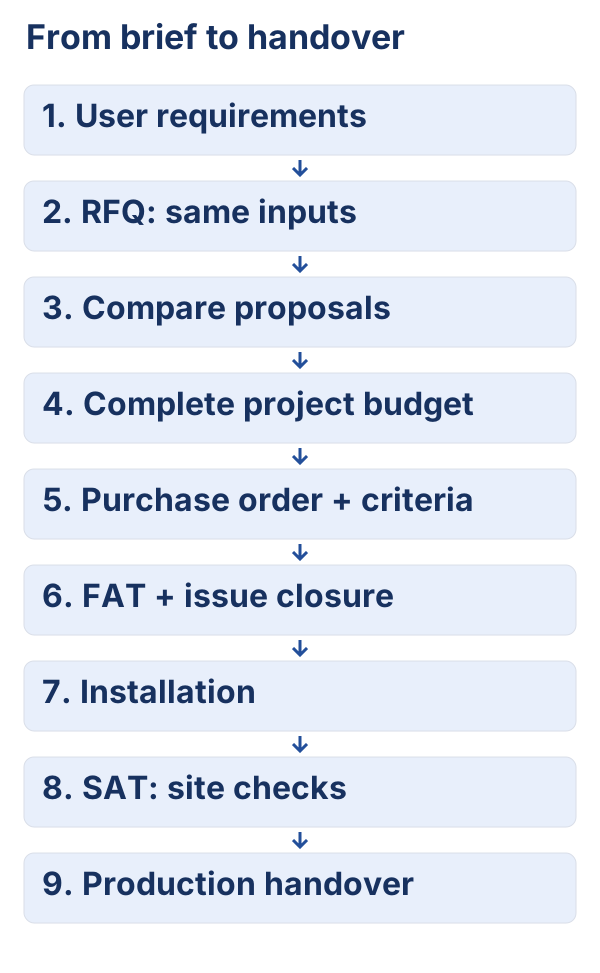
Packaging equipment purchases are won or lost on documents. A request that gives every supplier the same facts produces quotes you can compare. A budget that lists every component keeps the project from running short after the machine quote is accepted. An acceptance plan written before the machine is built gives both sides the same definition of done. The guides in this section provide structures for each of these, and the path below shows how they connect.
A typical sequence from requirements to production handover. Illustrative; your organization's procurement rules take precedence.
The early steps decide most of what follows. User requirements feed the request for quotation, the quotation comparison depends on every bidder answering the same questions, and the budget has to cover more than the machine. The later steps, factory acceptance, installation and site acceptance, are only as useful as the criteria written into the purchase order. The guides point out that some checks belong in site acceptance rather than factory acceptance, and that this should be decided in advance.
These pages offer no prices, speeds or payback figures, because those depend on your product, container, country and site. They are working checklists you can copy into your own documents and adapt.
Common questions
What should a request for quotation contain?
The RFQ checklist offers eight modules, beginning with product data and container and closure, and covering output and shifts, utilities and site, hygiene and cleaning, controls and data, documentation, and acceptance and commercial terms. It suggests asking each supplier to state the assumptions behind its rated speed, and to answer in the same shape so the responses can be compared.
Why does the machine quote understate the project cost?
The line cost guide breaks a project into nine components: machines, change parts, conveyors and integration, utilities, installation, FAT and SAT, training and spares, trial materials, and contingency. It notes that conveyors, utilities and trial materials are frequent omissions, and it gives no prices because they depend on the project.
What makes a factory acceptance test useful?
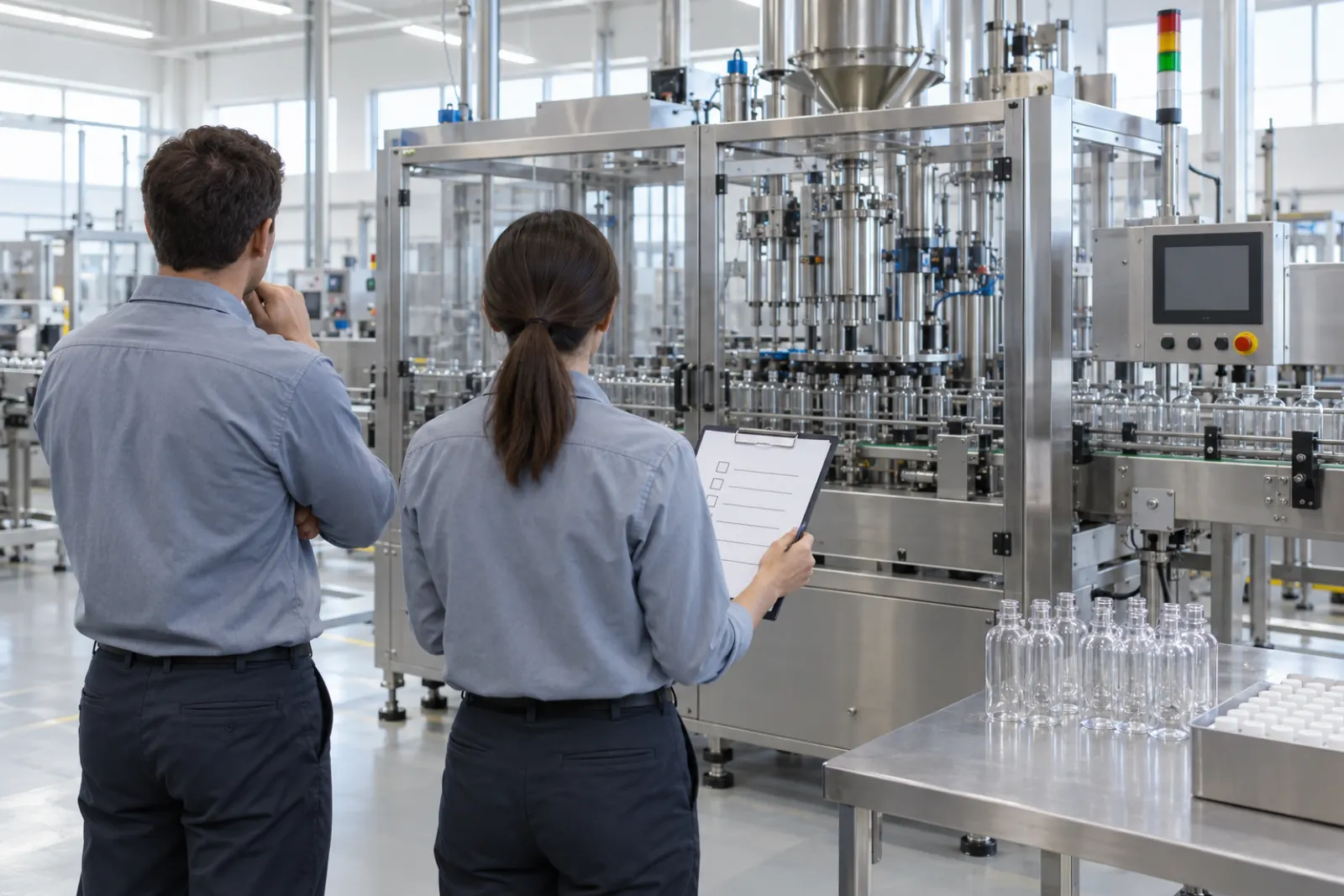
According to the FAT checklist, the difference is the plan: written acceptance criteria tied to your specification, materials that represent production, a record of what was run and found, and a closed punch list before the machine ships. It advises writing each criterion as a measurable statement with a method, a sample size and a pass rule, and not copying numerical limits from the guide.
What changes on the line if I move from bottles to pouches?
The bottle vs. pouch guide breaks the line into six functions: container supply, filling, closing or sealing, conveying, secondary packaging, and changeover with materials handling. It explains that a form-fill-seal machine forms, fills and seals the pouch in one operation, so the filler and container-making step are no longer separate.
Where to go next
Before you write a request, it helps to understand the machines being quoted. The equipment section explains filling, capping, labeling and sealing, and each guide there ends with questions you can carry straight into an RFQ.
For the recurring cost of containers and components, the food packaging cost worksheet separates material quotes from the cost per accepted finished pack.
Moving a liquid product between rigid bottles and flexible pouches changes filling, closing, conveying, changeover and cases. Use this guide to scope the work.
A copy-ready request-for-quotation structure for packaging machines, with eight modules of fields to fill in and a method for comparing quotes line by line.
Build a packaging line budget from nine components, from machines and change parts to FAT, SAT, training and contingency, and learn how to collect each figure.