The container material sets the limits for everything downstream: fill temperature, shelf life, line compatibility, and what happens to the package after use. These guides compare common options by the conditions they must meet rather than by general reputation.
None of them declares a universal winner. Each one lists what a buyer should request from a material supplier and which points need testing on the actual product and line.
Who this section is for
Packaging and process engineers comparing container materials
Brand owners deciding between bottle, cup, or film formats
Buyers who need to write a material specification for suppliers
What it covers
Glass, metal, paper, plastic, multilayer, and bio-based material families compared
PET, HDPE, glass, and PLA containers and how they differ
Compostable, biodegradable, and bio-based claims explained
Material limits such as heat tolerance and gas barrier
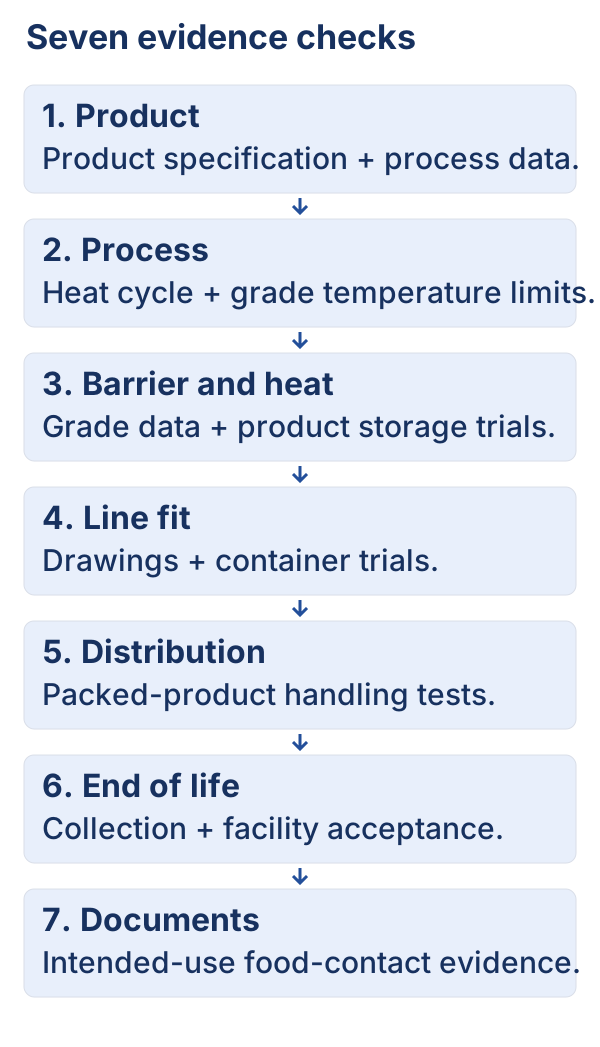
Use the seven-step evidence table below as the main selection path. It expands four decision areas—product, process, distribution and end of life—with separate checks for barrier, line fit and documentation. The diagram follows the same seven steps; material-family comparisons provide context rather than a second selection method.
How to choose food packaging materials: criteria you can verify
Each step needs evidence for the actual product and finished package. Work through them in order and stop when a material fails a step.
Scroll horizontally for any hidden columns →
Step
Question to answer
Evidence that settles it
1. Product
Is the product acidic, fatty, carbonated, oxygen-sensitive or light-sensitive?
Your product specification and process data
2. Process
What is the fill temperature, and is the product hot-filled, chilled, aseptic or retorted?
Your process definition; the supplier’s stated temperature limits for the grade
3. Barrier and heat
Does the material meet the barrier and heat needs from steps 1 and 2 for the whole shelf life and supply chain?
Supplier data for the exact grade and thickness, then storage trials on your product
4. Line fit
Will the container run on your filler, capper or sealer and labeler at your conditions?
Drawings, tolerances and a trial on your line or the machine supplier’s
5. Distribution
Will it survive your temperature history, condensation, stacking and breakage risk?
Distribution and handling tests with packed product
6. End of life
Does a collection route exist where the package is sold, and does any claim match it?
Local collection and facility acceptance; certification of the finished item where a claim depends on it
7. Documents
Is the material documented for food contact under the conditions of use?
Supplier declarations and the regulation sections they cite, reviewed by your compliance specialist
Two cautions apply across all steps. First, the same review notes that migration from food-contact materials typically increases with temperature, contact time and surface area and with acidic or fatty foods, so steps 1 and 2 shape the documents you need in step 7. Second, this publication does not make food-contact or compliance determinations. Treat step 7 as a question for a qualified compliance professional, not a box to tick from a supplier’s brochure. When you move from material choice to buying, the RFQ checklist shows how to screen material suppliers alongside the machine quote.
The same seven checks as the evidence table. Editorial selection path, not a material standard.
Product and process inputs determine barrier, thermal and line-fit checks. Distribution adds transport conditions; end-of-life and food-contact claims need their own documentary evidence. A material-family name does not settle any of these checks.
Food packaging materials by type
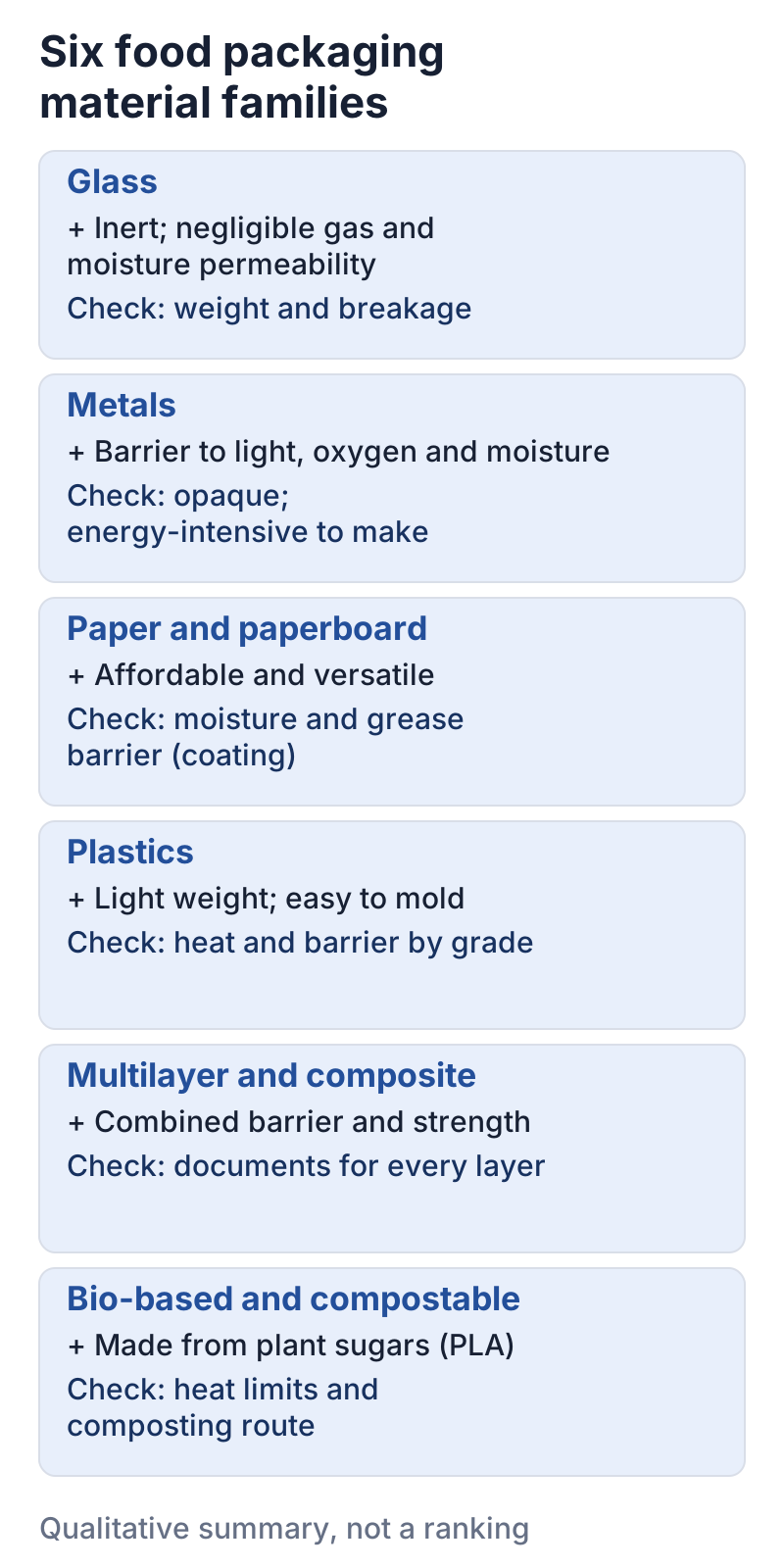
Most food and beverage packages are built from six material families. The table compares them qualitatively, so you can see which family to examine for your product before you open the detailed guides. The general properties come from an open-access peer-reviewed review by Yashwanth and colleagues, “Food packaging solutions in the post-per- and polyfluoroalkyl substances (PFAS) and microplastics era” (2025). They describe material families, not any specific grade, supplier or package, and they are not a ranking.
Six food packaging material families, each with one reported strength and one point to check. Qualitative summary from published sources, not a ranking.
Scroll horizontally for any hidden columns →
Material family
Typical food packages
Strengths reported
What to check before you choose it
Read next
Glass
Bottles and jars
Chemically inert, negligible gas and moisture permeability, transparent, reusable and recyclable
Weight and breakage handling; the review also describes glass as more expensive than other materials
Gas and moisture impermeability, high mechanical strength, protection against light, oxygen and moisture
Opaque, so the product cannot be seen; the review notes energy-intensive production and possibly higher cost
Compare against the glass and plastics rows for barrier, weight and visibility
Paper and paperboard
Cartons, boxes and shipping cases
Affordable, biodegradable and versatile
The review states that paper often fails to block moisture, gases and grease on its own; a PE or PP coating improves moisture and grease resistance, so ask what coating the package uses
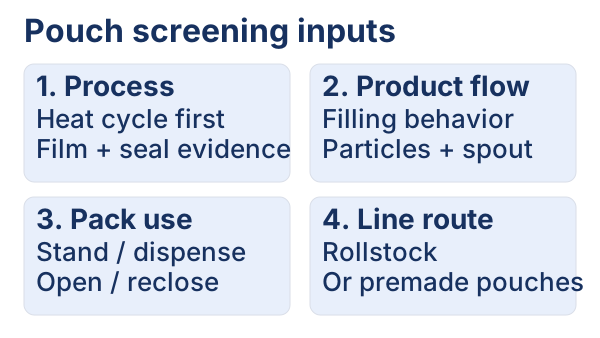
A family that looks right in this table is only a starting point. Grade, wall thickness, coating and design change the result, which is why each guide ends with the data to request from the material supplier. For multilayer pouches in particular, the guide to food pouch formats matches stand-up, retort, spouted and pillow pouches to food categories.
There is no single best material, and the guides here do not rank them. The best material for a project is the one that passes all seven steps in the table above for that product, process and market. If two materials pass, compare them on cost, supply and the line changes they require, using the same criteria for both.
How do I compare PET, HDPE, glass and PLA without a universal winner?
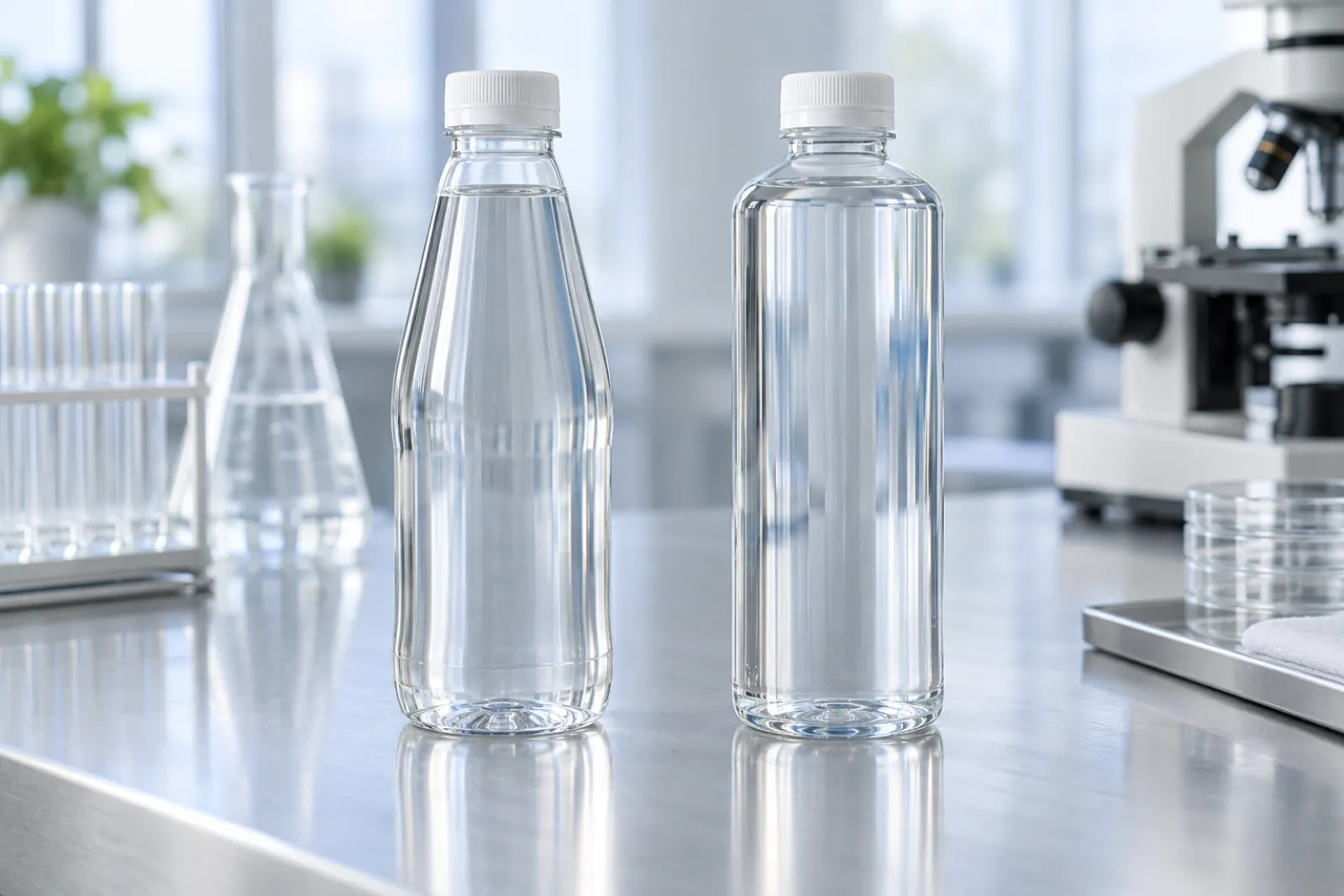
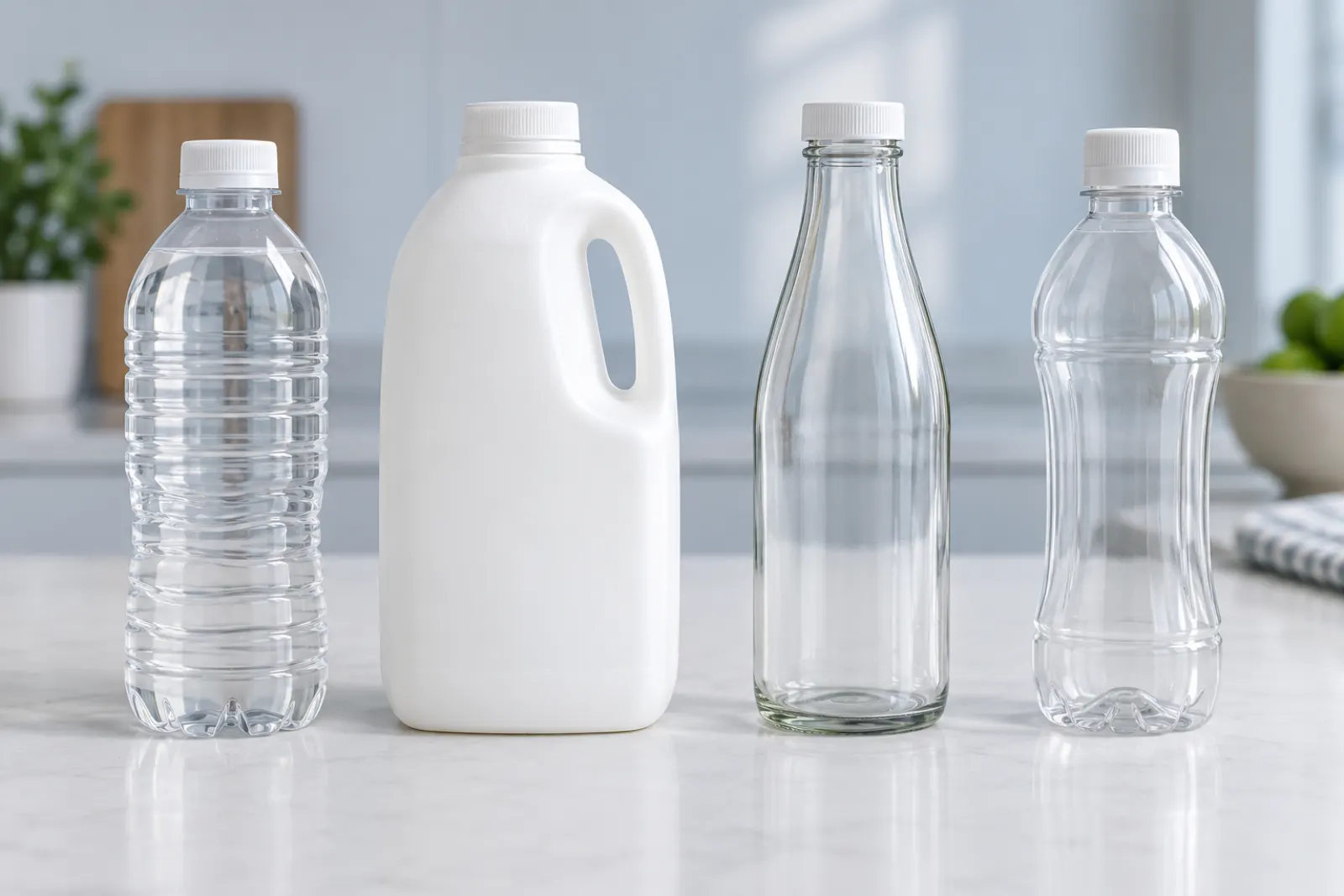
Compare them against your own requirements list. The bottle materials guide rates the four materials on weight, breakage risk, heat tolerance, gas barrier and recycling infrastructure, and cautions that ratings are relative and change with grade, wall thickness and design. It then shows how to turn those axes into a checklist you can paste into a quotation request.
When does PLA stop being a practical option?
The PLA guide says to check the thermal profile of the whole supply chain as well as the fill temperature, and then to check whether the product needs more gas or moisture barrier than PLA offers. It describes PLA as mainly considered for chilled, short shelf life drinks, and lists heat, barrier and brittleness as the constraints that decide most projects. Food-contact status and end-of-life routes are separate checks.
Is switching from PET to PLA a like-for-like swap?
According to the PLA vs. PET comparison, it rarely is. The guide works through temperature, barrier, line compatibility and the disposal route, in that order, and notes that the disposal route can reverse a preference. If a project fails an early step, the later steps do not need to be argued.
What does “compostable” actually promise?
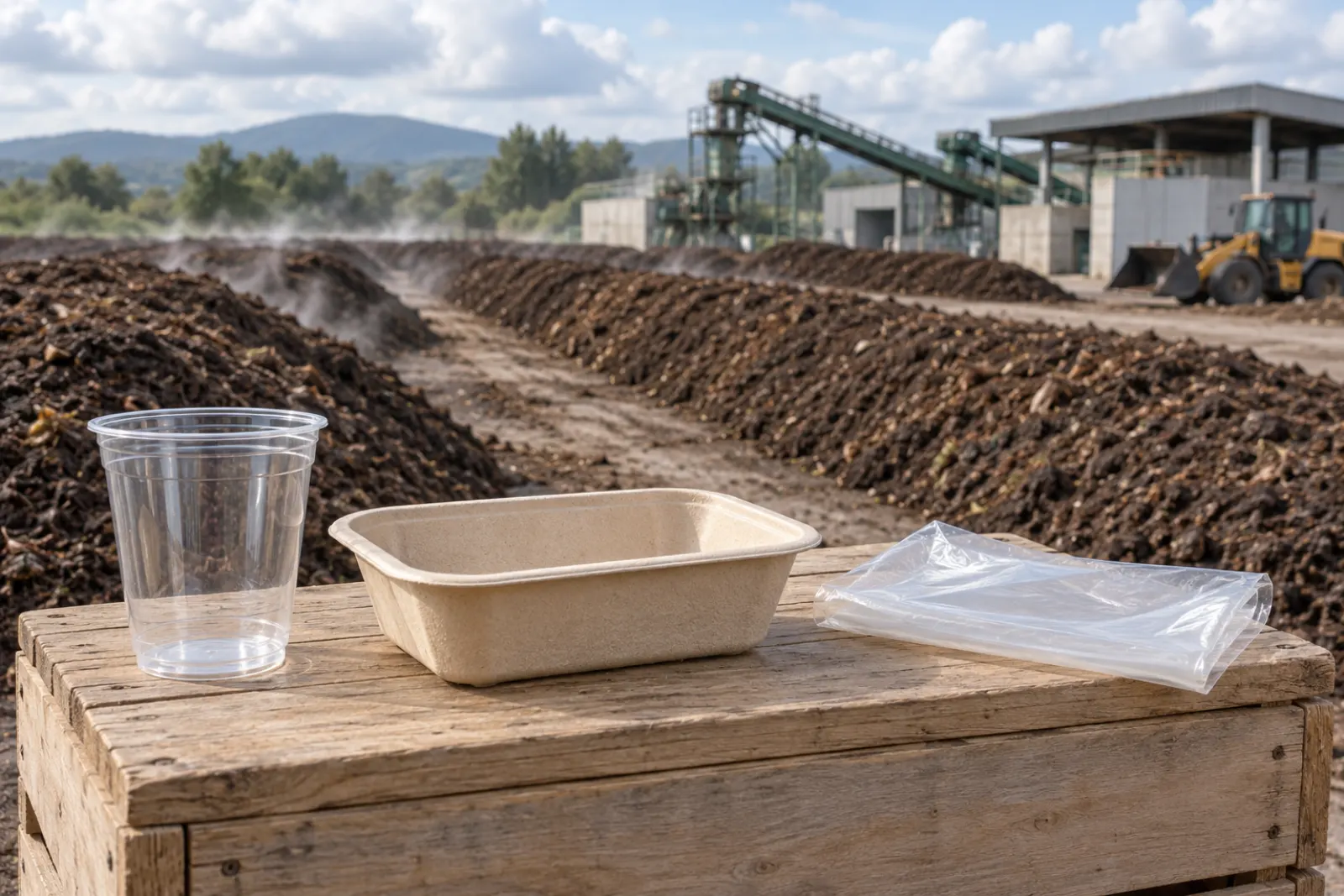
Less than many buyers assume. The compostable packaging guide describes a chain of four links: the material meets a standard, the finished item is certified, a collection route exists, and a facility accepts it. If any link is missing, the claim has to be qualified. It also explains why a resin certificate is not an item certificate, and summarizes how the FTC Green Guides treat these claims.
Where to go next
Once a material is short-listed, the next question is how the product itself shapes the package. The applications section takes milk, yogurt, bottled water and juice from product characteristics to container format and line steps. For the history of one early PLA packaging claim set, see the history section, which keeps reported claims apart from current guidance.
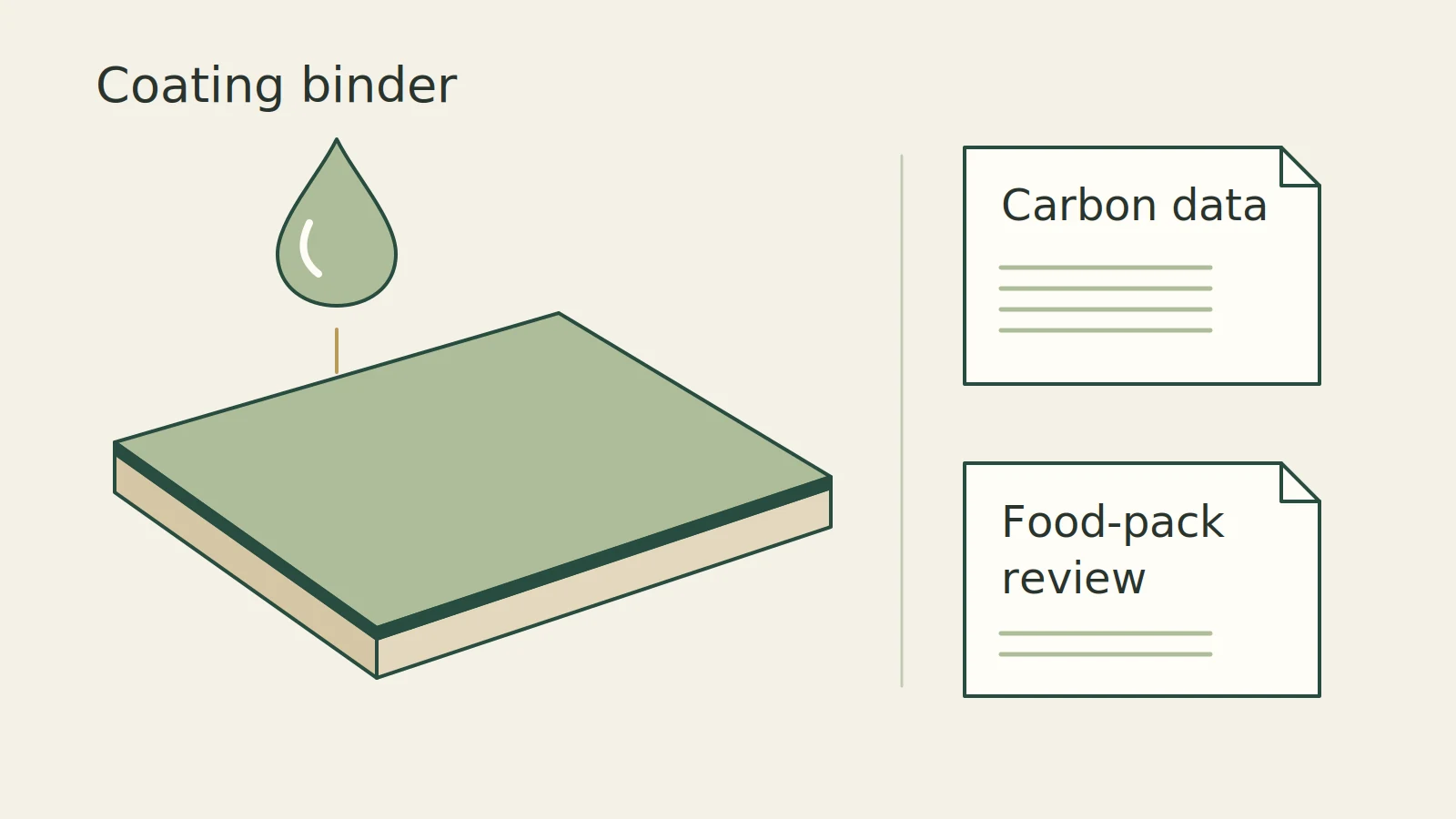
For a coating announcement, the BASF paper coating dispersion review separates product carbon data from the food-use and line checks for a finished pack.
PLA food packaging explained for buyers: where polylactic acid fits, its heat and barrier limits, end-of-life conditions, and what to request from suppliers.
Compare PLA vs PET bottles by fill temperature, barrier, carbonation, shelf life, line compatibility and disposal route, and see what to verify before replacing PET.
Compostable food packaging explained: bio-based vs biodegradable vs compostable, ASTM D6400 and BPI certification, FTC claim rules and the collection gap.
Compare beverage bottle materials (PET, HDPE, glass and PLA) by weight, breakage, heat tolerance, gas barrier and recycling infrastructure, with a requirements checklist.
BASF’s reduced-PCF paper coating announcement needs two reviews: product carbon data and the intended food-pack application. Check the boundaries before switching.