
PLA vs PET Bottles: A Practical Comparison for Beverage Packaging
Compare PLA vs PET bottles by fill temperature, barrier, carbonation, shelf life, line compatibility and disposal route, and see what to verify before replacing PET.
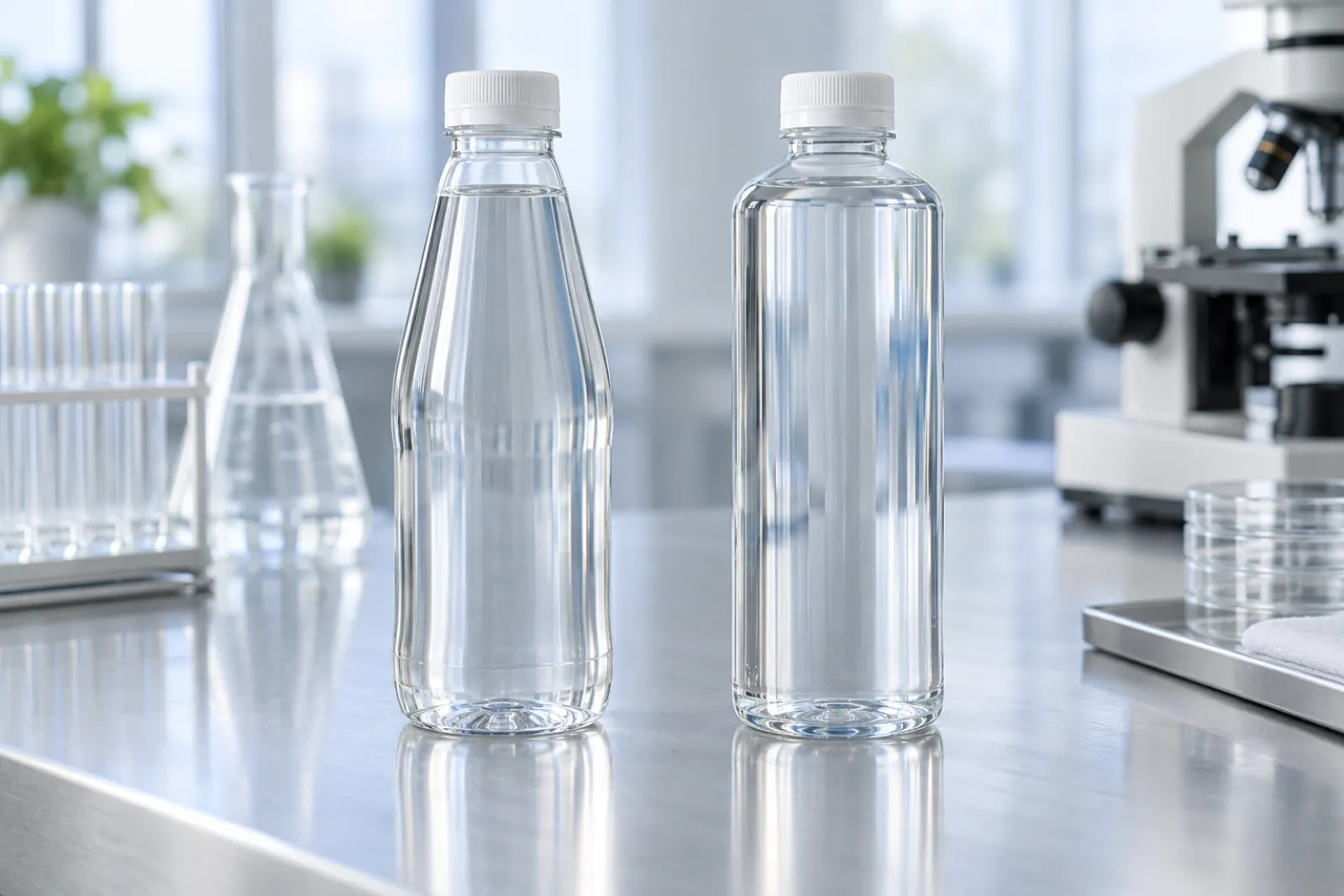
What this article covers
This guide helps beverage producers and packaging engineers decide whether a PLA bottle can replace a PET bottle for a given product, and what to validate when the answer is maybe. It compares conditions, not brands.
Covered
- Fill temperature, distribution temperature and heat-set options
- Carbonation, barrier and shelf life considerations
- Line, label and closure compatibility
- Recycling and disposal consequences of switching
Not covered
- Specific resin grades, brands or suppliers
- Price comparisons
- Glass and HDPE, covered in the bottle materials guide
A PET-to-PLA switch can fail at the filler, lose shelf-life protection or send the bottle into the wrong waste stream. Compare temperature, barrier, line compatibility and disposal using the proposed bottle grade and construction before treating the switch as workable.
This comparison is compiled from public sources, not our bottle testing. Use the four factors below to decide which evidence is still missing.
Scroll horizontally for any hidden columns →
| Factor | PLA candidate | PET reference / evidence needed |
|---|---|---|
| Temperature | Conventional bottle-grade PLA needs grade-specific thermal review | Ordinary / heat-resistant PET design; actual temperature, time and cooling window |
| Barrier | Request data for gas/moisture sensitivity and shelf life | Exact PET construction on the same test basis |
| Line | Trial the proposed finish, stiffness, closure and label | Record changes to the existing blowing / filling / capping / labeling setup |
| Disposal | Finished-item evidence plus an accessible accepting route | Local PET rules; cap and label compatibility for either route |
The decision framework
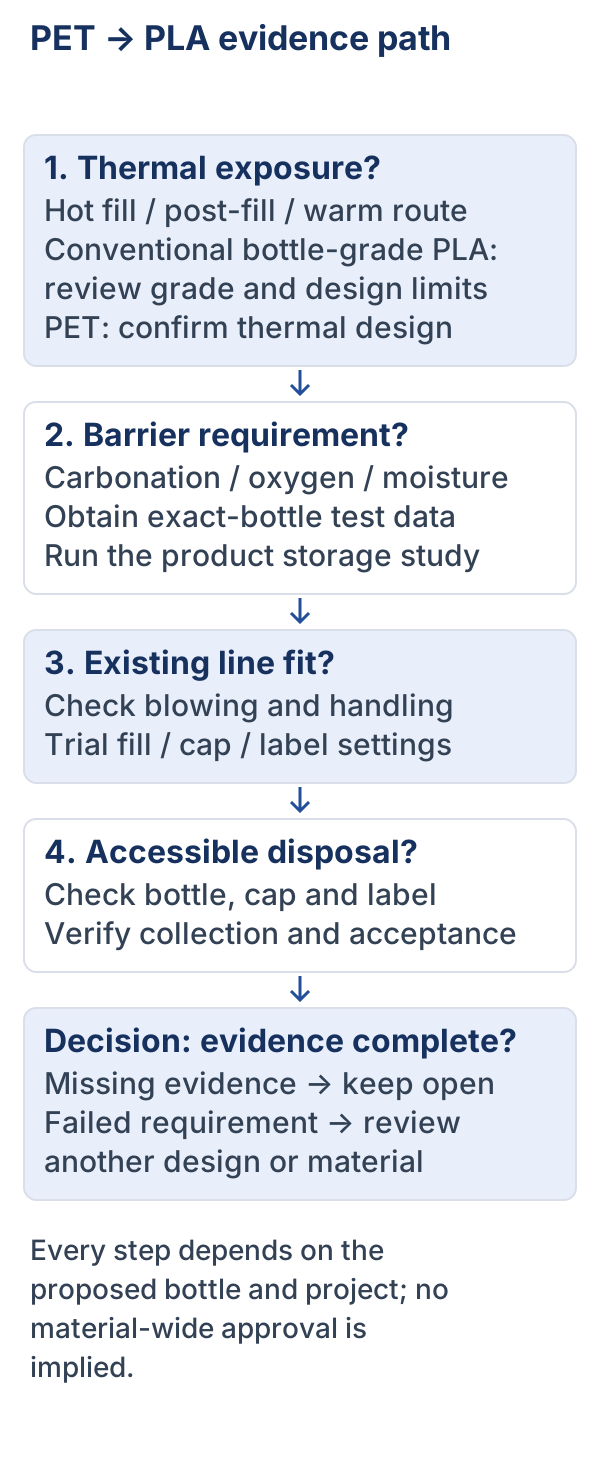
Read the tree as an evidence path: screen the thermal cycle, obtain product-specific barrier data, trial line interfaces, then confirm the complete package’s disposal route. A generic material label cannot pass any of those checks.
Temperature: fill, distribution and use
Heat is usually the first constraint. Reviews of PLA place the glass transition of semicrystalline PLA at roughly 58 °C and describe constrained heat resilience as one of its drawbacks. The review cited below treats the glass transition as the upper limit of practical use for amorphous PLA. A bottle that approaches that range can lose dimensional stability, and that is not limited to the fill step. Any stage that can warm the bottle matters: a hot summer trailer, an unventilated warehouse or a display near a heat source.
PET also needs bottle-specific limits. The 2001 IFT article discusses heat setting for hot fill and, immediately after a broad statement about post-fill pasteurization, reports special pasteurizable polyester designs. It is historical context, not a rule that every PET bottle can or cannot be pasteurized. Request the proposed design’s thermal window, including temperature, exposure time, pressure and cooling; hot-fill suitability alone does not settle a later pasteurization step. No current universal time/temperature limit is supplied here.
Carbonation and barrier
Carbonated beverages put internal pressure on the bottle and require the wall to retain carbon dioxide over the shelf life. PLA reviews state that its permeability to carbon dioxide, oxygen and water vapor imposes constraints on some beverage bottle applications, while petroleum-based polymers such as PET are described as efficient barriers. The comparison depends on grade, crystallinity, orientation and test conditions, and published values differ, so this guide does not give a permeability number.
PET is also not automatically sufficient. A Plastics Technology article from 2004 notes that smaller bottles have more surface area per unit of volume, which makes barrier more critical, and that small carbonated bottles often use barrier-enhanced PET such as multilayer or coated designs. For a buyer, “PET” is a family of options. Ask what barrier system the proposed bottle uses and what shelf life it supports for your product.
For non-carbonated beverages the barrier question shifts to oxygen sensitivity and moisture. A juice or flavored water may be oxygen-sensitive; a plain still beverage with a short chilled shelf life may not be. Shelf life depends on the product, so request data on your formulation rather than relying on a general ranking.
Line, label and closure compatibility
Stretch blow molding is used for both materials, but the thermal behavior differs, and preform conditioning, mold temperature and cooling settings are not interchangeable. For a plant, the practical impacts are:
- Blow molder: if you blow your own bottles, settings, molds and preform handling will differ. If you buy blown bottles, the supplier owns this risk but you own the specification.
- Filler: fill temperature, product temperature at the valve, and rinse or sanitizing steps can all expose the bottle to heat. Ask the filler supplier how bottle handling (neck grippers, star wheels) copes with the container’s stiffness.
- Capper: a more brittle container or finish may react differently to torque. See the bottle capping machine selection guide for torque and head considerations.
- Labeler: cold, condensing bottles are a labeling challenge regardless of material; see cold and wet bottle labeling for the checks that matter.
- Conveyors and accumulation: pressure on accumulating bottles and friction at transfers can show up as scuffing or deformation on a lower-stiffness container.
For the broader process of specifying the filling machine, see how to choose a liquid filling machine.
Recycling and disposal consequences
The disposal route is part of the material decision, and it can reverse the preference. APR’s PET design guide lists PLA among materials that sink with PET in float-sink separation and cause severe quality degradation in recycled PET even in very small amounts. APR’s PLA guidance says PLA is not currently considered recyclable in North America under its definition because collection systems are limited, and treats PET as a contaminant in PLA recycling.
By contrast, PET bottle collection is established. NAPCOR reports a 30.2 percent U.S. PET bottle recycling rate for 2024, with bottles the largest end market for recycled PET. Most bottles are still not recycled, so that rate does not make PET a perfect answer. It does mean the PET stream has no current way to absorb PLA bottles that enter it.
Composting is the alternative for PLA, but EPA notes that compostable plastics are not intended for recycling and that industrial composting conditions differ from home compost bins. Whether a given bottle is accepted by a composter is a facility decision. See compostable packaging for the claims and collection issues.
For a historical example of how a bottle’s container material and disposal claims were reported at the time, see the case study in our history section: Green Bottle Spring Water. It records what was said then and is not a current performance statement.
When a swap needs more evidence
Do not approve a direct replacement from appearance alone. Hot fill or warm distribution needs a documented thermal window; carbonation or long shelf life needs bottle-specific barrier and mechanical results. A change into a market with PET collection also needs a separate, confirmed disposal plan for PLA. If those records cannot support the requirements, compare other designs or formats in the beverage bottle materials guide.
Bottle-switch record
Copy one record per candidate bottle and current PET reference; compare documents and results under the same conditions.
Scroll horizontally for any hidden columns →
| Requirement / input | Evidence and trial record | Open check / owner |
|---|---|---|
| Heat: fill, post-fill, distribution and storage ____ | Grade/design ____; temperature/time/pressure/cooling window ____; route log ____ | ____ |
| Product: carbonation, gas/moisture sensitivity, shelf life ____ | Exact-design permeation and mechanical data ____; product storage results ____ | ____ |
| Line: finish, blowing, filler, capper, labeler and packing ____ | Supplier change list ____; production-representative trial/results ____ | ____ |
| Complete package: resin, cap, label, sleeve and additives ____ | Food-contact documents ____; disposal compatibility / certificate coverage ____ | ____ |
| Disposal: market, collection and receiving facility ____ | Acceptance confirmation ____; claim wording ____; check date ____ | ____ |
Should you leave the caps on plastic bottles for recycling?
Follow the local program’s instructions for the complete bottle. EPA reports APR’s recommendation to leave caps on, while noting that some recyclers lack the equipment to process them attached. That guidance does not establish a PLA collection route or make a non-compostable cap compostable.
Do you have to remove labels from plastic bottles for recycling?
Check local instructions and the exact label, sleeve and adhesive against the intended bottle stream. APR’s PET guide identifies incompatible attachments; appearance alone does not prove compatibility. For composting, check finished-item evidence and facility acceptance for the cap and label too, as explained in compostable packaging.
Questions to ask suppliers
- What is the highest fill temperature and highest storage temperature this bottle is rated for, and on what basis?
- For carbonated products, what is the CO2 retention data for this exact bottle size and design?
- Which barrier technology is used (monolayer, multilayer, coating), and does it change the recycling or composting status of the bottle?
- What oxygen and water vapor transmission data are available, under what conditions were they measured, and by whom?
- Which settings on the blow molder, filler, capper and labeler change compared with PET, and is a trial on production equipment included in the quotation?
- What closure and label materials do you recommend, and how do they affect the intended disposal route?
- Can you provide food-contact documentation for the finished bottle, including colorants and additives?
- If the bottle is described as compostable, which certificate covers the finished item, and which facilities accept it?
- What happens to the bottle if it enters a PET recycling stream, and how is that risk communicated to the customer?
- What data in your proposal is from your own measurements, and what is quoted from resin manufacturers or third parties?
Sources and method
This article is based on documentary research of the sources listed. It is not a hands-on equipment test. Supplier statements and editorial judgement are identified in the text.
- Aseptic vs Hot-Fill Packaging for Polyester Bottles Supports: historical PET heat-setting and hot-fill design discussion; the adjacent passage also reports special pasteurizable polyester bottles. Re-read October 8, 2026. It does not establish limits for all current PET bottles.
- Barrier PET Bottles Supports: small carbonated bottles have higher surface area per volume, which makes barrier more critical, and PET is often upgraded with multilayer or coating barrier technologies. Historical article.
- A review on bio-based polymer polylactic acid potential on sustainable food packaging Supports: PLA's CO2, oxygen and water vapor permeability constrains some beverage bottle uses; PLA's low heat resilience and glass transition near 58 °C for semicrystalline PLA.
- APR Design Guide: PET Rigid Supports: PLA sinks with PET in float-sink separation and severely degrades recycled PET even in very small amounts.
- PLA Design Guidance Supports: PLA is not currently considered recyclable in North America under APR's definition; PET is a contaminant in PLA recycling.
- 2024 PET Recycling Report press release Supports: 30.2 percent U.S. PET bottle recycling rate in 2024 and the role of bottles as the largest rPET end market.
- Frequently Asked Questions About Plastic Recycling and Composting Supports: compostable plastics are not intended for recycling and can contaminate the recycling stream; industrial and home composting differ.
Next reading
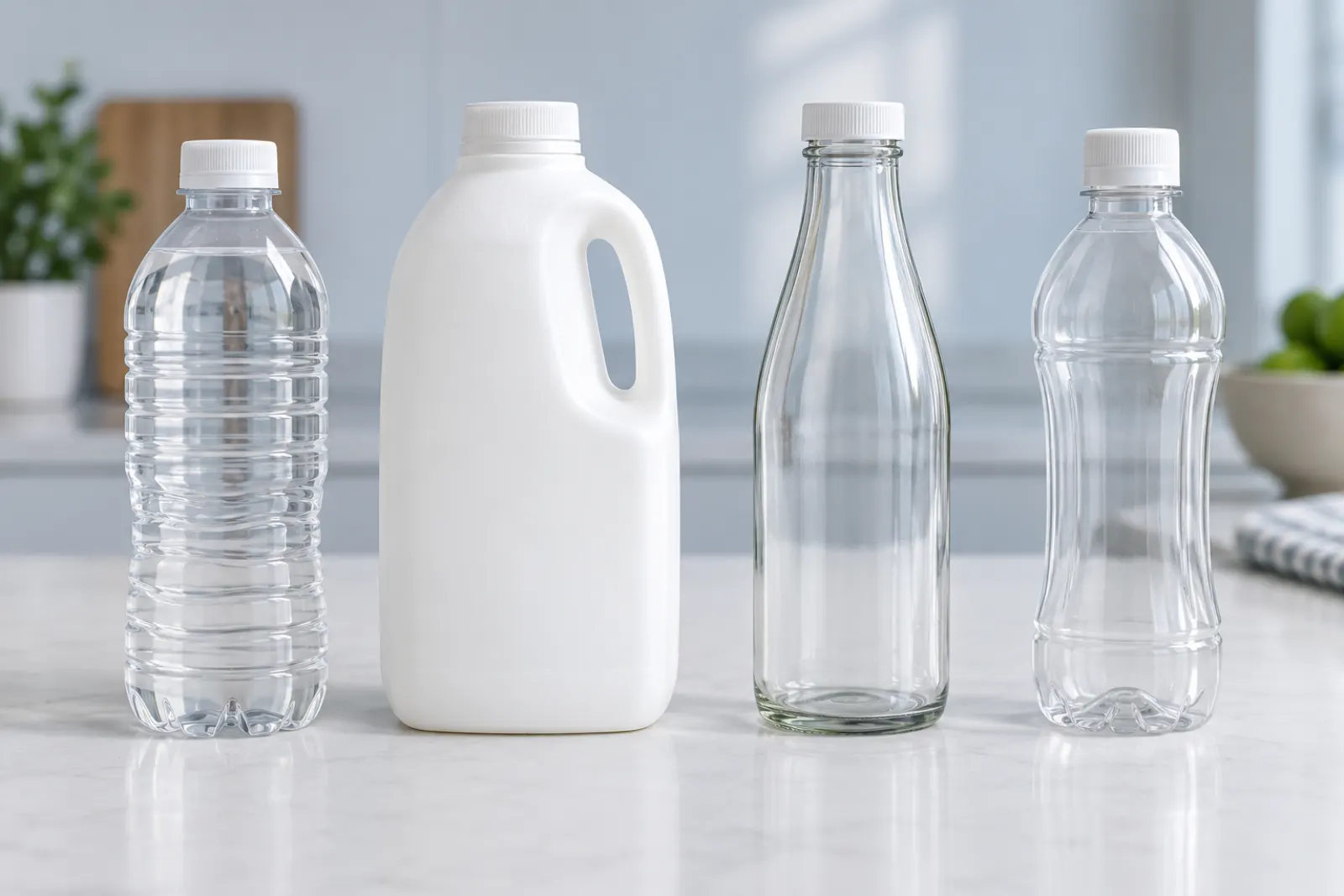
Beverage Bottle Materials: Comparing PET, HDPE, Glass and PLA
Compare beverage bottle materials (PET, HDPE, glass and PLA) by weight, breakage, heat tolerance, gas barrier and recycling infrastructure, with a requirements checklist.
Read the guide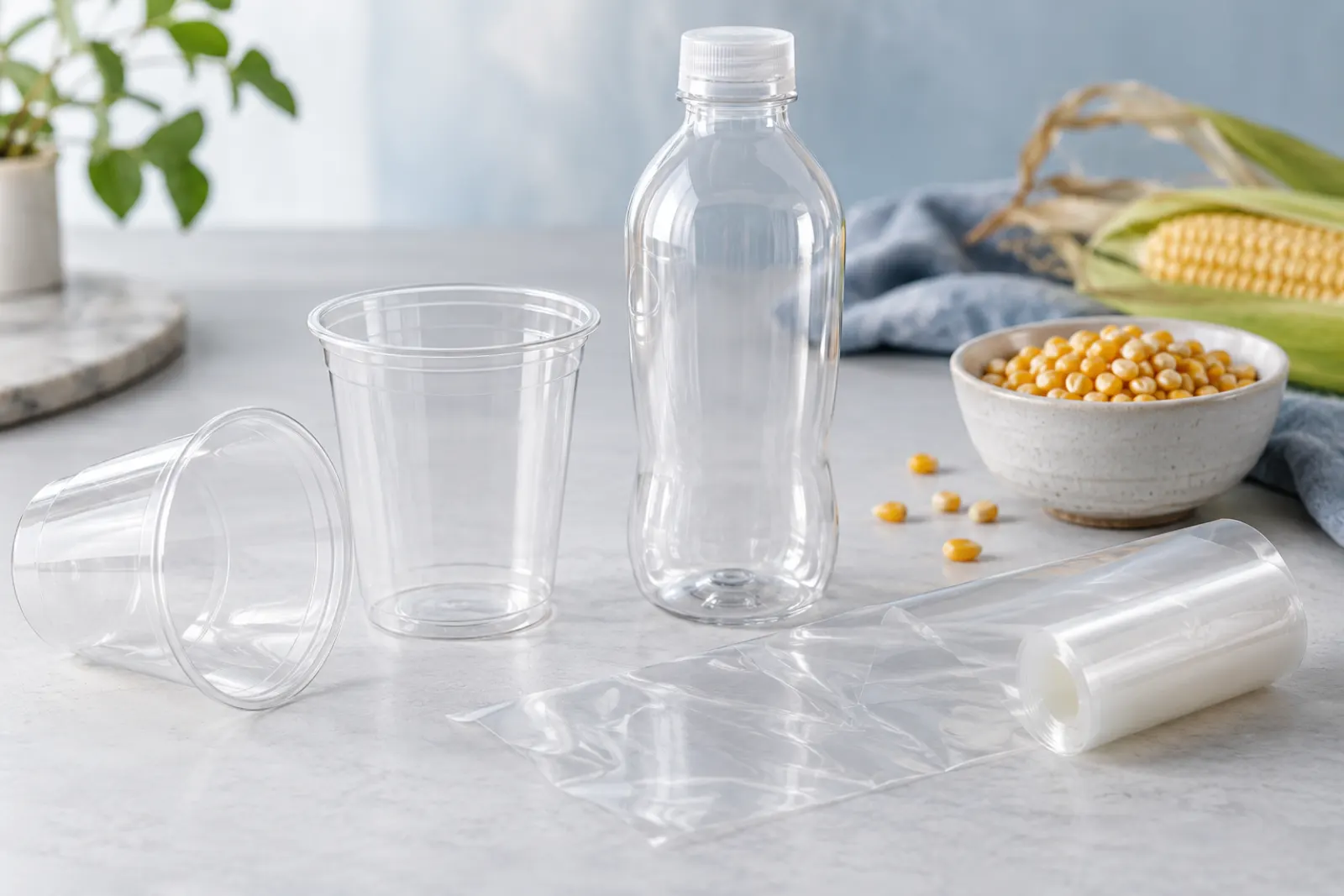
PLA Packaging for Food and Beverages: Uses, Constraints and Buyer Questions
PLA food packaging explained for buyers: where polylactic acid fits, its heat and barrier limits, end-of-life conditions, and what to request from suppliers.
Read the guide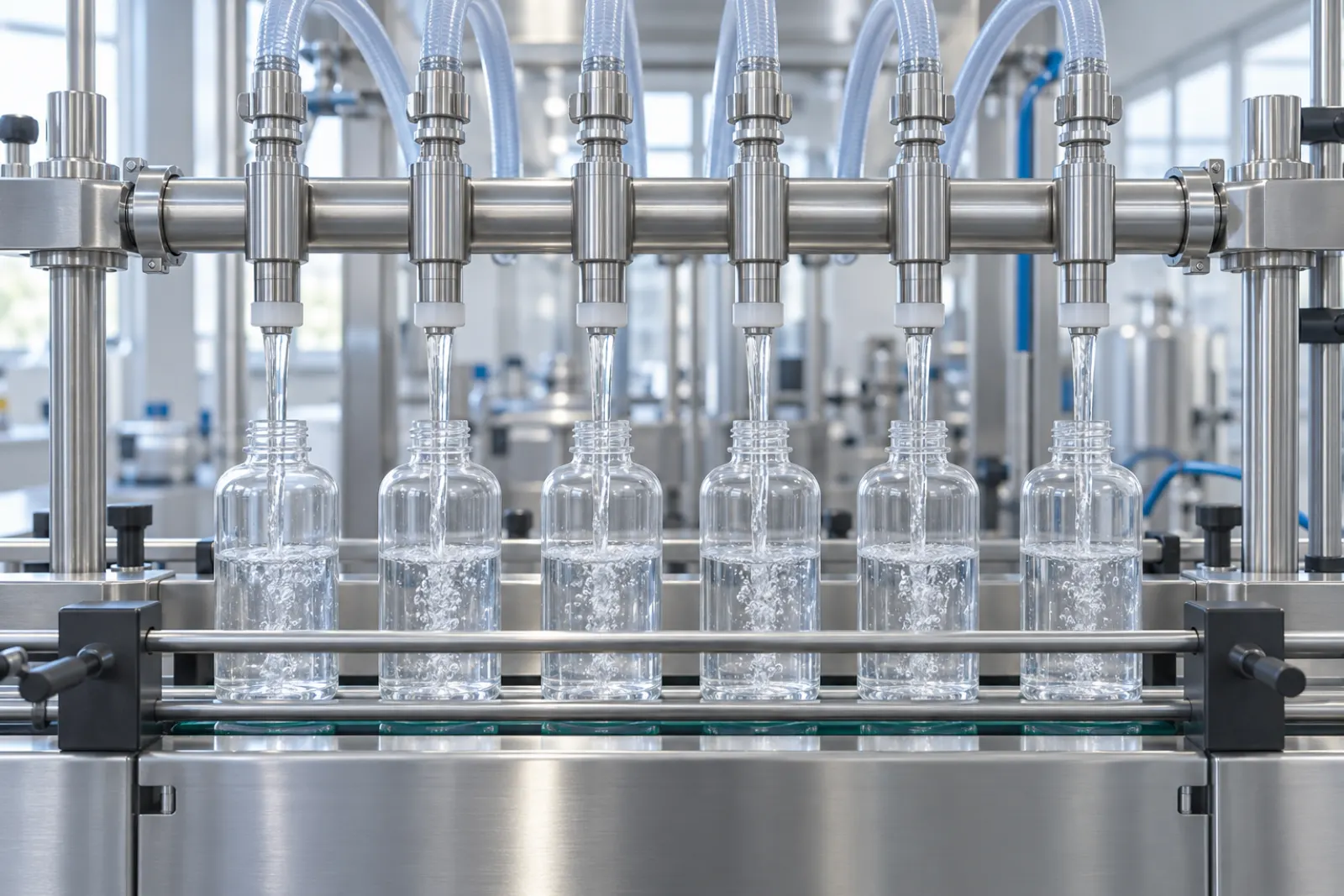
How to Choose a Liquid Filling Machine for Food and Beverages
A buyer's framework for choosing a liquid filling machine: project inputs, filling approaches compared, what to validate with samples, and supplier questions.
Read the guide
Green Bottle Spring Water: A Historical Packaging Case Study
A source-based case study of Green Bottle Spring Water, a PLA-bottled water of 2008 to 2011: dated company claims, evidence limits and open questions.
Read articleMore in Materials
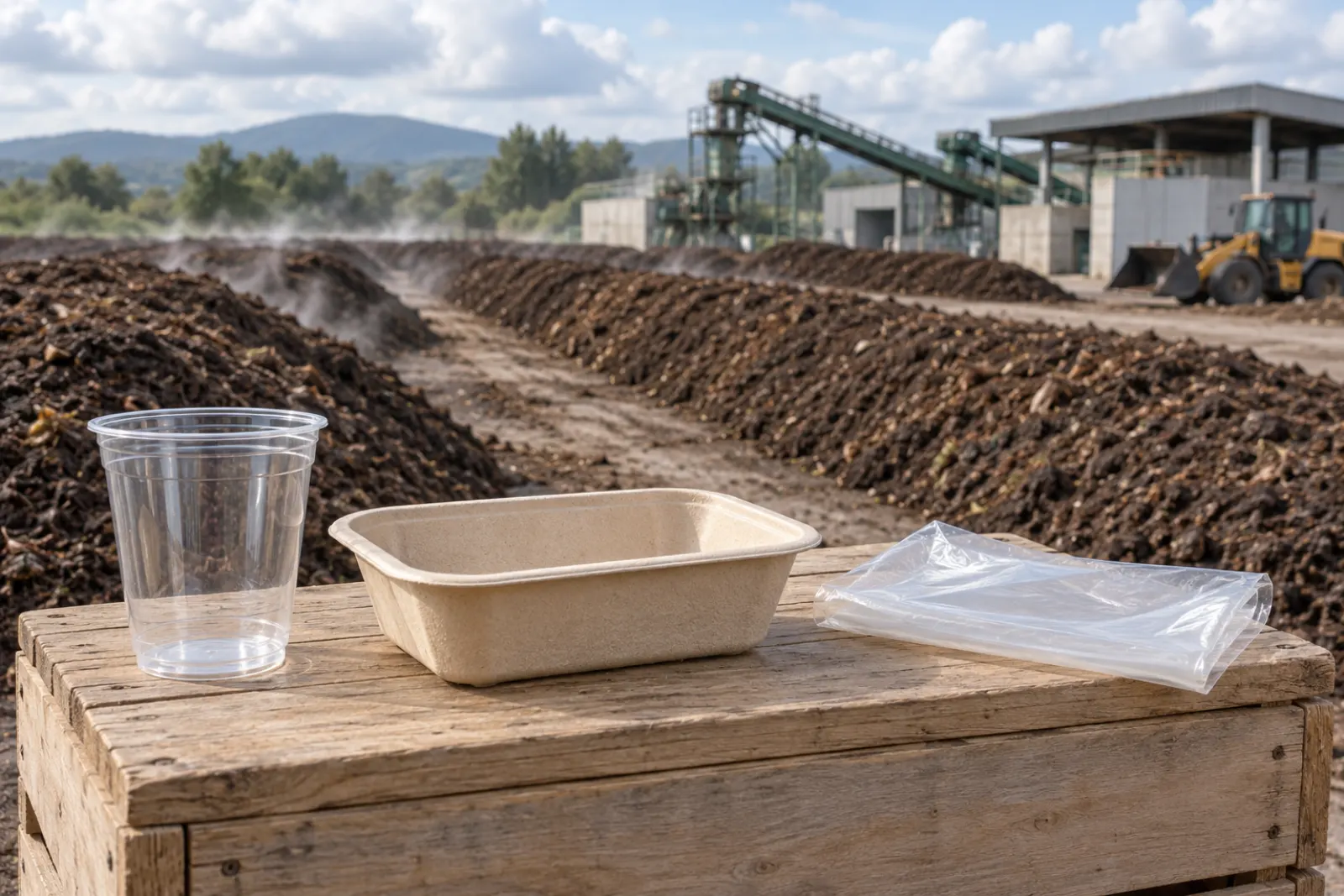
Compostable Packaging: Industrial Composting, Home Composting and Collection Systems
Compostable food packaging explained: bio-based vs biodegradable vs compostable, ASTM D6400 and BPI certification, FTC claim rules and the collection gap.
Read the guide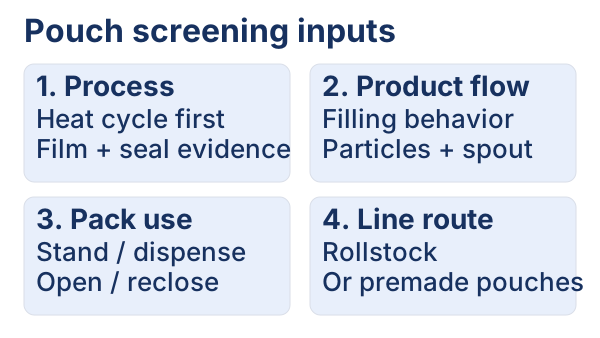
Pouch Packaging for Food: Stand-Up, Retort, Spouted and Pillow Pouches by Product
A pouch unsuited to heat processing can fail. Select by preservation route, product flow and use, then check film, fitment and filling compatibility.
Read the guide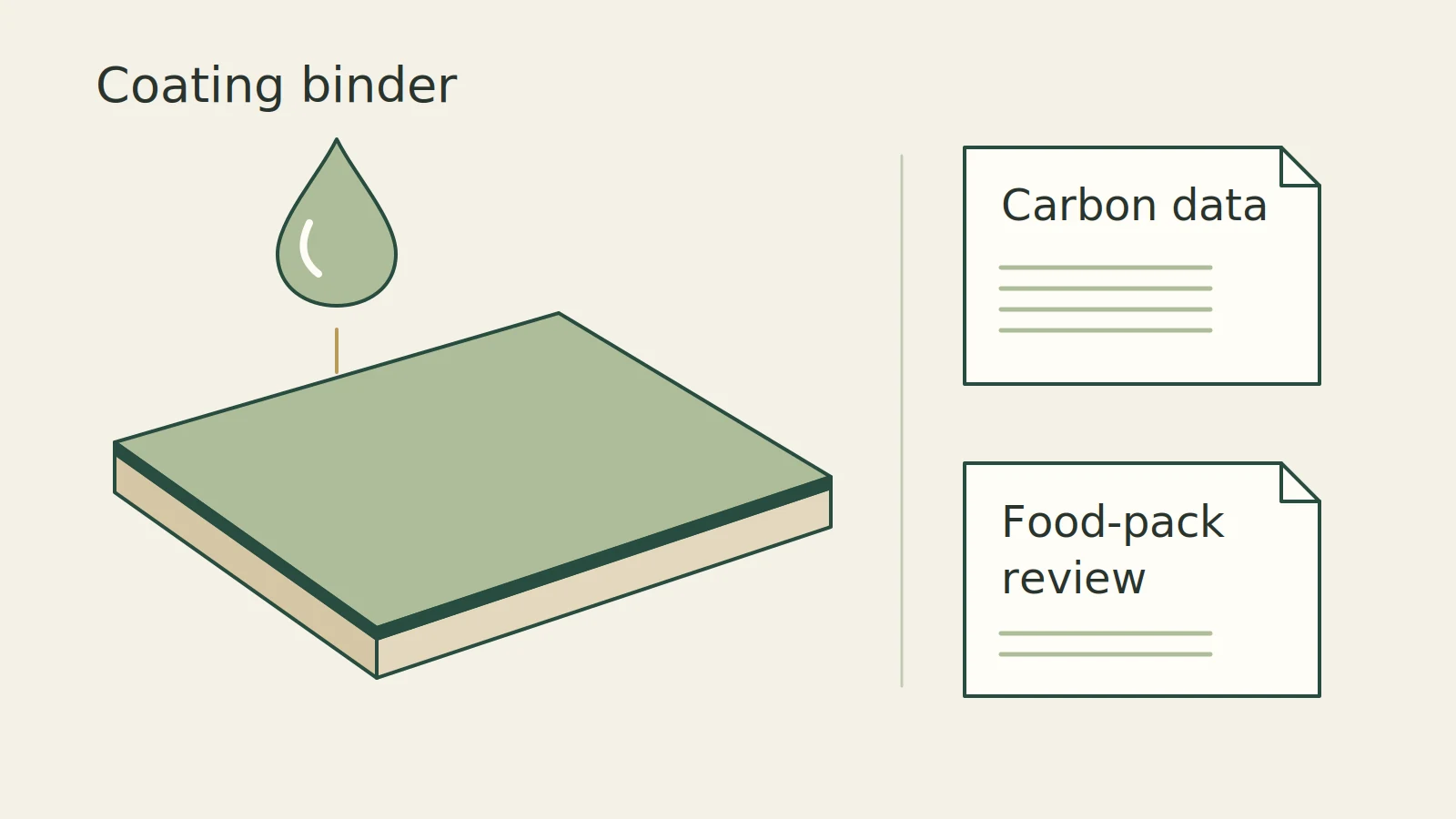
BASF Paper Coating Dispersions: Carbon Claims and Food-Pack Checks
BASF’s reduced-PCF paper coating announcement needs two reviews: product carbon data and the intended food-pack application. Check the boundaries before switching.
Read the guide