
About Naturally Iowa Packaging Review
Naturally Iowa Packaging Review is a food and beverage packaging publication operated by DeltaSpark, with guides on materials, equipment and purchasing.
Packaging knowledge for practical decisions
Naturally Iowa Packaging Review is a food and beverage packaging publication operated by DeltaSpark. We publish guides for equipment buyers, business owners, plant managers, and technical teams who need to understand packaging options and prepare better purchasing decisions.
What we cover
Our coverage connects packaging materials and formats with the equipment used to fill, close, label, and handle them. Topics include dairy and beverage packaging, bottle materials, filling methods, capping and sealing, labeling, packaging-line planning, and equipment procurement.
We also examine historical packaging examples where they help explain a material choice, an application, or a question that remains relevant to buyers.
How we develop content
Our editorial approach is to explain practical questions using identifiable sources, including technical documentation, published research, industry reporting, and relevant standards or regulatory guidance.
When discussing performance, we distinguish supplier statements, published findings, illustrative calculations, and documented test results. A literature-based guide is not presented as a hands-on equipment test. Recommendations identify their assumptions and the requirements that readers should verify for their own products, packaging, and operating conditions.
Content is published under real contributor names or an editorial byline that does not imply unverified professional qualifications.
Who operates this website
DeltaSpark is responsible for the operation and editorial management of this publication. We do not present the site as free of commercial interests. Relevant ownership, sponsorship, referral, or supplier relationships are disclosed with the content to which they apply.
This publication is not affiliated with the dairy business historically associated with this domain. Historical company and product references are provided as documented context, not as statements about our ownership, manufacturing history, staff, or current product availability.
How the publication is organized
The site has five sections. Each one starts from a different question a buyer or technical reader tends to ask, and the sections are meant to be read in combination.
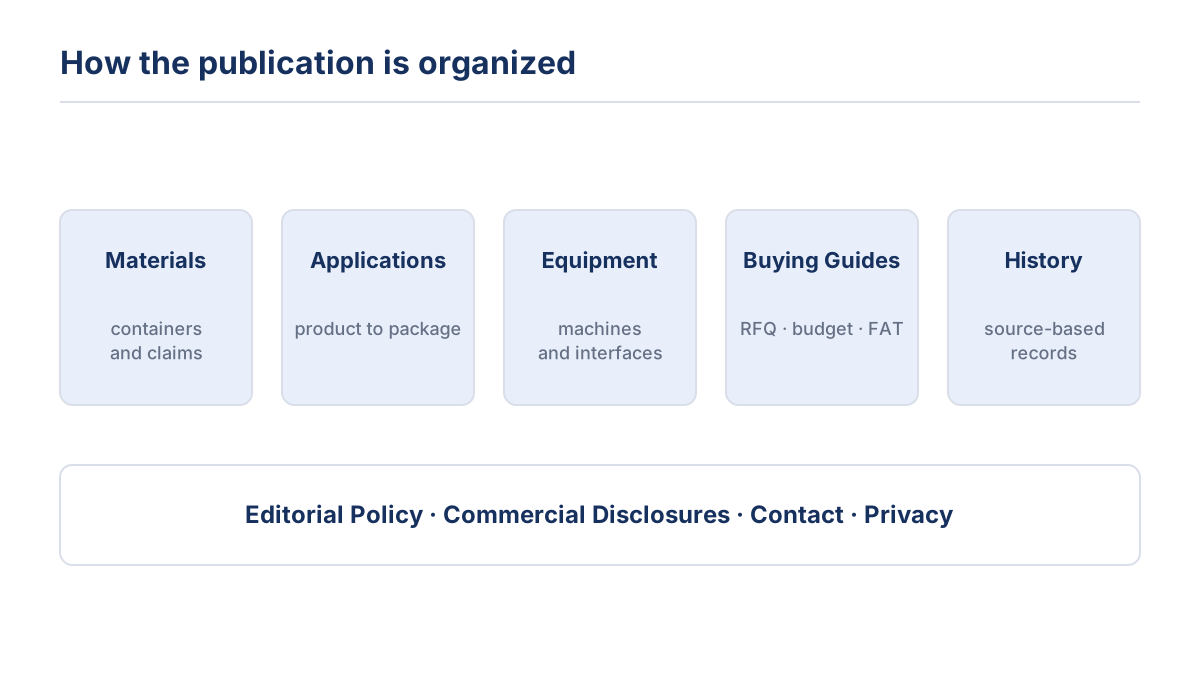
- Materials covers containers and claims. These guides compare bottle and packaging materials, such as PLA vs PET bottles and compostable packaging, and look closely at what a material label does and does not establish.
- Applications goes from product to package. Milk, yogurt, juice, and bottled water each impose different requirements on the container and the line, and these guides start from the product.
- Equipment deals with machines and their interfaces: filling methods, capping, labeling, and cup filling and sealing. The emphasis is on how a machine meets a container, a closure, or a label, because that is where many problems appear.
- Buying Guides supports the purchasing process with a request-for-quotation structure, a budget breakdown, and factory acceptance testing (FAT) preparation.
- History holds source-based records about the dairy business historically associated with this domain.
How to use a guide
Most guides follow the same layout, so you can find the part you need without reading from the top.
A guide opens with a short summary and a scope box that lists what the article covers and what it leaves out. Read the scope box before the body: a guide that excludes supplier recommendations says so there, and you should not expect to find them later in the text.
In the body, statements are tied to the kind of evidence behind them. A supplier’s description of its own equipment is attributed to the supplier. Calculations are marked as illustrative. The Editorial Policy lists the labels and how they are applied.
Equipment and buying guides usually include a list of questions to ask suppliers and a list of items that need project-specific validation. These lists are written to be copied into your own documents, such as a request for quotation. The Packaging Machine RFQ Checklist is the most direct example.
Each article ends with its sources, giving the publisher and, where available, the date of each one, followed by suggestions for further reading within the site. Articles do not carry a publication date; where timing matters, the date belongs to the evidence, such as the edition of a standard or the date of a report.
What you will not find here
Knowing these limits will help you decide how to use the site.
- Factory quotes, prices from suppliers, or lead times. This is not a sales desk.
- Rankings of suppliers or machines. Guides explain how to compare options and do not name winners.
- Hands-on test reports. Guides are based on documentary research unless an article states that it describes a real test and gives the conditions.
- Validation of your product or process. Nothing here substitutes for qualified checks on your own materials and equipment.
- Consumer, nutrition, or health content. The audience is people who buy, run, and plan packaging equipment.
The historical pages
The History section is separate research. It looks at a dairy business that once used this domain, using dated press reports and archived web pages, and it separates what a source says from what has been confirmed. These pages are not a company history of DeltaSpark or of this publication. The overview at Naturally Iowa, Dairy and PLA Packaging explains the approach, and the older addresses /about_faq.html and /greenbottlespringwater.html now lead to related historical records.
Questions and corrections
Readers can submit questions, source material, or correction requests through our Contact page. Please identify the article and the statement concerned so that the information can be reviewed.
Explore the publication
- Sections: Materials, Applications, Equipment, Buying Guides, History
- Policies: Editorial Policy, Commercial Disclosures