
Naturally Iowa and PLA Dairy Packaging: A Historical FAQ
A source-based historical FAQ on Naturally Iowa's PLA milk bottles, with dated company and press claims kept apart from what buyers must verify today.
What this article covers
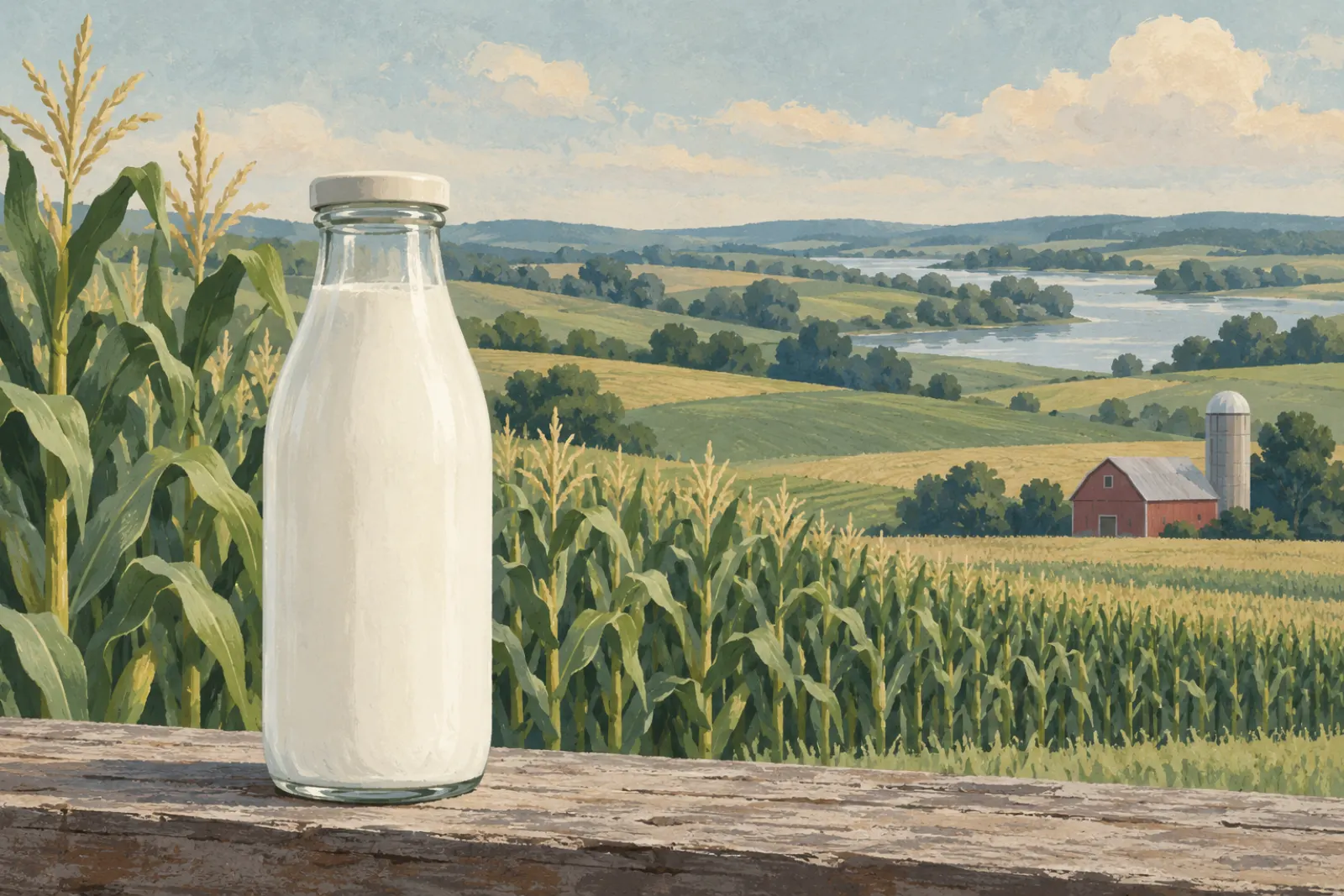
This page answers common questions about the historical Naturally Iowa dairy and its use of PLA bottles, using dated press reports and archived company statements. It separates what was claimed at the time from what a packaging buyer should check today.
Covered
- What the historical Naturally Iowa did, according to dated press and archived company pages
- Reasons and conditions the company and trade press gave for PLA milk bottles between 2004 and 2009
- A short list of what a buyer should verify today
Not covered
- Current material specifications, certifications or performance claims for any PLA product
- Any statement about the company's later history beyond what the cited sources report
- A reproduction of the original company FAQ
What this page is
Internet Archive captures from 2007 to 2009 show that this web address hosted a company page titled “Frequently asked questions about PLA packaging.” The company was Naturally Iowa, a dairy based in Clarinda, Iowa. This page is not that FAQ. It is a new reference written by Naturally Iowa Packaging Review, and the notice above applies throughout.
The questions below are the ones a packaging reader is likely to ask about the historical company. Each answer names its source and date. Statements the company made about its own packaging are presented as claims, not verified facts. For the full dated record, see our source-based overview of Naturally Iowa’s history. For the company’s later water bottle project, see the Green Bottle Spring Water case study.
How this page relates to the old address
The URL /about_faq.html once hosted the company’s own FAQ about PLA packaging. This page does not restore that FAQ. It is a new reference, written independently. Where we quote the archived FAQ, the quotes are short and attributed to a dated capture held by the Internet Archive. Naturally Iowa Packaging Review is a DeltaSpark publication and is not affiliated with the dairy business.
What did the historical Naturally Iowa do?
Sources describe the company in several ways, and they do not fully agree.
- A November 2004 BeverageDaily report said the products “get their start on the farms of southwestern Iowa” and called the business a “co-op dairy.”
- A June 2005 Dairy Foods article described Naturally Iowa, LLC, of Clarinda as “a consortium of Midwest dairy farms.”
- A May 2008 Dairy Foods profile listed Clarinda, Iowa as headquarters and 2002 as the founding year, and said the company went public in September 2007.
Per the Packaging World report of December 31, 2004, the company bottled “at its own plant under two brands”: Naturally Iowa all-natural milk and Rolling Hills Organic Farms organic milk. The May 2008 Dairy Foods profile said organic milk in PLA bottles reached grocery shelves in October 2005, after the company’s 28,500-square-foot processing plant began operation. The same profile said the company “currently manufactures PLA bottles for sale to other processors.”
The sources differ on how the business was organized (co-op, consortium, then a publicly traded company) and on the founding year. The company’s archived about page pointed to 2002, while a management page described it as organized in 2003. We do not resolve that difference here.
How was it connected to PLA dairy packaging?
PLA is the abbreviation for polylactic acid, a plastic that Packaging World in 2004 described as derived from corn. The company’s milk was packaged in bottles made from it.
- BeverageDaily reported in November 2004 that the milk came “in a half-gallon grip bottle of NatureWorks PLA.”
- Packaging World reported that the half-gallon bottles were stretch blow molded of NatureWorks polylactide from Cargill Dow, and that “The 1/2-gal bottles are produced by Liquid Container/Plaxicon using stock molds.”
- In June 2005, Dairy Foods described “the first dairy application for NatureWorks PLA plastics” as an organic milk bottled in Iowa.
- By May 2008, Dairy Foods reported that the company made PLA bottles for other processors.
Resin supplier naming also varies by source. A 2004 report refers to Cargill Dow, while the company’s later pages refer to Cargill, Inc. and to NatureWorks. This page uses the name each source used.
What reasons were given for the packaging at the time?
The reasons below are claims made by the company or reported from it, not findings by this publication.
On brand differentiation, company president Bill Horner said in the November 2004 BeverageDaily report: “The natural bottle is our hook - without it, we would only have half the story.” The company slogan, per the same report, was “We milk the cows and grow the bottles.”
On plant-based origin, the company’s archived FAQ, captured in October 2007, stated that “PLA starts (and ends) as an all-natural substance, such as corn.” Packaging World in 2004 likewise said PLA is derived from corn.
On product quality, the same archived FAQ stated that the bottles “met or exceeded all tests for aroma, flavor, microbiological quality, and vitamin retention” compared with traditional PET containers. It attributed the testing to Michigan State University and Iowa State University.
On certification, the FAQ also stated that NatureWorks PLA technology “has already earned certification from the Biodegradable Plastics Institute (BPI).”
We have not reviewed the underlying test reports and did not verify the certification claim, so we cannot confirm either.
What application conditions did historical reports mention?
Each condition below is tied to a source and date, and none should be read as a current technical guarantee.
Scroll horizontally for any hidden columns →
| Condition | What was reported | Source and date |
|---|---|---|
| Product and size | Natural and organic milk in half-gallon bottles | BeverageDaily, Nov. 2004; Packaging World, Dec. 2004 |
| Forming method | Stretch blow molded PLA | Packaging World, Dec. 2004 |
| Container source | Bottles produced by Liquid Container/Plaxicon with stock molds | Packaging World, Dec. 2004 |
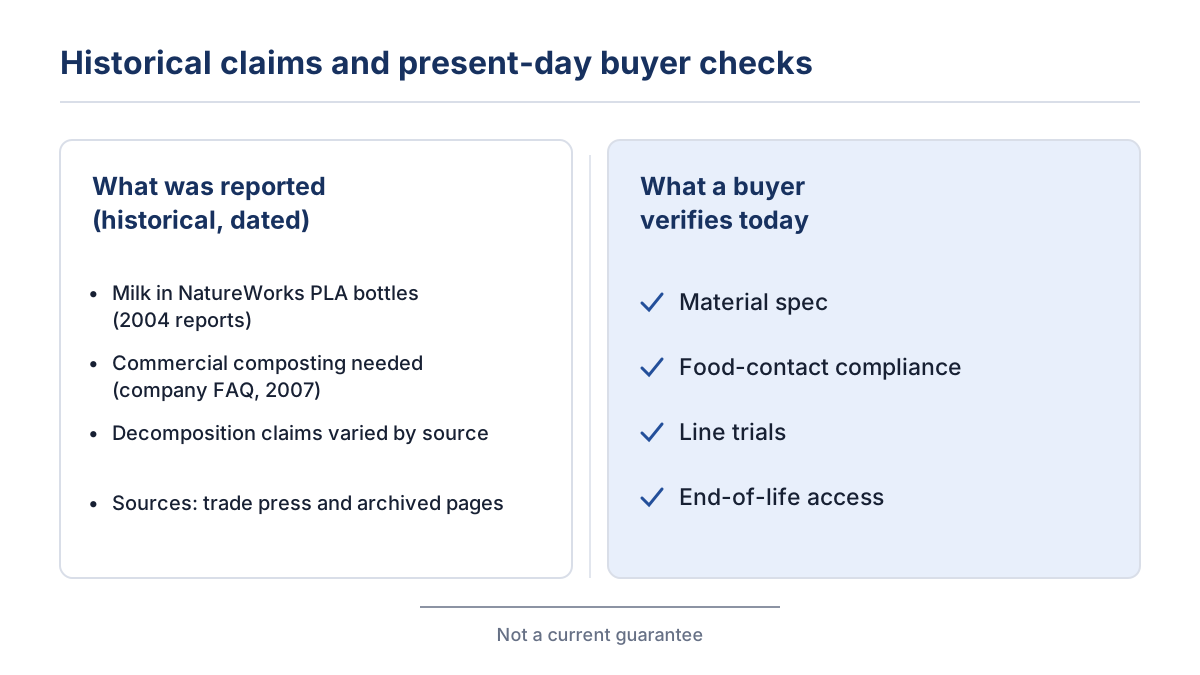
| Composting | PLA “breaks down in a commercial composting facility” | Packaging World, Dec. 2004 |
| Refrigerator question | Answer was “No”; composting does not start without conditions “such as those found in commercial composting facilities” | Company FAQ, captured Oct. 2007 |
| Disposal options | Recycling “along with regular plastic,” a “clean burn” option, and commercial composting, including facilities “in the state of Iowa” | Company FAQ, captured Oct. 2007 |
The company’s own pages were not consistent. Its about page, captured in October 2007, described a plastic that “biodegrades in the compost bin or local landfill.” That statement conflicts with the company’s FAQ, which said commercial composting conditions were necessary. Press reports of decomposition also varied: Radio Iowa reported in June 2007 that the bottles disappear “in about 100 days.” A September 2008 Omaha World-Herald story, reposted by IATP, said the bottles were “biodegradable in less than a year.” We repeat these only as dated claims. We do not treat any of them as established decomposition times.
What remains unconfirmed?
- The founding year. The company’s archived about page pointed to 2002, while a management page described it as organized in 2003.
- Which name the resin partner should carry. Sources use Cargill Dow, Cargill and NatureWorks, and they do not reconcile them.
- The test reports behind the company’s quality and certification statements.
- How the bottles were actually handled after use, and how much was composted. We found no source that reports collection or composting volumes.
- Anything about the dairy operations after 2010. We found no source, and we do not speculate.
What should a buyer verify today?
This section is editorial analysis, written by us. It is not a description of the historical company.
Historical coverage shows what one company said about one packaging format in one period. It does not show that any bottle, resin grade or line meets today’s requirements. A buyer considering PLA or any compostable container should check the following.
- Material specification: request the supplier’s current data sheet for the resin and the finished container, including heat tolerance and barrier properties. See PLA food packaging.
- Food-contact compliance: ask for the declaration that applies to your product, market and temperature.
- Environmental claims: any “compostable” or “biodegradable” wording on a current product needs substantiation and certification. Our guide to compostable packaging covers the FTC Green Guides.
- End-of-life access: check whether a collection and commercial composting route actually exists for your customers. The historical FAQ itself tied composting to commercial facilities.
- Product fit: for liquid dairy, see milk packaging for container, cold-chain and light-barrier questions.
- Line trials: run your own containers, caps and product on the filling line before committing. The liquid filling machine selection guide and the packaging machine RFQ checklist list what to put in writing.
Sources and method
This article is based on documentary research of the sources listed. It is not a hands-on equipment test. Supplier statements and editorial judgement are identified in the text.
- Brand awareness driven by natural packaging Supports: farm origins, 'co-op dairy' description, half-gallon NatureWorks PLA bottle, company president's quote and slogan.
- PLA 'milks' new market Supports: November 2004 announcement, two brands, bottle supplier, stretch blow molding, commercial composting statement. Read via a Wayback copy.
- Wrap it Up! Supports: 'consortium of Midwest dairy farms' description and 'first dairy application' statement.
- DFR Snapshot Supports: October 2005 shelf date, 28,500-square-foot plant, PLA bottles made for other processors, 2002 founding date, September 2007 public listing.
- Frequently asked questions about PLA packaging (Naturally Iowa company FAQ) Supports: company statements on corn origin, refrigerator question, commercial composting, disposal options, testing and BPI certification. Wording may differ in other captures.
- About Naturally Iowa (company about page) Supports: company's own history wording, including the 'compost bin or local landfill' statement that differs from its FAQ.
- Management team (company page) Supports: the company's statements that it was 'founded in 2003' and 'organized in 2003'.
- Iowa company uses milk bottles made from corn Supports: the 'about 100 days' decomposition claim as reported in June 2007.
- U.S. House uses Iowa bottles made from corn Supports: the 'biodegradable in less than a year' claim as reported in September 2008.
Related modern guides
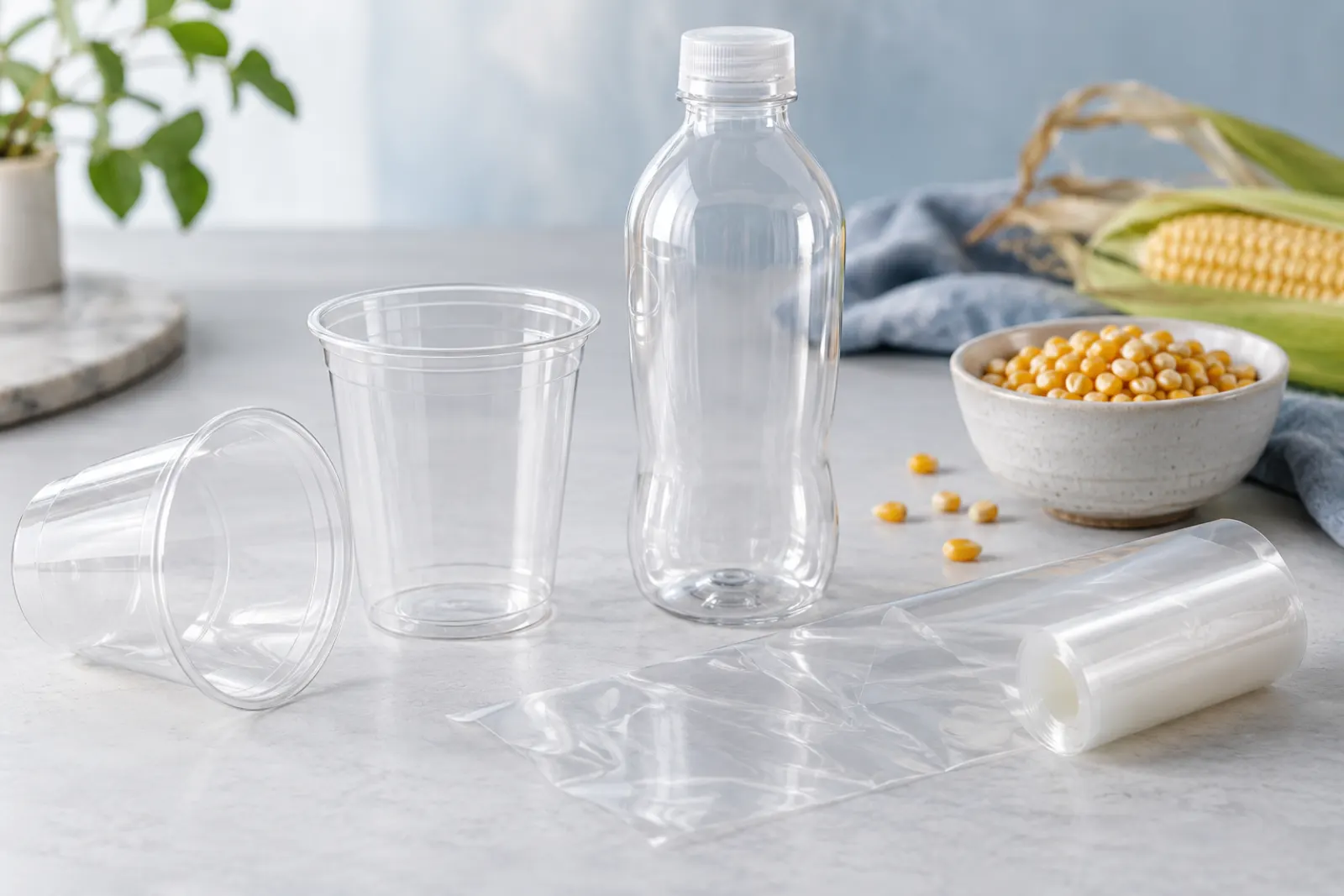
PLA Packaging for Food and Beverages: Uses, Constraints and Buyer Questions
PLA food packaging explained for buyers: where polylactic acid fits, its heat and barrier limits, end-of-life conditions, and what to request from suppliers.
Read the guide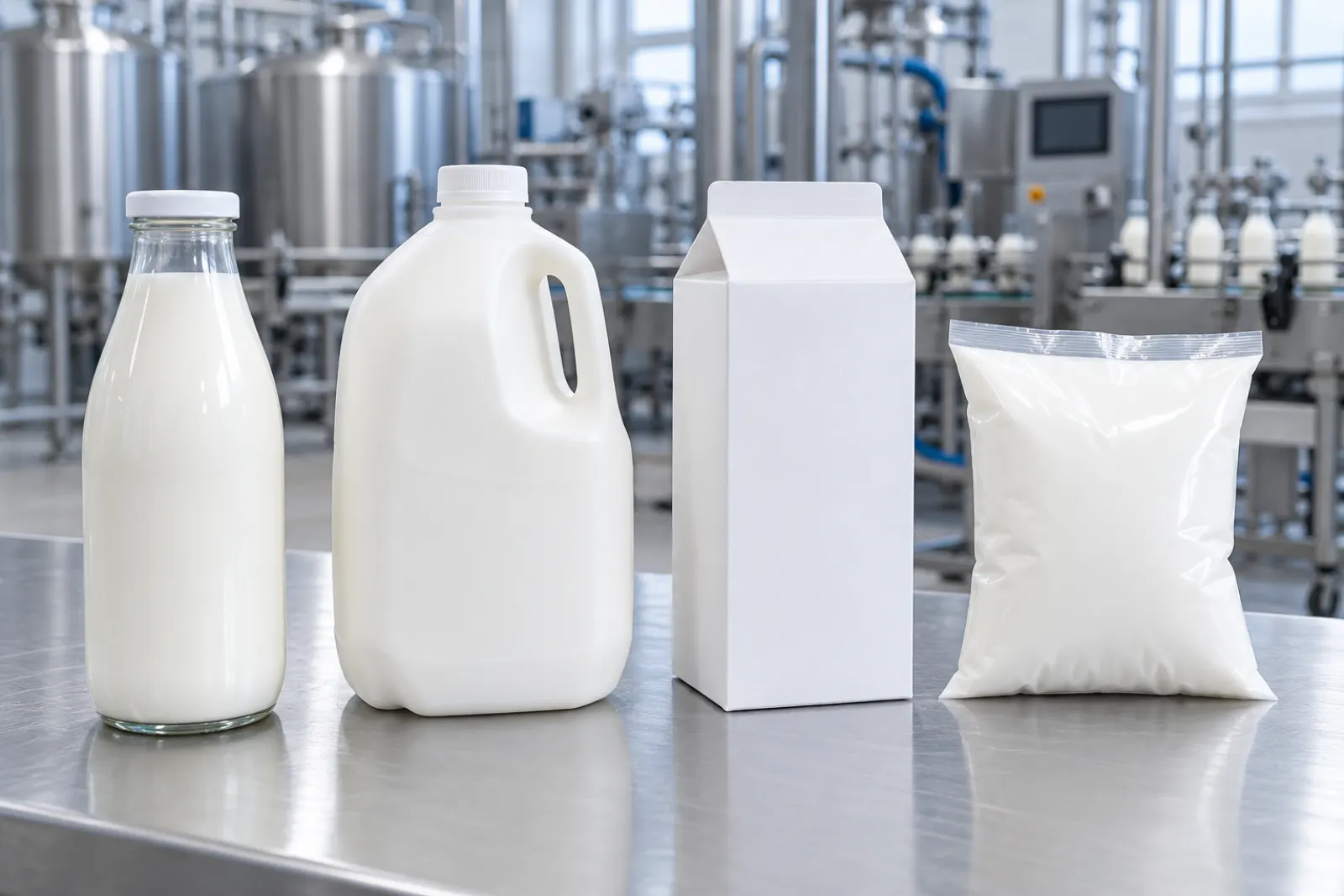
Milk Packaging Formats: Bottles, Cartons and Pouches
How to choose a milk packaging format by heat treatment, cold chain and light exposure, and what bottle, carton and pouch formats mean for filling equipment.
Read the guide
How to Choose a Liquid Filling Machine for Food and Beverages
A buyer's framework for choosing a liquid filling machine: project inputs, filling approaches compared, what to validate with samples, and supplier questions.
Read the guide
Packaging Machine RFQ Checklist for Food and Beverage Buyers
A copy-ready request-for-quotation structure for packaging machines, with eight modules of fields to fill in and a method for comparing quotes line by line.
Read the guide
Naturally Iowa’s Dairy and Packaging History: A Source-Based Overview
A source-based timeline of the historical Naturally Iowa dairy and its PLA bottles, 2002 to 2011, marking what is reported, claimed or unknown.
Read articleMore in History
Green Bottle Spring Water: A Historical Packaging Case Study
A source-based case study of Green Bottle Spring Water, a PLA-bottled water of 2008 to 2011: dated company claims, evidence limits and open questions.
Read article