
Milk Packaging Formats: Bottles, Cartons and Pouches
How to choose a milk packaging format by heat treatment, cold chain and light exposure, and what bottle, carton and pouch formats mean for filling equipment.
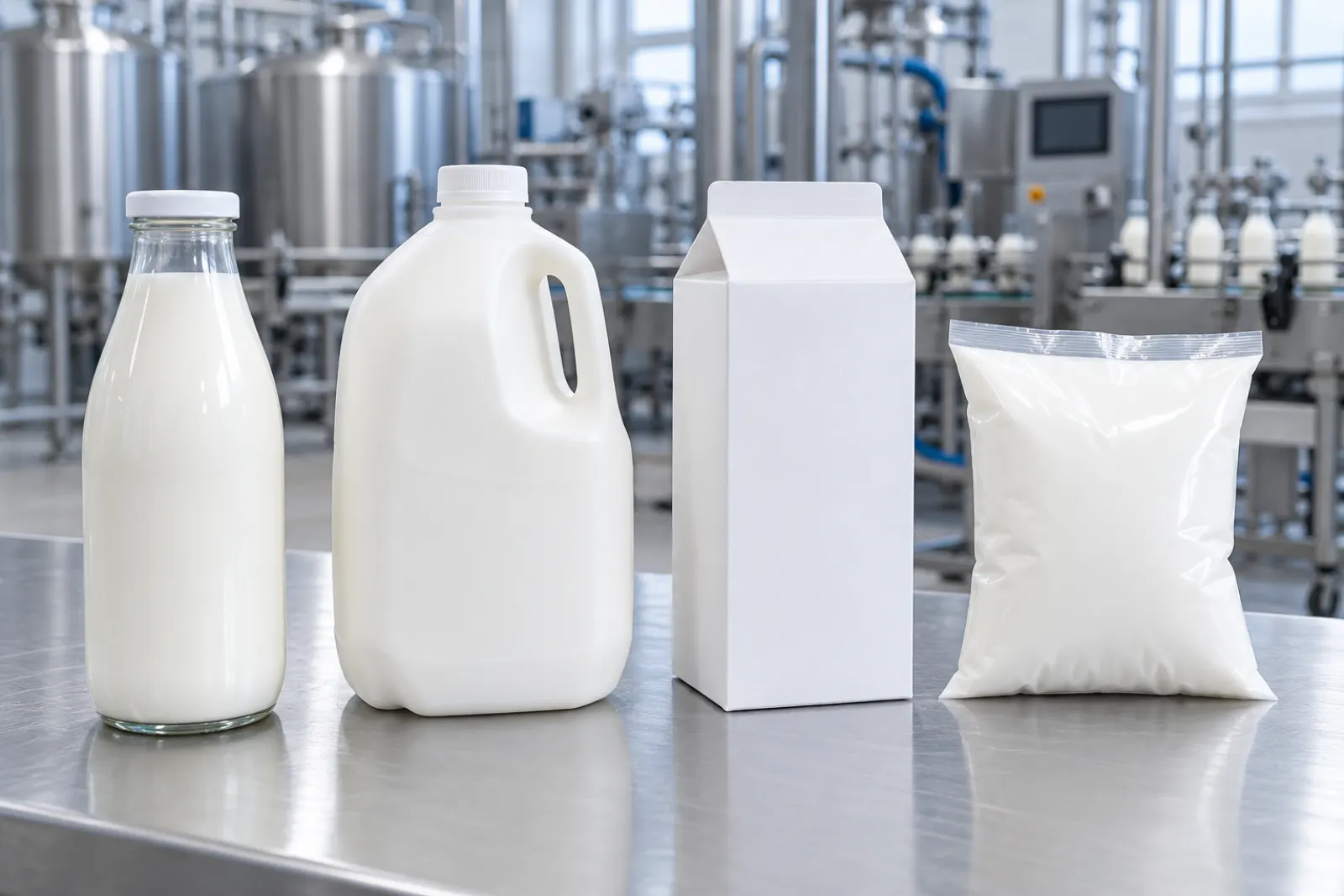
What this article covers
This guide helps dairy owners, plant managers and engineers match a milk packaging format (bottle, gable-top carton or pouch) to the product's heat treatment, distribution temperature and light exposure before choosing filling equipment.
Covered
- Pasteurized, extended shelf life (ESL) and UHT aseptic milk as concepts that drive packaging choice
- Bottle, gable-top carton and pouch formats and the equipment type each implies
- Light protection, cold chain and hygiene requirements shared by all formats
Not covered
- Milk processing design, pasteurizer sizing and regulatory approval of a specific plant
- Shelf-life claims, microbial safety outcomes and nutrition or consumer topics
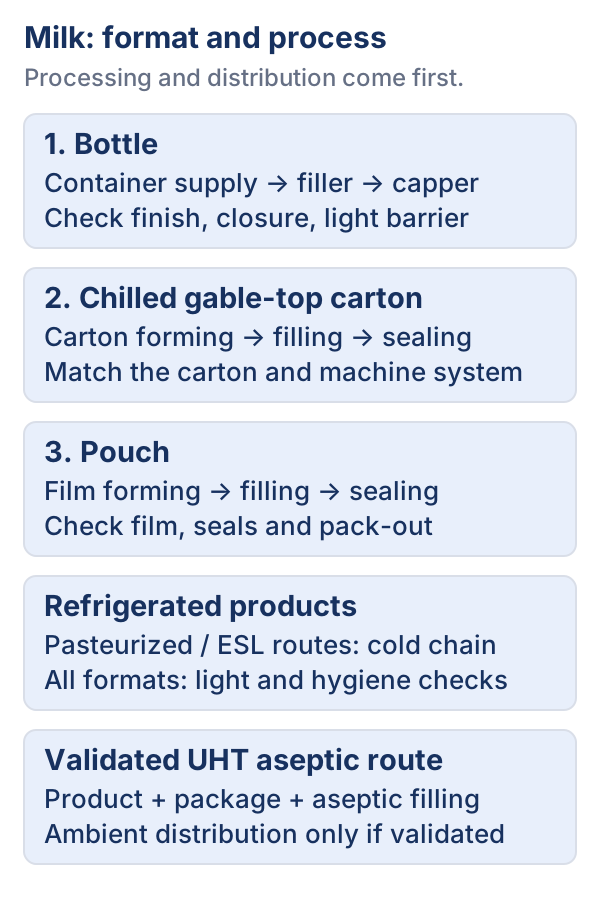
Choosing a milk package before its processing and distribution route can leave the line unable to support the required hygiene or light protection. Set pasteurized, ESL or UHT aseptic status first, then compare formats and their matching equipment.
Scroll horizontally for any hidden columns →
| Format | Equipment family | Check before selecting |
|---|---|---|
| Bottle | Container supply, filler and capper | Finish, closure and light transmission |
| Chilled gable-top carton | Dedicated carton forming, filling and sealing | Carton specification and refrigerated handling |
| Pouch | Film form-fill-seal | Film, seal integrity and secondary packing |
Pasteurized and ESL milk use chilled distribution in the routes discussed here. Ambient UHT distribution requires a validated aseptic product/package/filling system; changing the container alone does not provide it.
Step 1: Start with the product category
Three heat-treatment categories drive most packaging decisions. They are described here at concept level, from published sources.
Scroll horizontally for any hidden columns →
| Category | What the sources say | Packaging implication |
|---|---|---|
| Pasteurized (HTST) | The Grade “A” Pasteurized Milk Ordinance (PMO) is the national reference for Grade A milk, covering pasteurization conditions and standards for containers and closures, according to Penn State Extension. | Chilled distribution. Filling hygiene and post-pasteurization contamination control are central. |
| ESL (extended shelf life) | A 2017 review states that ESL milk is heated more intensely than HTST pasteurization but less than UHT, and that it has no single formal definition. The same review reports that most ESL milk is filled under ultra-clean, not aseptic, conditions. | Chilled distribution. The filler, container and closure are treated as part of the process, not just as a pack-off step. |
| UHT, aseptic | Food Technology magazine describes aseptic systems as sterilizing product and package separately and combining them under sterile conditions. | Package and filler must support aseptic operation. Ambient distribution is possible only when the whole system is validated for it. |
Two points from the literature matter for equipment buyers. First, the 2017 review states that ultra-clean filling leaves a risk of post-processing contamination, often from biofilms on filler nozzles, so settle nozzle design and cleaning early. Second, Food Technology magazine states that ESL packages “approach but not necessarily achieve” sterility and that low-acid ESL products must be refrigerated. The review also states that storage temperature has a strong effect on shelf life, and that real cold chains often run warmer than the recommended range.
None of this tells you how long your milk will last. That depends on raw milk quality, heat treatment, filling hygiene, package integrity and temperature history, which are matters for your own process validation and your regulator.
Step 2: Define light and cold-chain exposure
Light exposure is an input to the package specification. The cited Dairy Foods article reports light-related flavor changes in milk and describes paperboard and plastic light-protection options. Request transmission data for your exact bottle, pigment or laminate under the intended display conditions; the trade report is not a test of your package.
Cold chain is the other exposure. If the product needs refrigeration (as the sources above state for pasteurized and ESL milk), the packaging must tolerate condensation, the wet handling of crates or cases, and any cold-room labeling conditions. See labeling wet bottles if you plan to label cold containers.
Step 3: Compare the three formats
Bottles: HDPE, PET and glass
Bottles are the most flexible format for varied volumes and a reclosable cap. The material (HDPE, PET or glass) affects light protection, weight, breakage risk and plant handling. For a qualitative comparison, see beverage bottle materials. Review the resin and pigment system alongside the intended light exposure before comparing costs.
Equipment implications: a bottle line needs a way to present containers (unscrambler or blow-molded supply), a filler suited to a fat-containing liquid that may foam, a capper matched to the closure, and often tamper-evidence and induction-seal steps. Selecting those machines is covered in how to choose a liquid filling machine and bottle capping machine selection.
Plastic milk packaging: HDPE, PET and the light question
When buyers ask which plastic to use for milk, the useful answer is a set of checks rather than a resin name. The sources cited on this page support three points:
- HDPE jugs: The Cornell work summarized by Dairy Foods was carried out on milk in HDPE jugs under retail-like lighting, and the same article states that translucent plastic does not block enough light on its own. If you choose HDPE, the light-protection system (pigment, additive or label coverage) is part of the specification, not decoration.
- Clear plastic, such as PET: Dairy Foods lists UV blockers in clear plastic and opaque pigments as the plastic options for light protection. A clear bottle shows the product, which can be a reason to choose it, but it moves the light question onto the additive package and the retail display conditions.
- Glass: Choosing glass changes weight, breakage handling and the return or recycling loop more than it changes the filler principle. The bottle materials comparison covers those trade-offs.
For any plastic, ask the container supplier for the resin grade, the light-transmission data for the exact color and wall thickness, and the food-contact documentation for the bottle and closure.
Gable-top cartons
Gable-top cartons are paperboard with a polymer coating, formed and sealed on dedicated carton machines. According to Tetra Pak’s documentation, its Tetra Rex package is used for chilled products including dairy, and the filling machine range for it includes entry-level and “extended hygiene” models. That is the supplier’s own description. For a buyer, the consequence is that carton machines are typically a package-specific system: the machine, the carton material and the opening or cap are specified together.
Equipment implications: you buy carton blanks or sleeves from a carton supplier, the machine forms, fills and seals them, and the supplier relationship tends to cover consumables, service and sometimes the hygiene specification. Ask which parts of the sanitation concept are inside the machine and which are your responsibility.
Pouches
The Canadian Encyclopedia describes polyethylene pillow pouches for fluid milk in parts of Canada and notes that bag size changes involve the film-cutting settings. Hood Packaging’s supplier documentation states that its milk pouch films are for pasteurized and UHT milk and that its vertical form-fill-seal machine uses germicidal UV disinfection; it also describes an aseptic variant. These are supplier statements, not verified claims.
Equipment implications: a pouch line is a form-fill-seal machine, not a filler plus capper. Film quality, seal integrity and secondary packaging (a bag of pouches, a crate or a case) take the place of the cap and label. For the wider change this causes in a plant, see bottle vs. pouch packaging.
Side-by-side summary
Scroll horizontally for any hidden columns →
| Consideration | Bottle | Gable-top carton | Pouch |
|---|---|---|---|
| Light protection | Depends on resin and pigment or layer system | Paperboard is described as generally blocking enough light | Depends on film; confirm opacity requirement |
| Reclosure | Cap | Cap or fold-open top, depending on package | Typically cut open; pitcher or clip used by the end user |
| Equipment type | Container supply, filler, capper, labeler | Carton form-fill-seal | Pouch form-fill-seal |
| Changeover | Neck finish, cap and sometimes bottle shape | Package size sets machine format parts | Film width, bag length and fill volume |
| Package supply | Bottles or preforms, caps, labels | Carton material from a defined supplier | Film on reels |
| Typical cold-chain handling | Crates or cases; condensation on bottle surface | Cases; paperboard sensitivity to moisture should be reviewed | Bag-in-bag or crate; leak and puncture handling |
This table is qualitative and compares conceptual categories. It does not rank formats; the right one depends on your volume, distribution and capital constraints.
Milk carton packaging: what the layers do
A milk carton is a laminated package, and the layer structure is what separates a chilled gable-top from a carton meant for ambient UHT distribution. Carton suppliers describe the structure in their own documentation, so treat the following as supplier statements rather than independent findings.
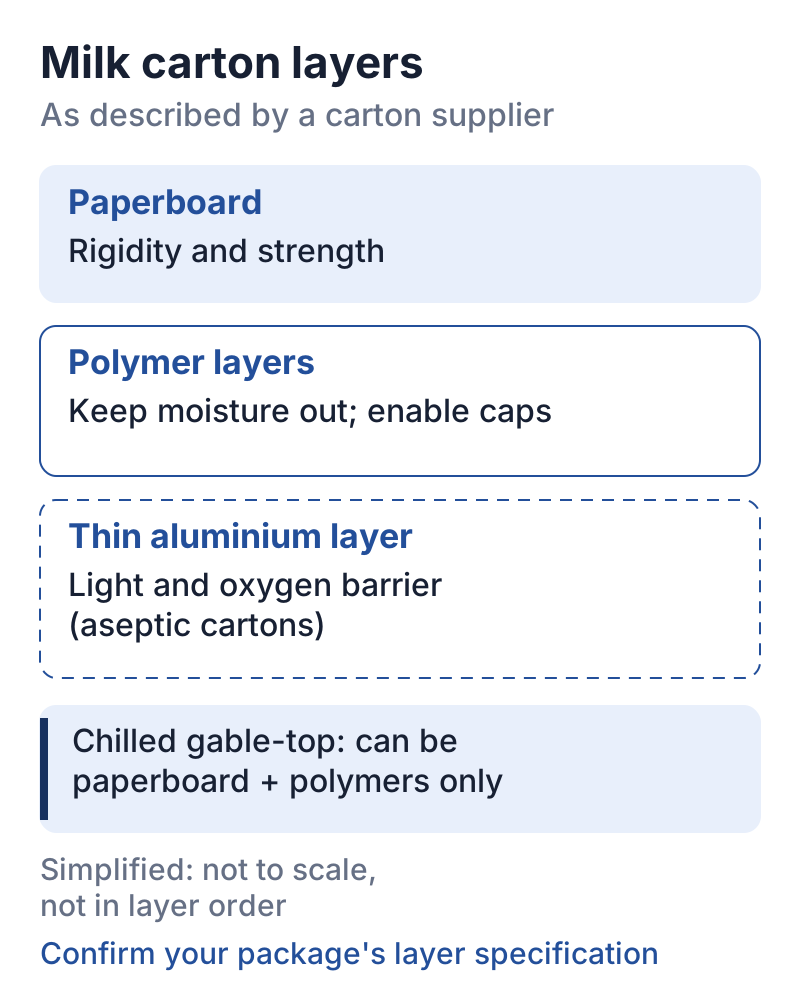
- Paperboard: Tetra Pak states that paperboard gives the package its rigidity and strength and makes up, on average, around 70% of its cartons. Dairy Foods separately describes paperboard gable-top cartons as generally blocking enough light.
- Polymer layers: According to the same supplier, the polymers keep moisture out and make features such as caps and straws possible. In a chilled supply chain with condensation, these layers do the work that the bare board cannot.
- Aluminium layer (aseptic cartons): Tetra Pak states that an ultra-thin aluminium layer inside its aseptic cartons protects against light and oxygen, and links that layer to keeping perishable food safe without refrigeration. Its chilled Tetra Rex gable-top is described as available made solely from paperboard and plant-based polymers.
What this means for a buyer: the carton specification follows the product category from Step 1. A chilled, pasteurized or ESL product and an aseptic UHT product do not need the same laminate, and the filling machine is usually specified for one family. Ask the carton supplier for the layer specification of the exact package, whether it contains a foil layer, which products and distribution temperatures it is specified for, and the food-contact documentation for each layer that touches the milk.
How a milk packaging machine fills and closes each format
Every milk line performs the same core sequence, but each format puts the steps on different machines. In outline:
Scroll horizontally for any hidden columns →
| Step | Bottle line | Gable-top carton | Pouch |
|---|---|---|---|
| Package supply | Bottles from an unscrambler or an in-house blow molder | Carton blanks or sleeves from the carton supplier | Film on reels |
| Package preparation | Rinsing or other container treatment, if specified | The carton machine forms the carton from the blank | The machine forms the film into a tube |
| Hygiene step | Defined by the filling concept (standard, ultra-clean or aseptic) | Defined by the machine version; the supplier describes “extended hygiene” models | Hood Packaging describes UV disinfection of the film on its machine |
| Fill | Filler suited to a foaming, fat-containing liquid | Fill inside the carton machine | Fill inside the form-fill-seal machine |
| Close | Capper, often with tamper evidence or induction seal | Top seal, with cap or fold-open top | Transverse seal and cut |
| Code and inspect (checks to specify) | Date code, fill level, cap presence | Date code, seal check | Date code, seal and leak checks |
| Secondary packing | Crates, cases or shrink | Cases or crates | Bag-in-bag, crate or case |
For aseptic products, Food Technology magazine describes the product and package being sterilized separately and brought together under sterile conditions, so the package-preparation and hygiene rows become the validated core of the line rather than add-ons. The selection of fillers and cappers for a bottle line is covered in the liquid filling machine guide and the filling methods comparison.
Takeaway: Match the processing category to a documented package and filling system before shortlisting machines.
Step 4: What the format means for the plant
The format also affects the rest of the plant. Before shortlisting equipment, collect the following.
- Product: milk type, fat range, heat-treatment category and target distribution temperature
- Hygiene concept: ultra-clean, aseptic or standard chilled filling, and who validates it
- Container or film: material grade, color or opacity, supplier and food-contact documentation
- Fill volumes and the number of sizes you will run
- Output per hour and shifts, including cleaning time
- Cleaning method (CIP, COP or manual) and the sanitary design standard you expect, for example 3-A or EHEDG-based requirements in the specification
- Closure or seal type and the inspection you expect (seal integrity, leak, fill level, code)
- Secondary packaging: crates, cases, shrink or bag-in-bag
- Cold-room and dock conditions for packed product
- Space, drains, compressed air, steam and chilled water available at the site
Your buyer-side specification for this project should reference the RFQ checklist so quotes are comparable across the three formats.
For historical context, our history section includes a reconstructed FAQ on PLA dairy packaging. It is a historical reference, not current technical guidance.
Which milk packaging is best for your product?
No format is best in general, and this guide does not rank them. A format is the right one when it passes every one of these checks for your product, in this order:
- Product category: Does the package and its filling concept match pasteurized, ESL or aseptic UHT milk? If the product needs aseptic packaging, only formats and machines specified for aseptic operation stay on the list.
- Light exposure: Will the product sit under retail or dock lighting? If so, a paperboard carton or a plastic with a defined light-protection system is a requirement, and the supplier must provide transmission data.
- Cold chain and handling: Can the package tolerate condensation, wet crates and the handling time of your distribution? Paperboard moisture sensitivity, pouch puncture and bottle breakage are the questions to settle here.
- Use pattern: Does the buyer of the milk need a reclosable cap, or is a cut-open pouch or fold-open top acceptable in your market?
- Line and package supply: Can you secure the package supply (bottles, carton material or film) and the matching machine, service and consumables? A carton system typically ties the machine to a defined package supplier.
- End-of-life route: Is there a collection route in your market for the package you choose? Laminated cartons, pouches and bottles may be collected through different streams, or not at all, depending on the market, and any environmental claim needs that route behind it.
If two formats pass all six checks, the choice becomes a question of volume, capital and the plant changes described in Step 4. Packaging design in the visual sense (graphics and label artwork) is outside the scope of this guide. The structural design choices that matter here are light barrier, closure, and the label or print area the format leaves you.
What needs project-specific validation
Published sources give concepts and general ranges. These items need validation on your own product, container and line:
- Heat treatment and filling hygiene: whether your chosen system and cleaning plan meet the requirements of your regulator and process authority. This article does not establish compliance.
- Shelf life: the shelf life you intend to declare, under your actual temperature history. The sources cited here treat shelf life as dependent on many variables.
- Light protection: light transmission of the exact container or film, under your retail or dock lighting.
- Container performance on your filler: wall strength, neck finish tolerance and closure fit. For bottles, ask for sample containers before committing.
- Seal and leak performance: for cartons and pouches, seal integrity under your fill temperature and cooling.
- Foam and fill accuracy: behavior of your actual milk (fat level, temperature, standardization) on the proposed filler.
- Cleaning: confirm that the cleaning cycle reaches all product-contact surfaces, including filler nozzles, which the 2017 review identifies as a contamination site in ultra-clean filling.
- Secondary packaging: crate, case and pallet stability when cold and wet.
- Food-contact and regulatory documentation: needed for every material the milk touches.
Questions to ask suppliers
- Which heat-treatment categories and distribution temperatures is this package or machine specified for, and where is that stated in your documentation?
- Is the machine offered in standard, extended-hygiene, ultra-clean or aseptic versions, and what exactly differs between them?
- How are filler nozzles, product pipes and valves cleaned, and can the cleaning be verified?
- Which sanitary design standards do the product-contact parts follow, and can you supply the documents?
- What documentation do you provide for food-contact materials in the package, film or closure?
- What light-barrier options exist for this container or film, and what transmission data can you supply?
- What are the format parts for each size we plan to run, and how long is a typical changeover?
- Which spare and consumable items are single-source, and what is the lead time?
- What sample-fill or pilot trials can be run with our product, and what will be recorded?
- How are seal or cap integrity and fill volume checked in-line, and what happens to rejected packages?
- What utilities, floor space and drainage does the system require?
- Which acceptance activities (factory and site) are included, and what are the written acceptance criteria?
The filling machine selection guide gives a longer project-data list to send with these questions.
Sources and method
This article is based on documentary research of the sources listed. It is not a hands-on equipment test. Supplier statements and editorial judgement are identified in the text.
- The Grade "A" Pasteurized Milk Ordinance Supports: the PMO is the national reference for Grade A milk processing and covers pasteurization, containers and closures, and aseptic processing and packaging.
- Optimum Thermal Processing for Extended Shelf-Life (ESL) Milk Supports: ESL milk is heated more than HTST pasteurization but less than UHT; most ESL milk is filled ultra-clean rather than aseptically; storage temperature strongly affects shelf life.
- Aseptic and Extended-Shelf-Life Packaging Supports: ESL packages approach but do not necessarily achieve sterility, and low-acid ESL products must be refrigerated.
- New Study Validates Light Blocking Efforts Supports: summary of a Cornell study on light exposure and milk flavor in HDPE jugs, and the packaging options for light protection.
- Tetra Rex carton packages Supports: supplier documentation describing a gable-top carton for chilled products, available made solely from paperboard and plant-based polymers, and the filling machine families that run it. Retrieved 2026-10-06.
- Packaging materials Supports: supplier statement that its cartons combine paperboard (rigidity and strength), polymers (keep moisture out, enable caps and straws) and, in aseptic cartons, a thin aluminium layer that protects against light and oxygen. Retrieved 2026-10-06.
- Milk Bag Supports: description of the polyethylene pillow-pouch milk format used in parts of Canada and why size changes are a machine setting.
- Liquid Packaging & Filling Equipment Supports: supplier documentation on milk pouch films and vertical form-fill-seal equipment, including UV disinfection and aseptic variants.
- Aseptic packaging Supports: aseptic packaging systems for unrefrigerated storage and distribution. Supplier description, not validation of a reader's UHT line. Accessed 2026-10-08.
Next reading
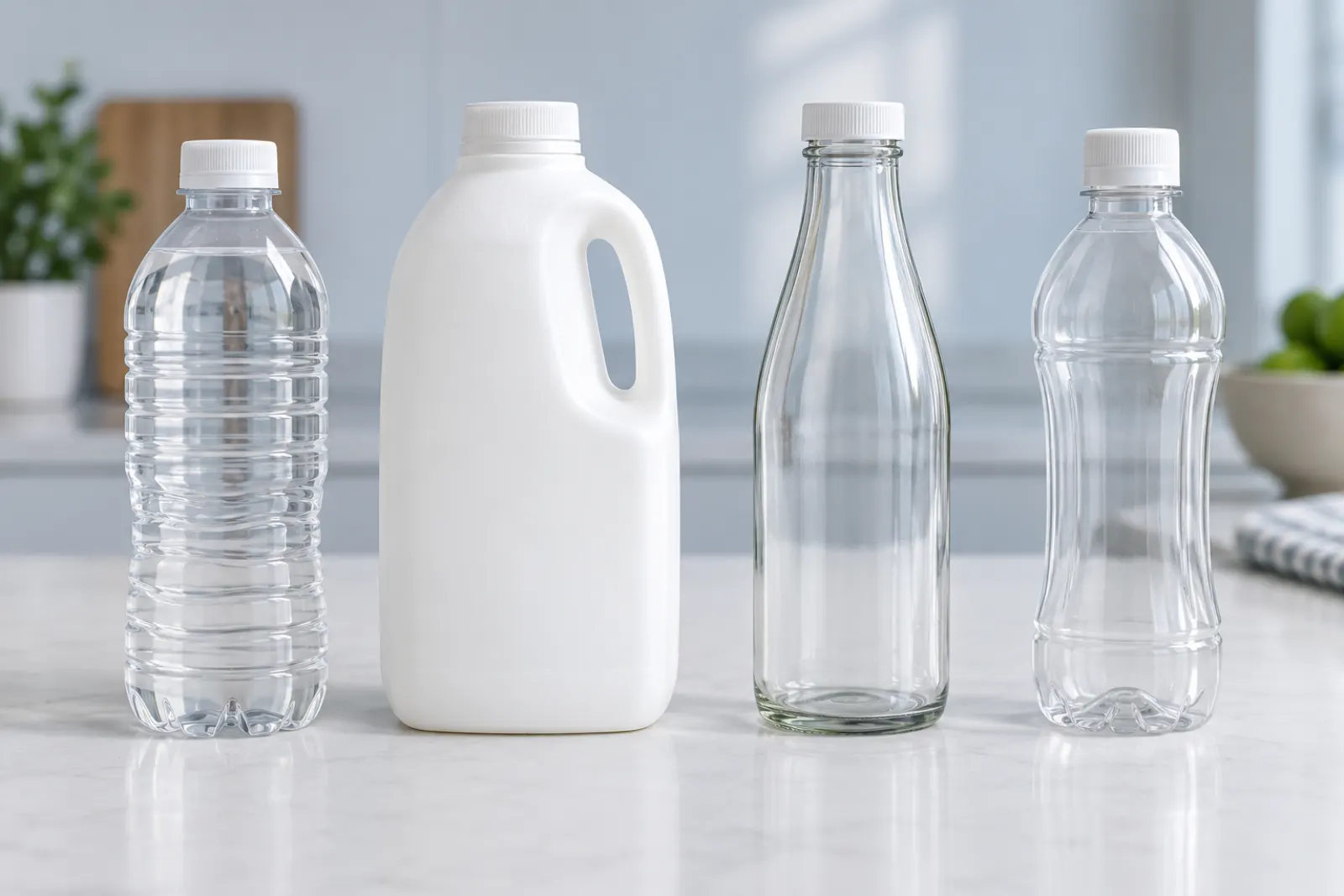
Beverage Bottle Materials: Comparing PET, HDPE, Glass and PLA
Compare beverage bottle materials (PET, HDPE, glass and PLA) by weight, breakage, heat tolerance, gas barrier and recycling infrastructure, with a requirements checklist.
Read the guide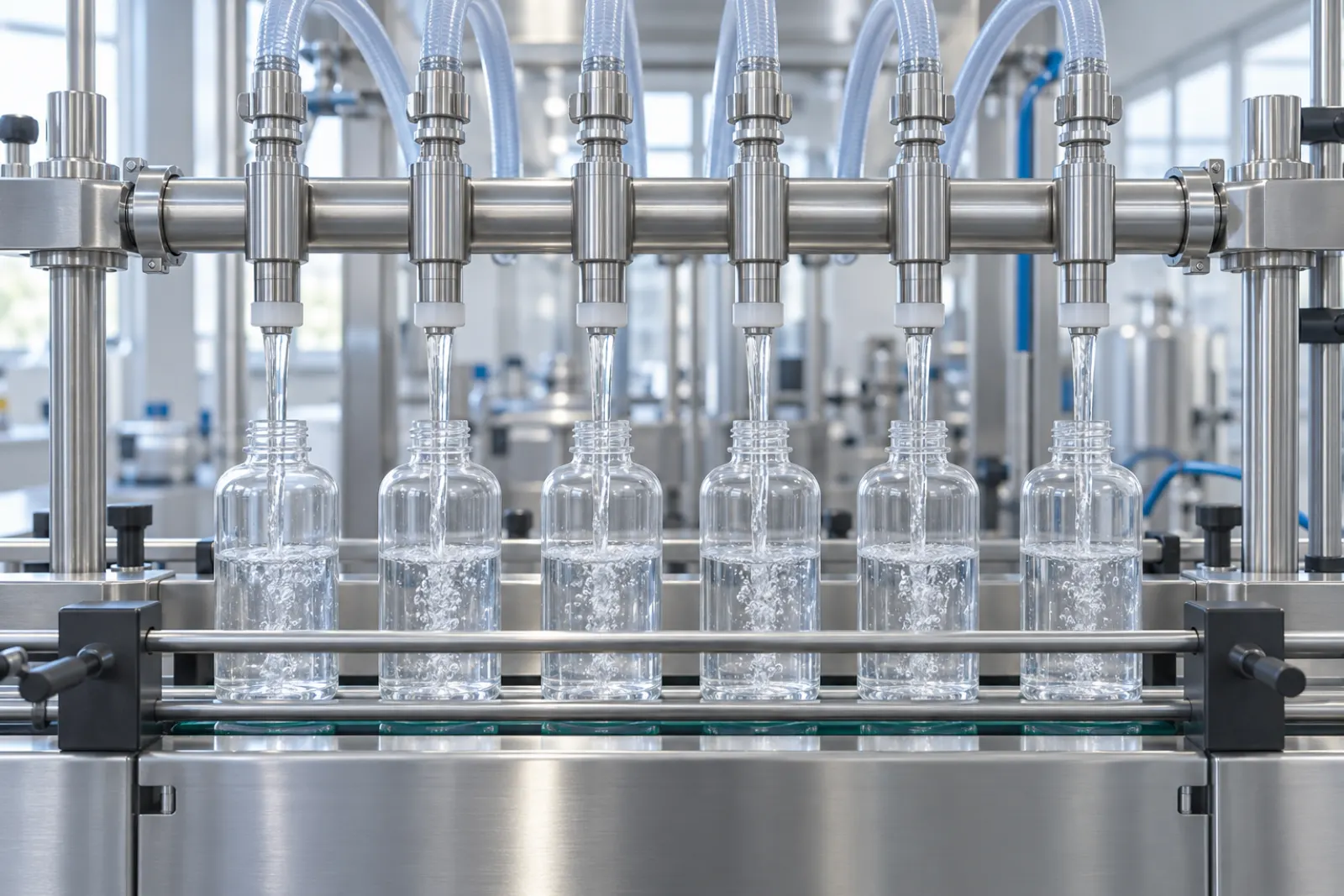
How to Choose a Liquid Filling Machine for Food and Beverages
A buyer's framework for choosing a liquid filling machine: project inputs, filling approaches compared, what to validate with samples, and supplier questions.
Read the guide
Bottle Capping Machine Selection: Caps, Torque and Changeover
How to match a capping machine to the closure and bottle finish: cap types, application vs removal torque, heads, change parts and pre-purchase validation.
Read the guide
Naturally Iowa and PLA Dairy Packaging: A Historical FAQ
A source-based historical FAQ on Naturally Iowa's PLA milk bottles, with dated company and press claims kept apart from what buyers must verify today.
Read articleMore in Applications
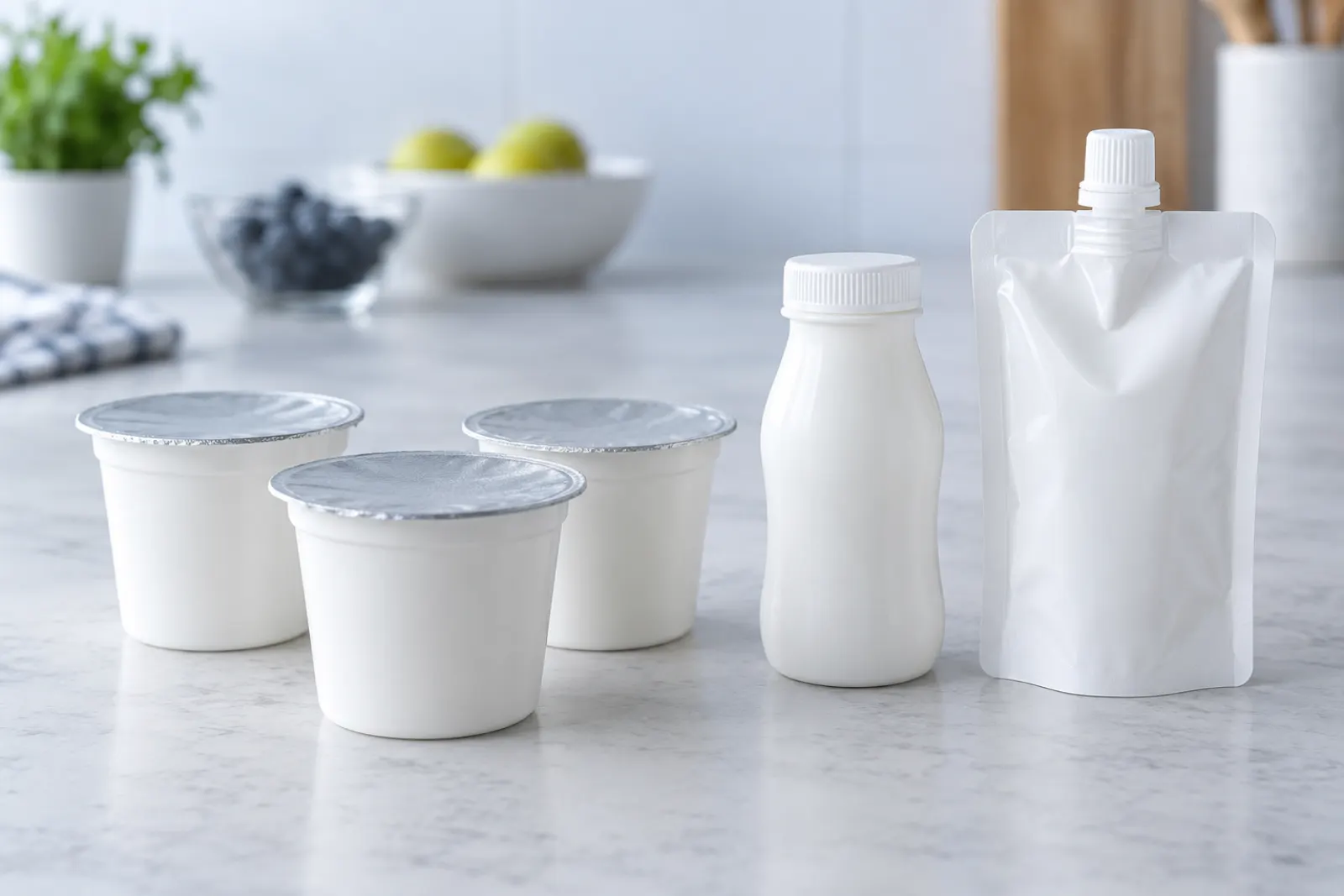
Yogurt Packaging: Cups, Bottles and Pouches for Different Products
Match yogurt packaging to product type: set, stirred, drinkable or squeeze. Compare cups, bottles and spouted pouches and their filling and sealing needs.
Read the guide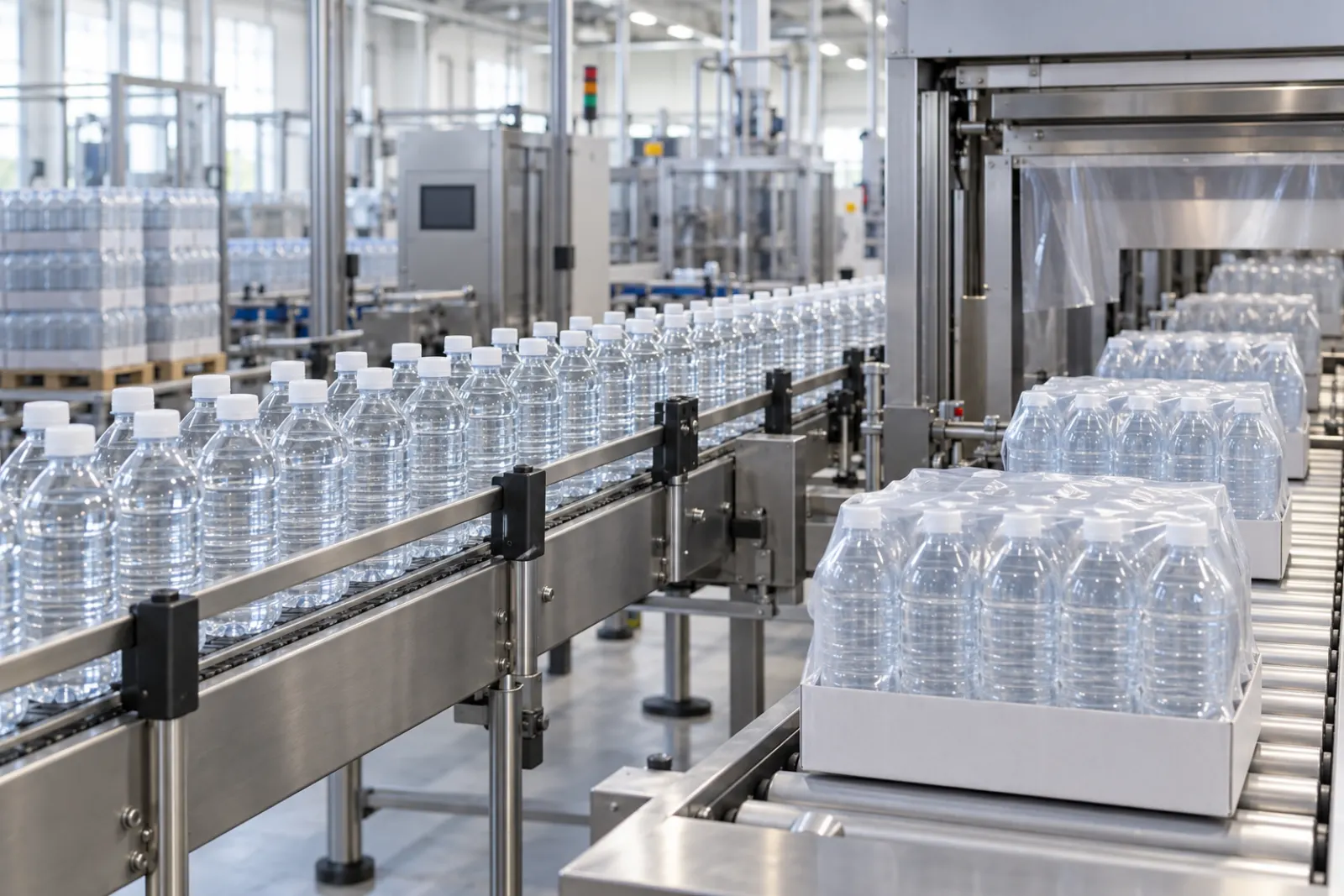
Bottled Water Packaging Lines: From Prepared Containers to Packed Cases
Plan a bottled water packaging line from container supply to palletizing: rinsing, filling, capping, labeling, coding and the interfaces between stations.
Read the guide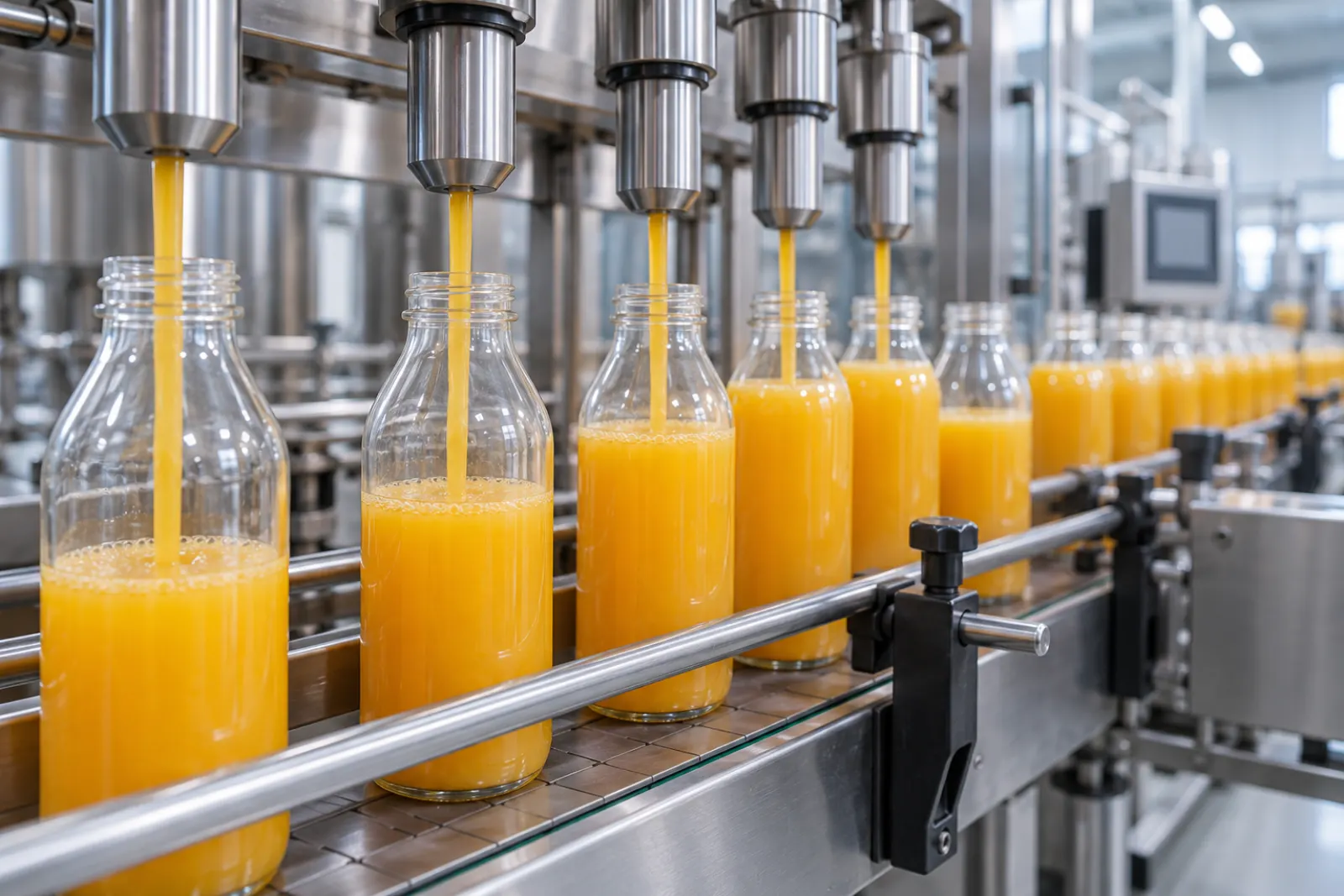
Juice Filling and Packaging: Choosing a Process Before a Machine
Plan juice packaging product-first: chilled, hot fill, HPP or aseptic, then container and filler. Concepts only; process validation stays with the processor.
Read the guide