
Beverage Bottle Materials: Comparing PET, HDPE, Glass and PLA
Compare beverage bottle materials (PET, HDPE, glass and PLA) by weight, breakage, heat tolerance, gas barrier and recycling infrastructure, with a requirements checklist.
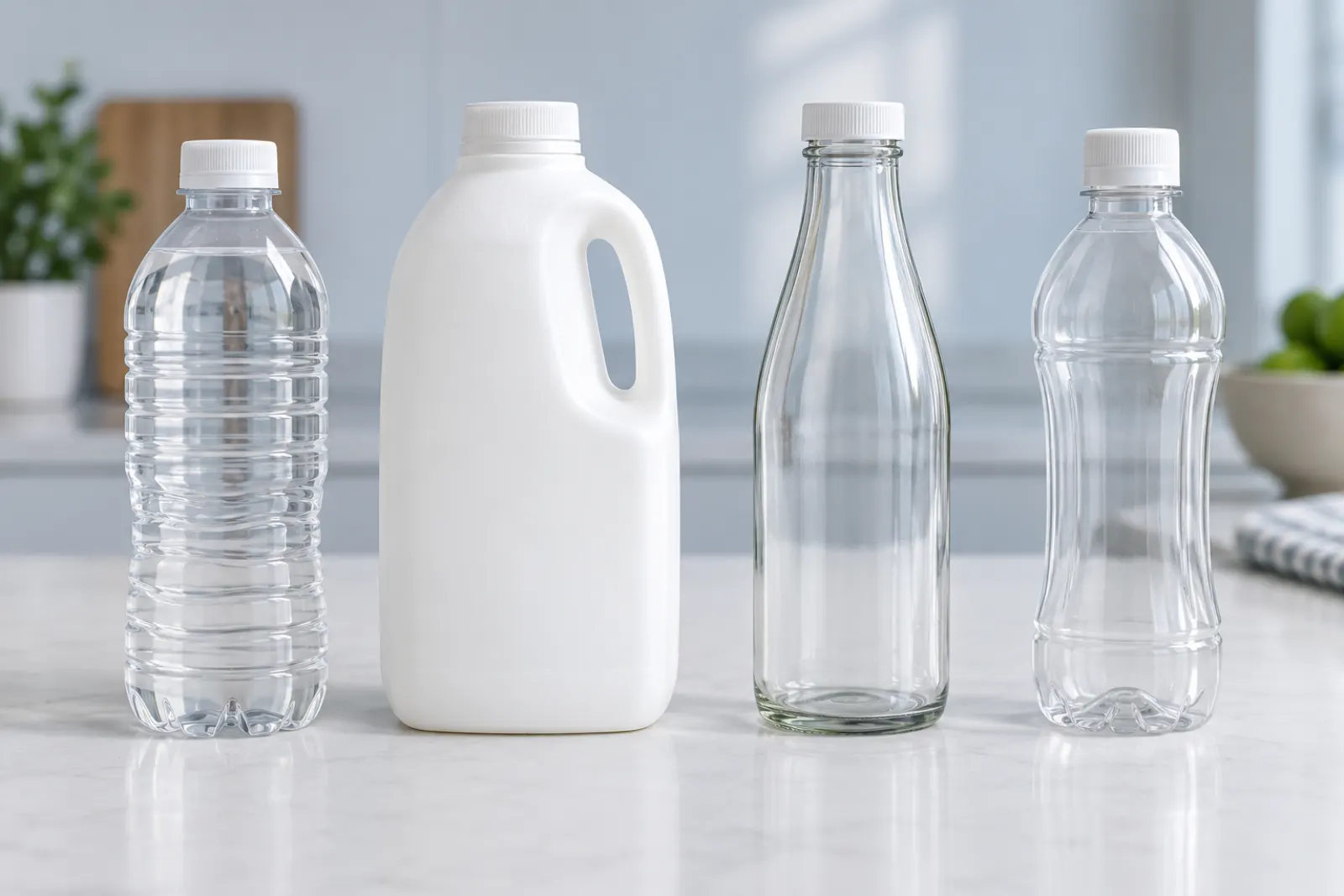
What this article covers
This guide helps beverage producers build a container requirements list and compare PET, HDPE, glass and PLA qualitatively against it. It is a screening tool, not a specification.
Covered
- Qualitative comparison of PET, HDPE, glass and PLA bottles
- Weight, breakage, heat tolerance, gas barrier and recycling infrastructure
- A container requirements checklist and supplier questions
- How material choice affects filling, capping and labeling
Not covered
- Cartons, pouches, cans and kegs
- Grade-specific data sheets or price comparisons
- Brand or supplier recommendations
A bottle that misses a thermal, shelf-life or handling requirement can deform, lose product protection or break on the line. Screen PET, HDPE, glass and PLA against the exact product and route before requesting bottle-specific evidence.
This is a public-source screening comparison for U.S. packaging projects, reviewed October 8, 2026, not a matched-container test or a material ranking.
The comparison at a glance
Scroll horizontally for any hidden columns →
| Material | Constraint to resolve first | Evidence to obtain |
|---|---|---|
| PET | Ordinary versus heat-resistant design; gas barrier for the product | Bottle-specific thermal window and barrier / shelf-life results |
| HDPE | Product visibility, light protection and barrier needs | Wall/pigment design and measured barrier / light transmission |
| Glass | Breakage, line handling and required light protection | Actual bottle handling / drop results and color data |
| PLA | Grade-specific heat and barrier limits; accessible disposal route | Thermal / permeation data; finished-item and facility evidence |
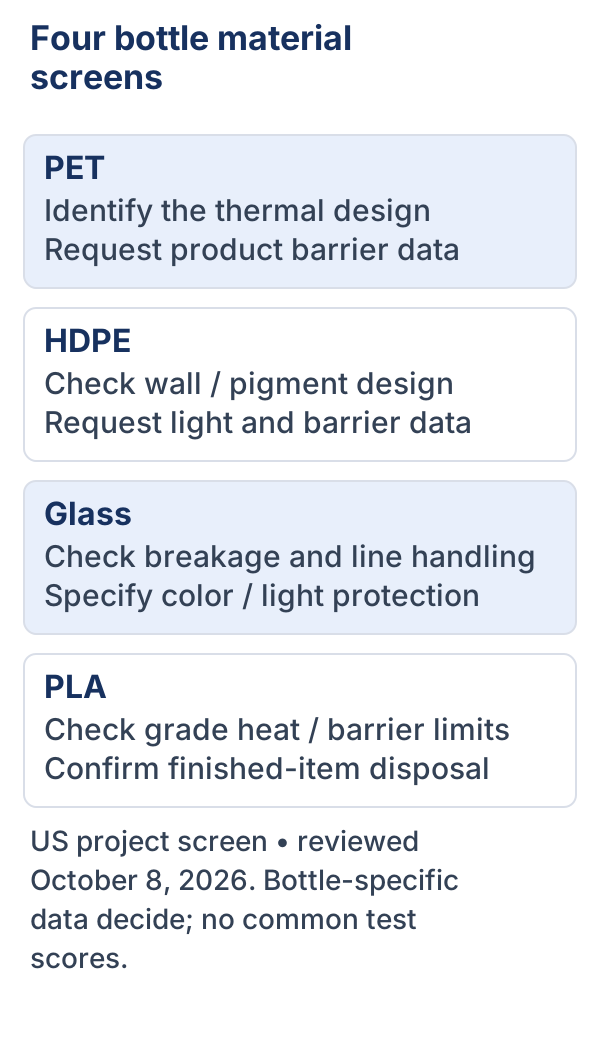
The cited documents provide no common test basis or numerical cutoffs for scoring bottle weight, breakage, heat and gas barrier. EPA’s U.S. recycling figures below describe 2018 collection outcomes, not a current acceptance rule for each finished package. Gas barrier, moisture barrier and light protection remain separate checks.
Material by material
PET
PET is the common choice for clear beverage bottles, including carbonated drinks and water. For a buyer, three things matter:
- Heat: ordinary PET bottles and heat-resistant designs need separate specifications. The 2001 IFT article discusses heat setting for hot fill; immediately after its broad post-fill pasteurization statement, it reports special pasteurizable polyester designs. That historical account cannot set a limit for all PET bottles. Obtain the exact bottle’s approved temperature, exposure time, pressure and cooling conditions for your process; no current universal PET pasteurization window is established here.
- Barrier: a Plastics Technology article from 2004 explains that small carbonated bottles have more surface area per unit of volume, so barrier becomes more critical, and that producers use multilayer or coated designs to extend carbonation retention. Use that historical account to request barrier data on the exact size and construction; it does not establish a present-day rating.
- Recycling: NAPCOR reports a 30.2 percent U.S. PET bottle recycling rate for 2024 and describes bottles as the largest end market for recycled PET. EPA’s 2018 data reported a similar 29.1 percent for PET bottles and jars. The infrastructure is established, though most bottles are still not recycled.
HDPE
HDPE is typical for opaque or translucent bottles such as milk jugs, juice and other chilled products. EPA’s 2018 data listed a 29.3 percent recycling rate for HDPE natural bottles. Gas barrier, moisture barrier and light protection depend on the proposed bottle construction; request data for its pigment, wall thickness and design. Opaque or translucent walls can suit products that need light protection but limit product visibility. For a dairy application see milk packaging.
Glass
According to the Glass Packaging Institute, glass is nonporous and impermeable, so it does not interact with the contents, and glass containers can be recycled repeatedly into new containers. GPI also says 80 percent of recovered glass is made into new glass products, that color sorting matters because manufacturers can use only limited amounts of mixed-color glass, and that contaminated or broken glass may go to other uses. GPI is an industry association, so treat its statements as supplier-side information. Glass is high on weight and breakage risk, which affects shipping cost, line handling and safety. Check that your filler, conveyors and accumulation tables are built for glass, because glass lines usually have different handling and glass-breakage controls. Light protection depends on color; clear glass transmits light.
PLA
PLA bottles are mainly considered for chilled, short shelf life drinks. A peer-reviewed review lists constrained heat resilience and brittleness among PLA’s drawbacks and states that its permeability to carbon dioxide, oxygen and water vapor constrains use in certain beverage bottles. For recycling, APR’s PET design guide lists PLA among materials that sink with PET and cause quality degradation in recycled PET even in very small amounts. See PLA vs PET bottles for the decision tree and PLA food packaging for a wider view. Do not treat PET collection as a disposal route for PLA; industrial composting depends on a facility accepting the finished item, as covered in compostable packaging.
Using the screening table
Apply the project’s hard constraints before comparing options. The source set is mixed: historical technical reporting on PET, EPA U.S. recycling data from 2018, industry-association statements on glass and PET recycling, and a PLA literature review. It cannot support a single performance score. Ask for bottle-specific results measured under comparable conditions, and mark missing evidence as unresolved.
How material choice affects the line
The container material affects equipment decisions beyond the bottle itself:
- Filling: fill temperature and pressure limits come from the container. The liquid filling machine selection guide lists the container and process inputs a supplier will ask for.
- Capping: finish design, container stiffness and torque limits differ by material. See the bottle capping machine selection guide.
- Labeling: material affects label stock, adhesive choice and handling when bottles are cold and wet. See cold and wet bottle labeling.
- Handling: glass needs different guarding and conveyor treatment than plastic. Lightweight plastic bottles can tip or deform on conveyors and need appropriate guides and air conveying settings.
Building a container requirements record
Copy one record for each bottle candidate. Enter the hard constraint first, identify the supplier document that addresses it, and leave unresolved checks open until results exist.
Scroll horizontally for any hidden columns →
| Hard constraint / input | Supplier evidence | Pending validation / result |
|---|---|---|
| Product: carbonation, oxygen/light/moisture sensitivity; shelf life ____ | Exact bottle barrier and transmission data ____ | Product storage study / acceptance rule ____ |
| Fill and post-fill route: temperature, time, pressure, cooling ____ | Ordinary / heat-resistant design; permitted window ____ | Trial across actual thermal cycle ____ |
| Distribution / storage maximum and minimum ____ | Rated thermal and mechanical limits ____ | Route log and handling / drop results ____ |
| Volume, finish, closure, label and decoration ____ | Dimension and food-contact documents ____ | Cap torque / label adhesion / handling trial ____ |
| Weight / cost / breakage constraints ____ | Design mass and mechanical results ____ | Plant safety and route acceptance ____ |
| Disposal route and sales markets ____ | Finished bottle, cap and label compatibility ____ | Local acceptance, claim wording and check date ____ |
| Installed equipment and net-output target ____ | Filler / capper / labeler interface requirements ____ | Line trial and required changes ____ |
What needs project-specific validation
The screening table cannot replace testing on your container and product. Validate these with the supplier and in a trial:
- Carbonation or oxygen retention: data for the exact bottle design, size and product, with shelf life based on your acceptance criteria.
- Thermal behavior: fill, cooling, shipping and storage temperatures against the bottle’s rated limits.
- Mechanical behavior: top-load, drop, stress-crack and burst performance relevant to the line and route.
- Light protection: transmission data where flavor or color changes with light exposure.
- Line compatibility: handling, capping torque retention and label adhesion on production equipment.
- Recycling or disposal claims: evidence that the finished bottle, closure and label are compatible with the route you intend to describe.
Questions to ask suppliers
- What bottle material, grade and wall design do you propose, and what documentation supports your rating on heat, gas barrier and strength?
- What are the maximum fill and storage temperatures for this bottle, and what is the basis for those limits?
- For carbonated or oxygen-sensitive products, what shelf life data exist for this size and design, and who produced them?
- How does the bottle perform on light protection, and can you provide transmission data?
- What closure and label materials do you recommend, and how do they affect recycling or disposal?
- What bottle handling, guarding or conveying changes does this material require on my line?
- What documentation covers food-contact status for the finished bottle, closure and decoration?
- How does your design perform in drop and top-load testing, and which results were measured on this exact design?
- What is the lead time and minimum order quantity for the bottle and for change parts needed to run it?
- Which statements in your proposal are your own measurements, and which are quoted from a resin or glass supplier or a trade group?
Fill in the requirements record above, then carry the open checks into filler selection, capping checks or cold/wet labeling trials.
Sources and method
This article is based on documentary research of the sources listed. It is not a hands-on equipment test. Supplier statements and editorial judgement are identified in the text.
- Facts About Glass Supports: According to GPI, glass is nonporous and impermeable, can be recycled repeatedly into new containers, and recycling depends on color sorting and contamination control. GPI is an industry trade group.
- 2024 PET Recycling Report press release Supports: 30.2 percent U.S. PET bottle recycling rate in 2024 and bottles as the largest end market for recycled PET.
- Plastics: Material-Specific Data Supports: 2018 recycling rates of 29.1 percent for PET bottles and jars and 29.3 percent for HDPE natural bottles.
- Aseptic vs Hot-Fill Packaging for Polyester Bottles Supports: the historical discussion of heat setting and hot-fill bottle design; the adjacent passage also reports special pasteurizable polyester bottles. A 2001 account, not a current limit for all PET bottles. Re-read October 8, 2026.
- Barrier PET Bottles Supports: small carbonated bottles have higher surface-to-volume ratio and often use multilayer or coated barrier PET. Historical article.
- A review on bio-based polymer polylactic acid potential on sustainable food packaging Supports: PLA's constrained heat resilience, brittleness, and gas and water vapor permeability constraints for some beverage bottles.
- APR Design Guide: PET Rigid Supports: PLA sinks with PET during recycling and degrades recycled PET even in very small amounts.
Next reading
PLA vs PET Bottles: A Practical Comparison for Beverage Packaging
Compare PLA vs PET bottles by fill temperature, barrier, carbonation, shelf life, line compatibility and disposal route, and see what to verify before replacing PET.
Read the guide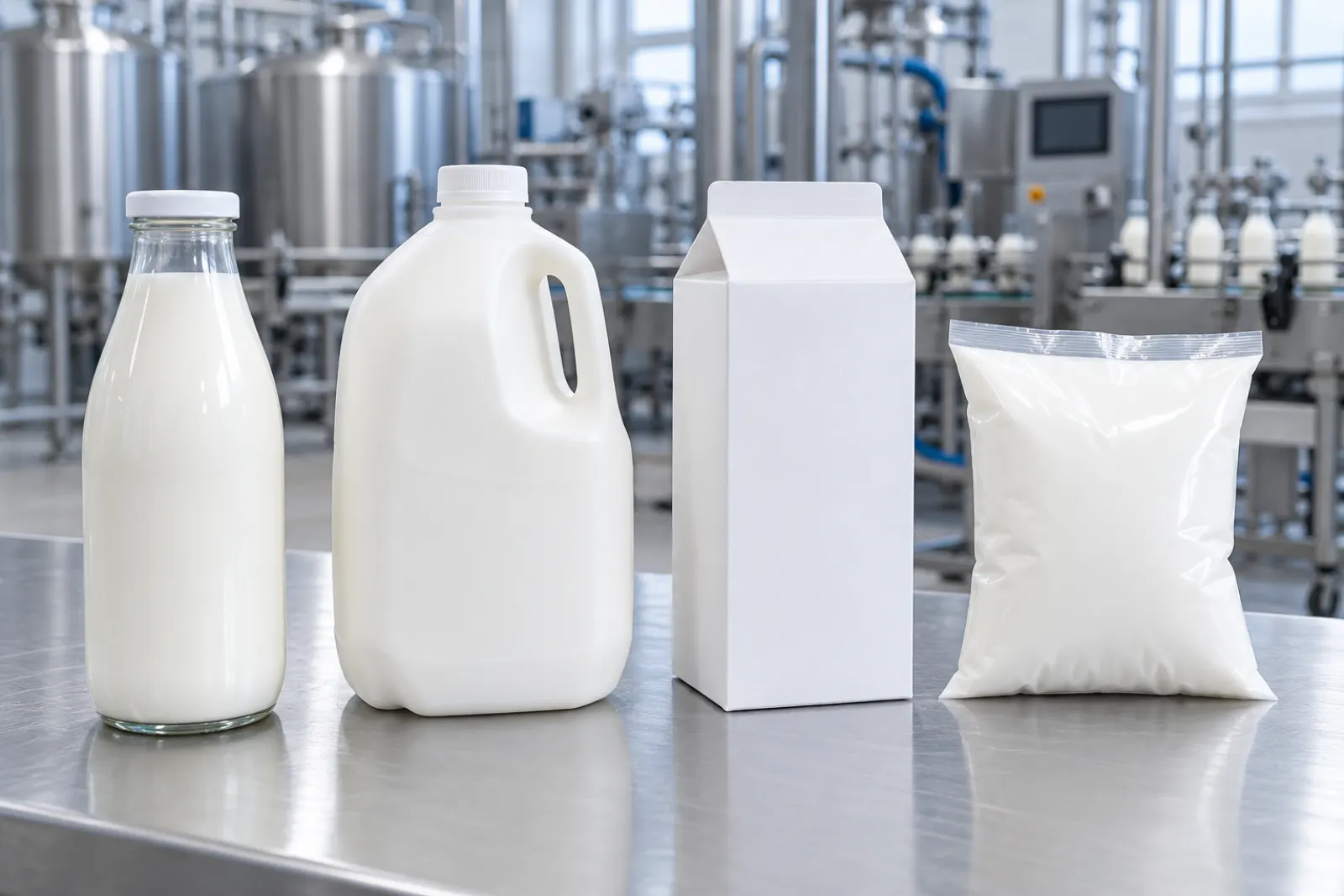
Milk Packaging Formats: Bottles, Cartons and Pouches
How to choose a milk packaging format by heat treatment, cold chain and light exposure, and what bottle, carton and pouch formats mean for filling equipment.
Read the guide
Bottle Capping Machine Selection: Caps, Torque and Changeover
How to match a capping machine to the closure and bottle finish: cap types, application vs removal torque, heads, change parts and pre-purchase validation.
Read the guide
Labeling Cold and Wet Bottles: Label, Adhesive and Machine Checks
A technical checklist for labeling cold, condensing bottles: container surface, label stock, adhesive and labeler settings, plus a trial on production bottles.
Read the guideMore in Materials
PLA Packaging for Food and Beverages: Uses, Constraints and Buyer Questions
PLA food packaging explained for buyers: where polylactic acid fits, its heat and barrier limits, end-of-life conditions, and what to request from suppliers.
Read the guide
Compostable Packaging: Industrial Composting, Home Composting and Collection Systems
Compostable food packaging explained: bio-based vs biodegradable vs compostable, ASTM D6400 and BPI certification, FTC claim rules and the collection gap.
Read the guide
Pouch Packaging for Food: Stand-Up, Retort, Spouted and Pillow Pouches by Product
A pouch unsuited to heat processing can fail. Select by preservation route, product flow and use, then check film, fitment and filling compatibility.
Read the guide