
How to Choose a Liquid Filling Machine for Food and Beverages
A buyer's framework for choosing a liquid filling machine: project inputs, filling approaches compared, what to validate with samples, and supplier questions.
What this article covers
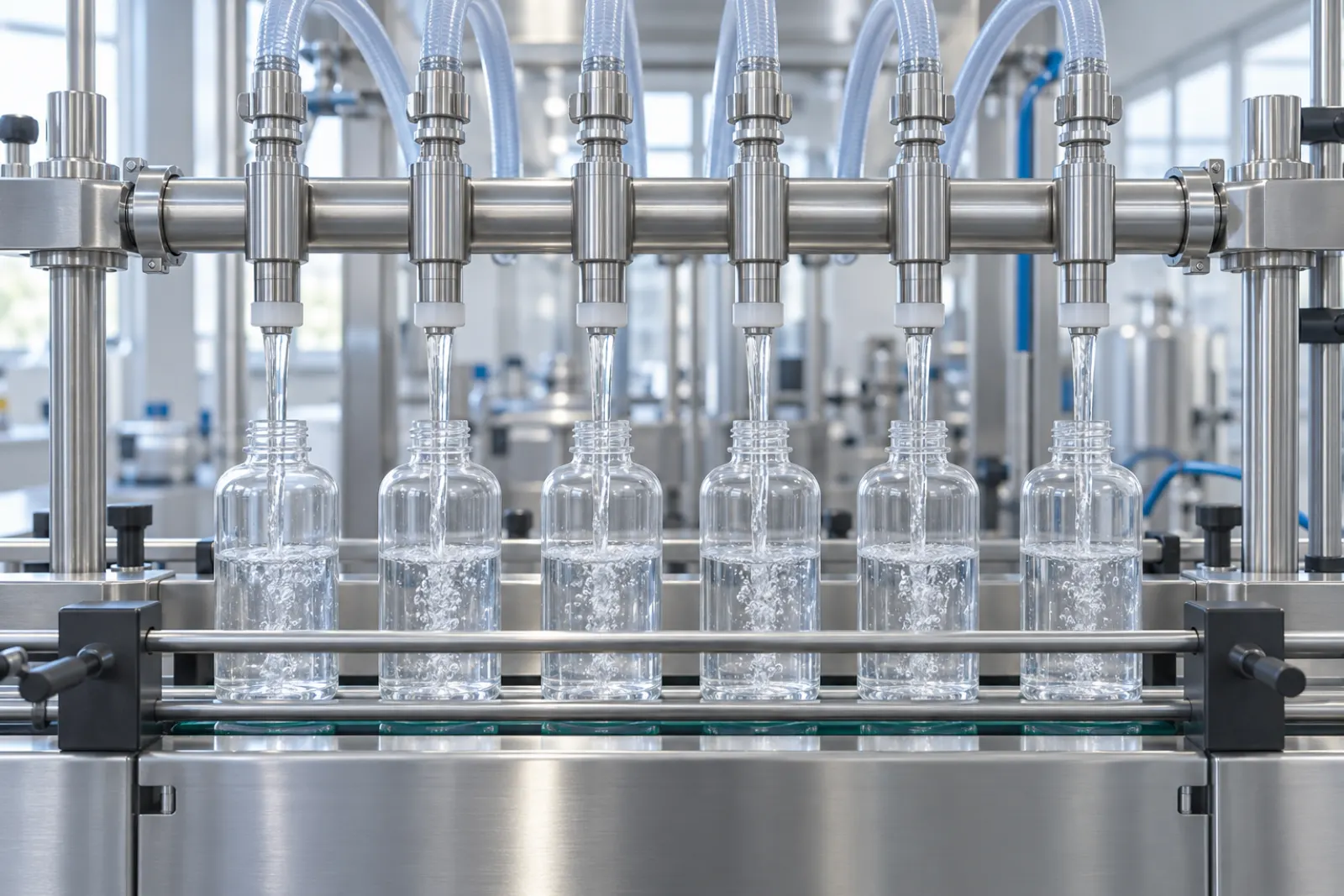
This guide helps equipment buyers and plant managers define a filling project before requesting quotes, compare filling approaches on conditions and limits rather than claims, and plan the sample trials that decide the shortlist.
Covered
- Project inputs that determine filler type
- Comparison of common filling approaches by product, container and cleaning needs
- Validation items and supplier questions
Not covered
- Product formulation, pasteurization or shelf-life decisions
- Detailed price comparison or supplier ranking
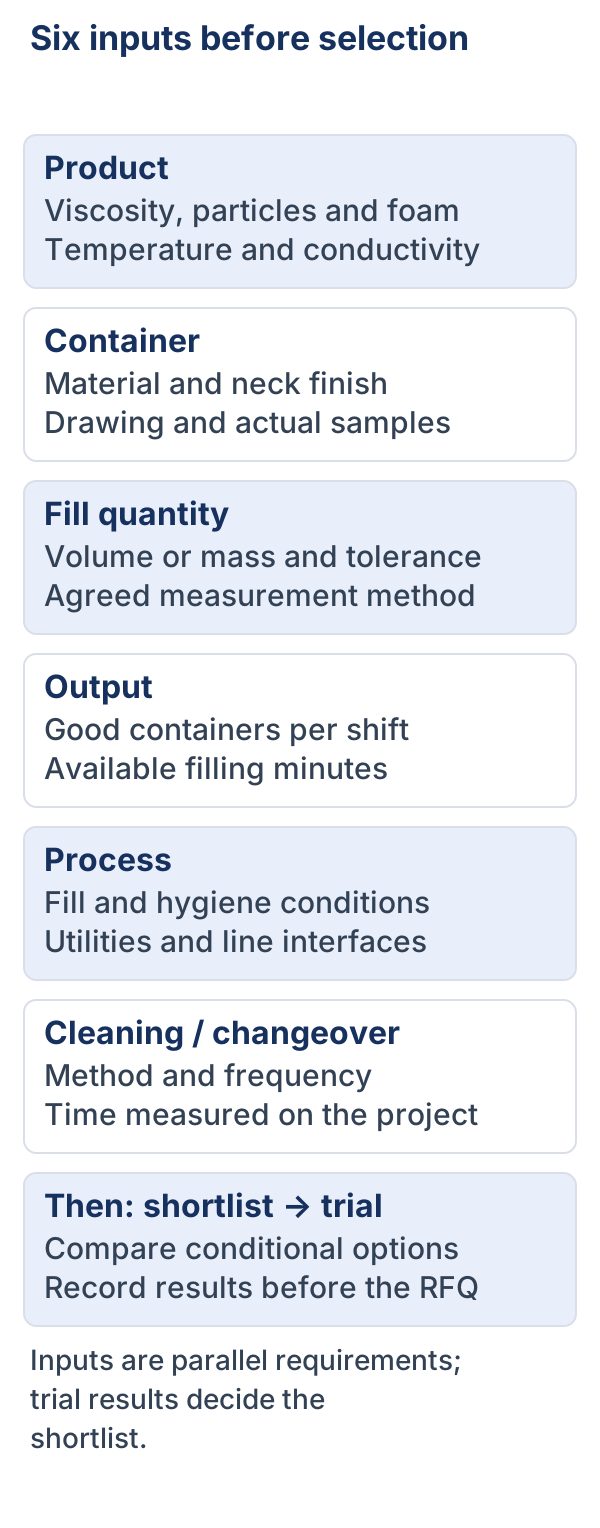
Incomplete product and output inputs produce filler proposals that cannot be compared. Define the six inputs below, shortlist filling approaches by their limits, then check the shortlist with your product and containers.
This is a selection framework compiled from public sources, not our machine test or a supplier recommendation.
Scroll horizontally for any hidden columns →
| Input | Value or source to record | Selection use |
|---|---|---|
| Product | Viscosity at fill temperature; particles; foam; conductivity | Screen the metering and product path |
| Container | Material, finish, drawing and samples | Check handling and closure interfaces |
| Fill quantity | Volume or mass, tolerance and measurement method | Separate declared quantity from visible level |
| Output | Good containers/shift; available filling minutes | Compare net demand with trial output |
| Process | Fill temperature, hygiene concept and utilities | Define operating conditions |
| Cleaning / changeover | Method, frequency and timed records | Check time left for production |
Step 1: Build the project information sheet
The inputs below are the minimum a supplier needs to propose a filler. Write them down as ranges instead of single values, and mark which are fixed and which can still change.
Product
- Viscosity at filling temperature, and how it changes with temperature and shear.
- Particulates: pulp, fruit pieces, seeds, with maximum size.
- Foaming tendency and gas content (still, lightly carbonated, nitrogen-dosed).
- Whether the product is electrically conductive (matters for some flow measurement).
- Filling temperature, and whether the product is chilled, ambient or hot.
- Acidity, salt, alcohol or oils that affect seal and gasket materials.
- Preservation approach, such as chilled short shelf life, hot fill or aseptic. This sets the hygiene class of the machine, and is covered conceptually in the juice packaging guide.
Container
- Material (PET, HDPE, glass, other) and neck finish, with drawings or physical samples.
- Fill height and headspace requirements.
- Whether containers arrive rinsed, blown on site or already clean.
- Number of sizes and shapes planned for the next several years.
- The closure that follows. Capping drives filler layout, so review bottle capping machine selection at the same time.
Fill volume and accuracy
- Nominal fill volume per container, and the tolerance you actually need. Take this from your product specification and weights-and-measures requirements, not from a supplier brochure.
- Whether the target is fill level (visual consistency in clear bottles) or fill volume or weight. These are different goals and favor different filling approaches.
Output
- Required containers per minute or hour, and the number of shifts.
- Whether that is rated speed or actual net output after stops and changeovers.
- Expected growth, and whether a second line is more realistic than a faster machine.
Process conditions
- Room environment: ambient, chilled, clean room zone.
- Available utilities: compressed air quality, steam, hot water, chilled water, power.
- Integration with upstream rinsing and downstream capping, inspection and labeling. The bottled water line overview shows a typical sequence.
Cleaning and changeover
- Cleaning method required: clean-in-place (CIP), clean-out-of-place (COP), manual, or dry.
- Cleaning frequency and allergen or flavor-change rules.
- Number of product and container changeovers per week, and the acceptable changeover time.
The OpX Leadership Network’s Total Cost of Ownership material states that the buyer should supply expected rates and changeover needs while the machine builder supplies design capabilities. It also lists daily set-up time, changeover and cleaning among operating costs. That is a reason to put these items on the first page of your specification instead of the last.
Step 2: Compare filling approaches by conditions
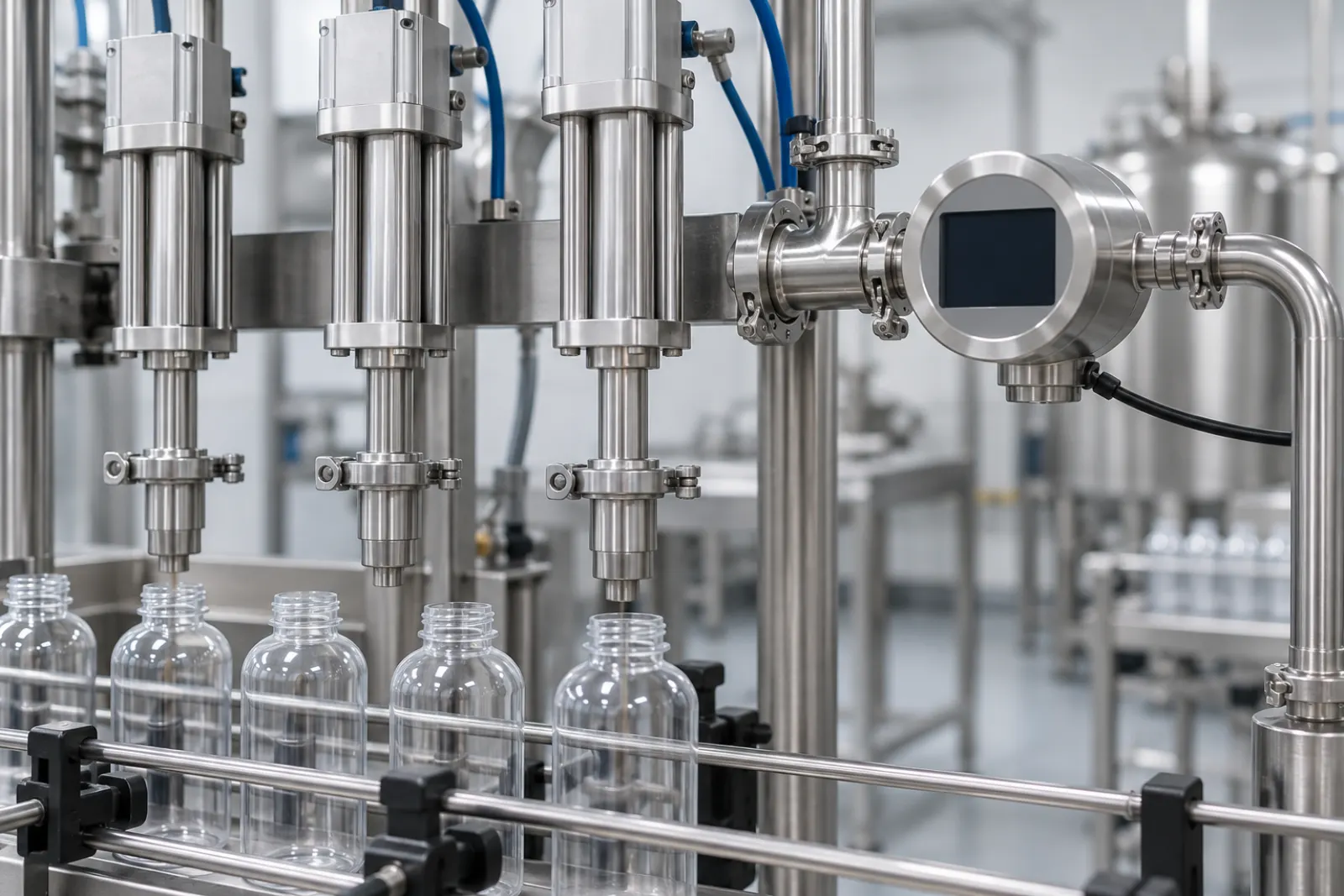
Filling machines are described along three separate axes: how the volume is measured (metering principle), how product reaches the valve (feed), and how the machine is built (inline or rotary). Liquid filling methods compared separates these in detail. For selection, the table below is a conditional starting point. It is qualitative and generic, and the right choice for your product depends on trials.
Scroll horizontally for any hidden columns →
| Approach | Typically considered when | Main limits to check | Cleaning and changeover notes |
|---|---|---|---|
| Time or level based (gravity, overflow) | Thin, free-flowing liquids; clear containers where fill level appearance matters (overflow) | Viscous, particulate or heavily foaming products may fill inconsistently; level filling does not control volume if container volumes vary | Few moving parts; product return lines on overflow add cleaning scope |
| Volumetric piston | Thicker products, products with particles, where volume repeatability matters | Mechanical wear parts (seals, valves), more parts to disassemble; stroke range limits the size range per cylinder | Often cleaned out of place or semi-CIP; verify disassembly time |
| Flowmeter (magnetic) | Thin to moderate conductive liquids, frequent volume changes by recipe | Needs product conductivity above the meter’s minimum; accuracy can degrade when conductivity is low or variable | Smooth product path; confirm CIP design and meter cleanability |
| Flowmeter (Coriolis mass) | Products with variable conductivity or properties, or where mass-based dosing is wanted | Meters must be sized for the fill range; entrained gas affects measurement | Confirm meter and valve hygienic design, and cost per filling station |
| Pump based (gear, peristaltic, diaphragm) | Viscous or particulate products with moderate dosing needs | Shear on delicate products; pump wear and calibration | Pump and tubing replacement or cleaning is part of the routine |
One supplier’s documentation describes electromagnetic flowmeters as the typical choice on beverage fillers. It notes that when water treated by reverse osmosis (conductivity of 5 to 10 μS/cm in its example) replaces well water, the accuracy of electromagnetic meters can deteriorate, and it positions Coriolis meters as an alternative. Because this is supplier documentation, use it as a reason to ask about conductivity, not as a ruling. No approach suits every product. A piston filler can be the wrong answer for thin juice in a high-speed line, and a gravity filler can be the wrong answer for a viscous drinkable product.
Step 3: Decide the hygiene and cleaning requirement early
Cleaning requirements change the machine itself as well as the cleaning schedule. Two regulatory and standards references help frame the conversation.
Under 21 CFR 117.40, food-contact equipment must be designed and made so that it is adequately cleanable, with corrosion-resistant, nontoxic food-contact surfaces able to withstand the cleaning compounds and sanitizers used. That is a baseline and does not specify your machine.
The 3-A Sanitary Standards’ resource paper on cleanability makes a point buyers often miss. Equipment that meets 3-A criteria is not automatically suitable for CIP, because the standards cover cleaning methods from manual to full CIP. EHEDG Guideline 46 addresses aseptic and hygienic filling machines, including selecting a machine class according to the design principles implemented, decontamination requirements, and the microbiological tests used for qualification. The full guideline is available from EHEDG (free to members, priced for others); this publication has only reviewed its catalogue description.
In practice, write down what the filler must achieve: chilled short-shelf-life filling with standard hygienic design, extended shelf life with container and environment controls, or aseptic filling. Ask suppliers to state which class or standard their proposed machine is designed to and what documents support it.
Small food and beverage batches: is a semi-automatic filler enough?
Our suggested screen, based on the public sources below, is that a semi-automatic filler is worth a sample trial for a small food or beverage run when three things hold: the operator can keep pace by hand, the product behaves well with the filling principle chosen, and cleaning between products fits inside the shift. Meeting the three means the option deserves a trial, not that the machine is confirmed. Product traits decide the principle before any question of automation: thin liquids, foaming liquids, thick or chunky sauces and hot-filled products each point somewhere different. The equipment overview defines manual, semi-automatic and automatic by what the operator does for each package and covers sizing a station in general; this section adds what the food itself changes.
Keep the decision table generic so the same conditions can be checked on every candidate.
Scroll horizontally for any hidden columns →
| Product trait | Candidate principle | Check before choosing automation |
|---|---|---|
| Thin liquid; consistent visible fill level | Overflow / level | Declared quantity as well as level; container variation |
| Foaming liquid | Vacuum level or another documented foam-control approach | Container and product limits; foam during a trial |
| Thick product or pieces | Piston or another documented particulate-capable path | Largest particle; valve/nozzle passage; cleaning sequence |
| Hot-filled product | Set by the preservation process | Temperature and timing under the proposed operator-paced cycle |
Supplier-document example — Accutek. Its published overflow, vacuum and piston documentation describes different product ranges; its dressing article also distinguishes smaller or less frequent runs from an automatic line and lists CIP as a model-dependent option. These are descriptions of that supplier’s equipment, read October 6, 2026, rather than our measured results or a purchase recommendation. Exact ranges and ratings need the proposed machine’s current documentation.
Which machine is better, automatic or semi-automatic?
Compare a move from semi-automatic filling when timed production records show that hand loading, fill consistency, cleaning or an interface prevents the required good output. More automation deserves comparison only if it addresses that recorded limit and still meets the product’s process conditions.
Required good-output rate = good containers needed per shift ÷ available filling minutes. Subtract cleaning, changeovers and other planned stops from the shift; compare the result with sustained good output from a trial, rather than a brochure’s cycle rate.
Illustrative calculation, assumed inputs: a 480-minute shift minus 60 minutes cleaning, 30 minutes changeover and 30 minutes other stops leaves 360 filling minutes. A target of 7,200 good containers needs 20 good containers/minute (7,200 ÷ 360). These are assumed inputs for arithmetic, not machine ratings. Unplanned stops and rejects still affect whether the trial meets the target.
Scroll horizontally for any hidden columns →
| Shift / trial record | Enter value or result |
|---|---|
| Good-output target and shift duration | ____ containers; ____ minutes |
| Cleaning, changeovers, other planned stops | ____ / ____ / ____ minutes |
| Available filling time and required rate | ____ minutes; ____ good containers/min |
| Timed cycle | Hand load/unload ____; fill ____; waiting ____ |
| Sustained trial output | ____ good containers/min; rejects ____; conditions ____ |
| Decision | Recorded limiting step ____; configuration to trial ____ |
Take the limiting step back to the project information sheet before specifying different equipment.
Step 4: What needs project-specific validation
A filling machine specification cannot be validated on paper. These items need physical evidence.
- Sample trial with your product. Fill your actual product, at filling temperature, into your actual containers. Foaming, stringing, dripping and splashing show up here and not in brochures.
- Fill accuracy under your conditions. Ask the supplier to state how accuracy is measured (number of samples, container type, product) and repeat the check yourself during the factory acceptance test.
- Container handling. Check neck finish compatibility with grippers, star wheels or neck guides, with drawings or real samples.
- Changeover. Time a full changeover between two of your formats with the people who will do it, including cleaning and verification.
- Cleaning access. Inspect the disassembly sequence, drain points, and what remains in the product path after CIP or manual cleaning.
- Controls and data. Review recipe storage, alarms, access levels and what records the machine produces.
- Interfaces. Confirm conveyor heights, container spacing, and handshake signals to the capper and labeler.
- Documentation. Request material certificates for food-contact parts, drawings, and manuals before purchase.
If a trial at the supplier is not possible, treat any performance statement as unverified until it is confirmed at the factory acceptance test. The FAT checklist explains how to define the test, samples and acceptance criteria before the purchase order. The OpX Leadership Network’s acceptance test guide exists for this purpose: its stated aim is to clear up the expectations and miscommunication that can cause confusion, unbudgeted cost and longer timelines.
Step 5: Questions to ask suppliers
Send these with the project information sheet so answers are comparable. You can copy them into the RFQ.
- Which filling principle do you propose for this product (time or level, piston, flowmeter type, pump), and why, based on the viscosity, particulates and foaming data we provided?
- What fill tolerance does your documentation state for this product and container, and under what conditions and sample size was it measured?
- Which fill volume range can one set of change parts cover, and which formats require additional parts?
- How long does a changeover take between the two formats we specified, who performs it, and which steps need tools?
- Which cleaning method does the machine support (CIP, COP, manual), and what drawings or procedures document it?
- Which hygienic design standard or guideline does the machine claim conformance with, and is there a certificate or an assessment by a third party, or only a self-declaration?
- Which food-contact materials and elastomers are used, and can you provide the supporting declarations?
- What happens at stop, restart and empty-container conditions? Is there a no-container, no-fill function?
- What utilities, including air quality and consumption, does the machine require?
- Which spare and wear parts do you recommend for the first year, and what are the lead times?
- What trial, FAT and SAT scope is included in the price, and what is excluded?
- Which interfaces to our capper, rinser, conveyor and plant network are included in your scope?
Common mistakes in filler selection
- Choosing by speed rating alone. Rated speed on a data sheet is not net output after changeovers, cleaning and stops.
- Treating accuracy as a machine property. It depends on product, container and operating conditions.
- Ignoring downstream equipment. A filler that outruns the capper or labeler wastes its capacity. The capping guide and the milk and juice application pages cover the interfaces, and the milk packaging guide adds container and cold-chain context.
- Leaving changeover to the commissioning stage. If you expect many formats, changeover design is a selection criterion.
- Skipping a sample trial because the product looks like water. Small differences in sugar, pulp or protein change foaming and dripping behavior.
Decision summary
Choose the filling approach after the six inputs are fixed, shortlist two or three candidate approaches by their conditions and limits, and confirm with a trial using your own product and containers. If a supplier will not discuss limits, that tells you something. The aim is a written specification that any qualified supplier can answer in the same format, followed by a factory acceptance test that checks the answers.
Sources and method
This article is based on documentary research of the sources listed. It is not a hands-on equipment test. Supplier statements and editorial judgement are identified in the text.
- Total Cost of Ownership: Playbook and Checklists Supports: the recommendation to state expected rates and changeover needs in the purchase specification, and to count set-up, changeover and cleaning in operating cost.
- One Voice for Acceptance Tests (Factory Acceptance Tests; Protocols for Capital Equipment in the CPG Industry) Supports: agreeing acceptance-test expectations between buyer and equipment maker before purchase.
- EHEDG Guideline 46: Aseptic and Hygienic Filling Machines - Planning, Installation, Qualification and Operation Supports: the existence of machine classes for filling machines based on design principles, and the role of decontamination and microbiological qualification.
- Cleanability of Equipment Supports: that meeting 3-A criteria does not by itself mean a machine is suited to clean-in-place, and the CIP / COP / manual / dry cleaning categories.
- 21 CFR 117.40 Equipment and utensils Supports: the regulatory expectation that food-contact equipment be adequately cleanable, corrosion-resistant and made of nontoxic materials.
- Equipping a filling machine with Coriolis mass flowmeters Supports: that electromagnetic meters are typical on beverage fillers and that product conductivity affects their accuracy.
- Semi-automatic Overflow Filler Supports: supplier description of semi-automatic overflow fillers for low to medium viscosity liquids filled to the same visible height in small to medium runs.
- Semi-automatic Vacuum Filler Supports: supplier figures for a foot-pedal vacuum level filler for small volumes of low-viscosity and foamy liquids.
- Best Filling Machines for Hot Sauces Supports: supplier guidance that viscosity and particulates decide between gravity, piston and timed-flow fillers, and its stated figures for semi-automatic and automatic piston fillers.
- The Best Filling Machines for Ranch Dressing Supports: supplier guidance on piston filling for thick dressings with particulates, optional clean-in-place, and when it suggests semi-automatic versus automatic filling.
Next reading
Liquid Filling Methods Compared: Gravity, Piston and Flowmeter-Based Systems
Compare liquid filling methods by metering principle, product feed and machine structure: gravity, overflow, piston and flowmeter systems and their limits.
Read the guide
Bottle Capping Machine Selection: Caps, Torque and Changeover
How to match a capping machine to the closure and bottle finish: cap types, application vs removal torque, heads, change parts and pre-purchase validation.
Read the guide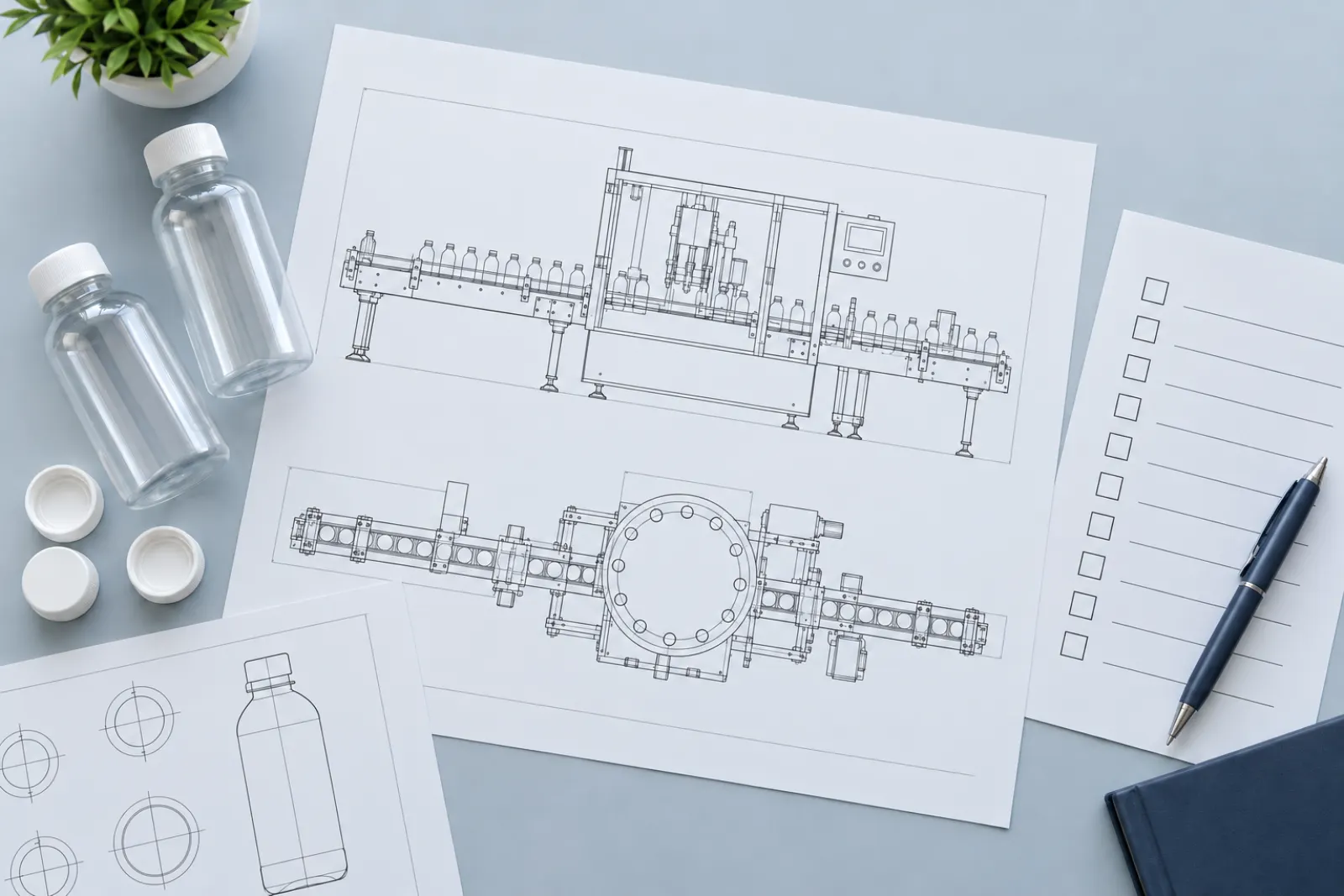
Packaging Machine RFQ Checklist for Food and Beverage Buyers
A copy-ready request-for-quotation structure for packaging machines, with eight modules of fields to fill in and a method for comparing quotes line by line.
Read the guide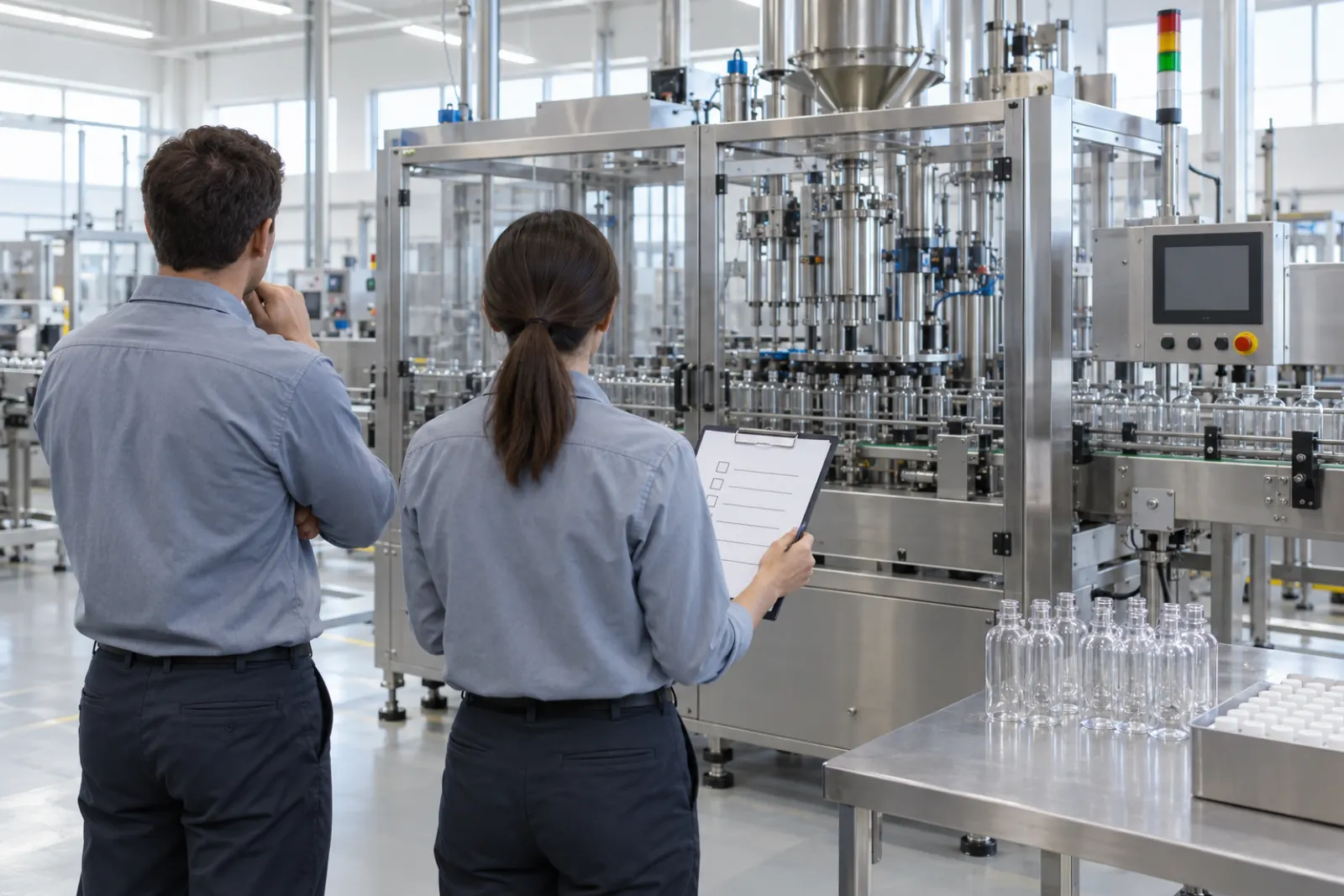
Factory Acceptance Testing for Packaging Equipment: Planning the Checks
Finding defects after shipment can delay installation. Prepare a FAT protocol, representative materials, raw test records and an agreed punch list.
Read the guideMore in Equipment
Labeling Cold and Wet Bottles: Label, Adhesive and Machine Checks
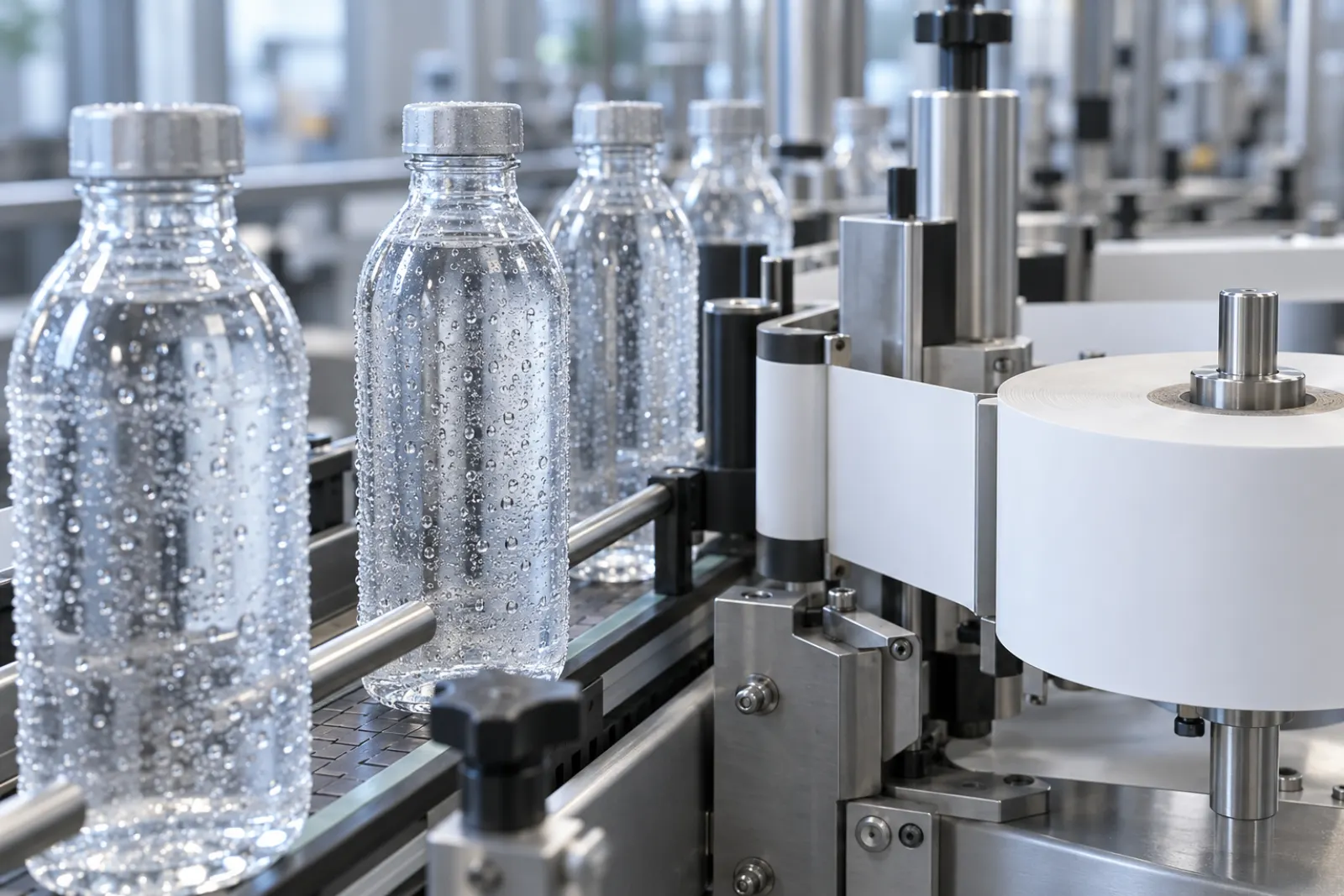
A technical checklist for labeling cold, condensing bottles: container surface, label stock, adhesive and labeler settings, plus a trial on production bottles.
Read the guide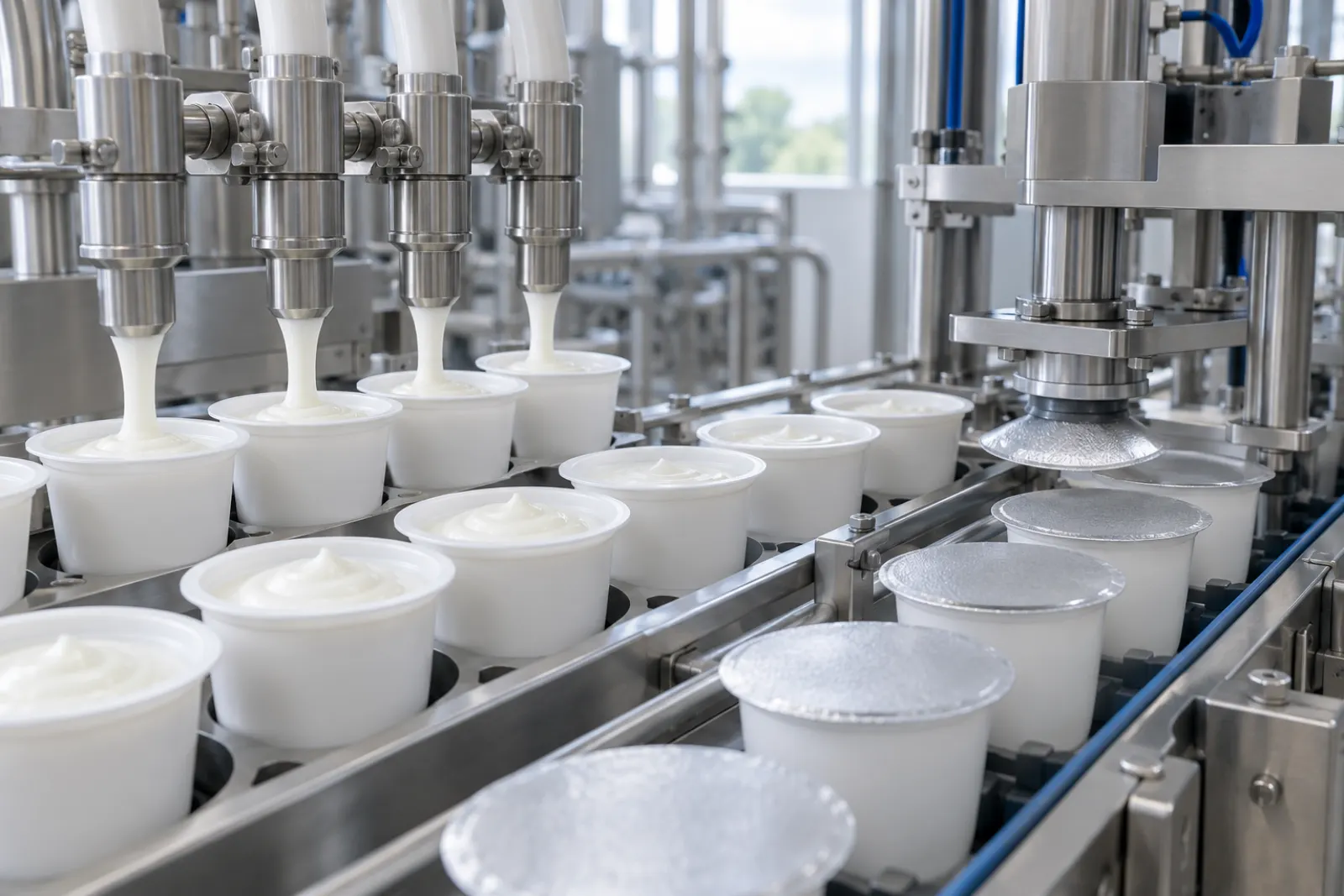
Cup Filling and Sealing Machines for Yogurt: A Buyer’s Checklist
A buyer's checklist for yogurt cup filling and sealing machines: stations, cup and lid compatibility, seal checks, cleaning, and questions to put to suppliers.
Read the guide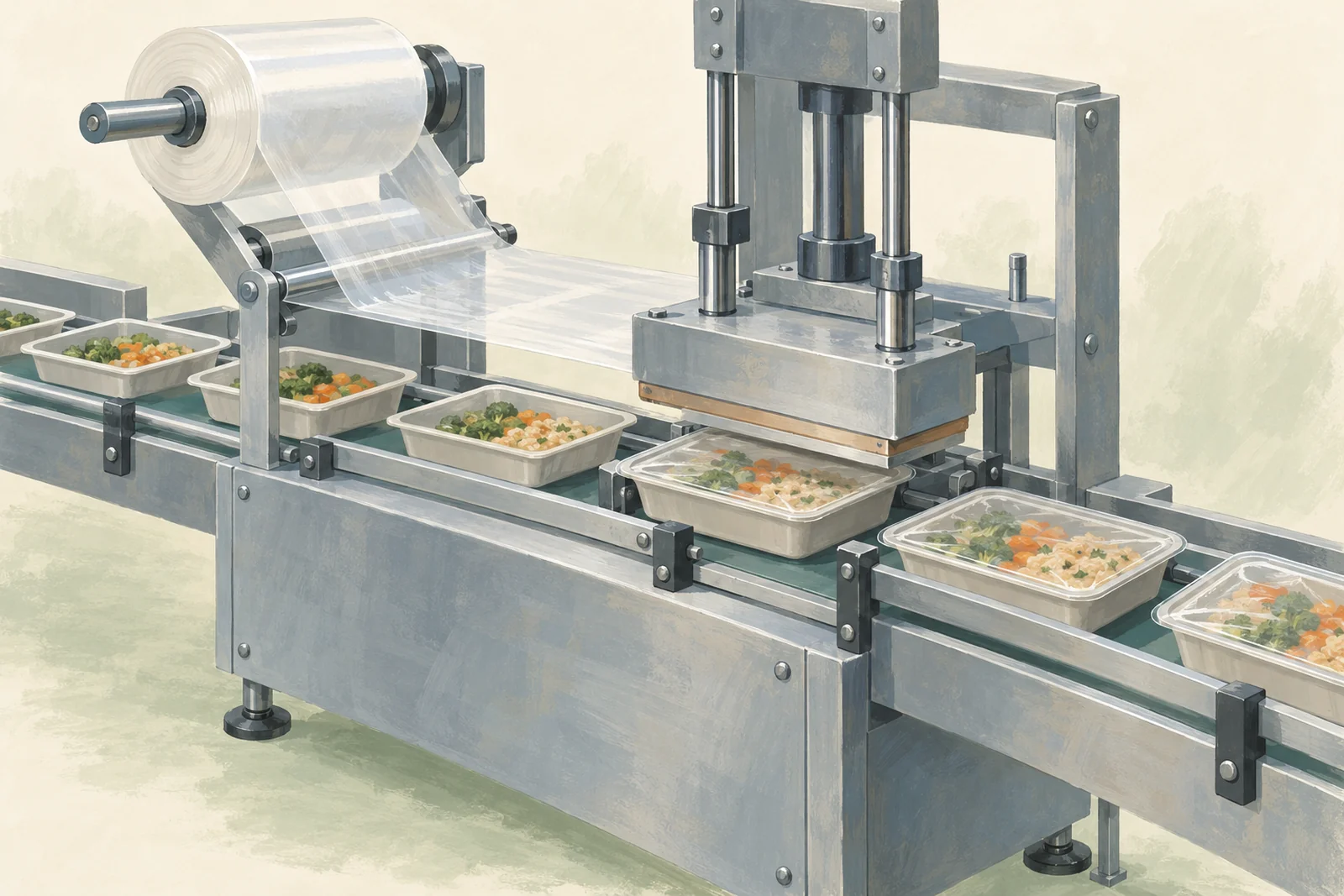
Food Tray Sealing Machines: How They Work and What to Check
A technical guide to selecting food tray sealers: manual vs inline automation, vacuum MAP gas flush technology, tray and lidding compatibility, and seal integrity validation.
Read the guide