
Liquid Filling Methods Compared: Gravity, Piston and Flowmeter-Based Systems
Compare liquid filling methods by metering principle, product feed and machine structure: gravity, overflow, piston and flowmeter systems and their limits.
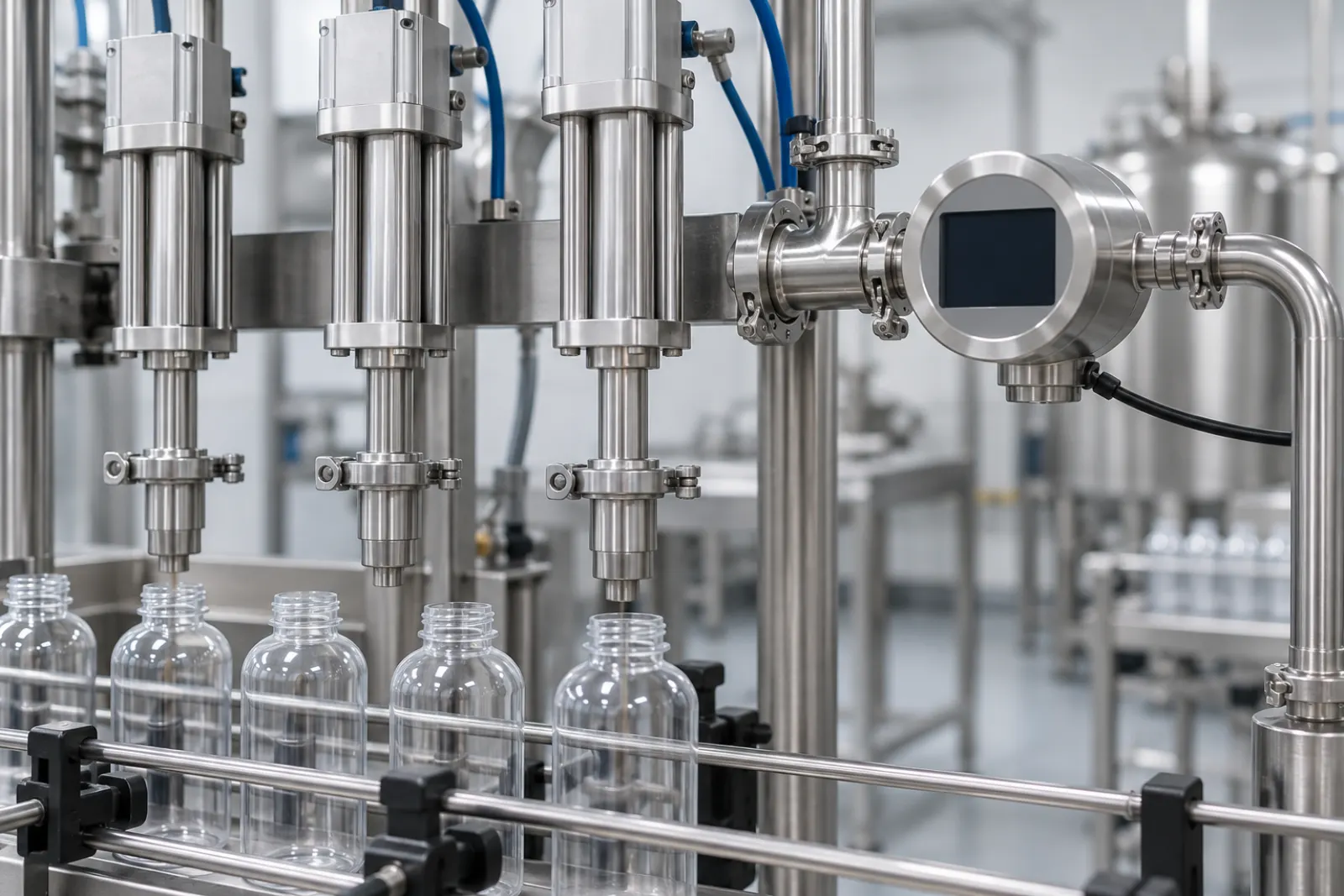
What this article covers
This comparison separates three things that are often mixed up when buying a filler: the metering principle, how product is fed to the valve, and whether the machine is inline or rotary.
Covered
- Metering principles: time or level, volumetric piston, flowmeter (magnetic and mass)
- Product feed methods and machine structure
- Where each approach is typically considered and where it is limited
Not covered
- Aseptic or extended shelf life filling process design
- Supplier or model comparison
Comparing a rotary layout with a piston measuring principle can produce the wrong shortlist. Separate how the dose is measured, how product reaches the valve, and how containers move through the machine; those categories are not mutually exclusive.
This comparison uses public supplier and standards documentation, not our own equipment tests. For the project inputs, see the liquid filling machine selection guide.
Scroll horizontally for any hidden columns →
| Axis | Question / options | Conclusion |
|---|---|---|
| Metering | Time/level, piston volume, magnetic volume or Coriolis mass | Specify the quantity controlled; layout does not decide it |
| Feed | Gravity head, pressure-assisted or pump-fed | Describe how product reaches the valve separately |
| Structure | Inline or rotary container movement | Rotary and piston are different axes, not competing labels |
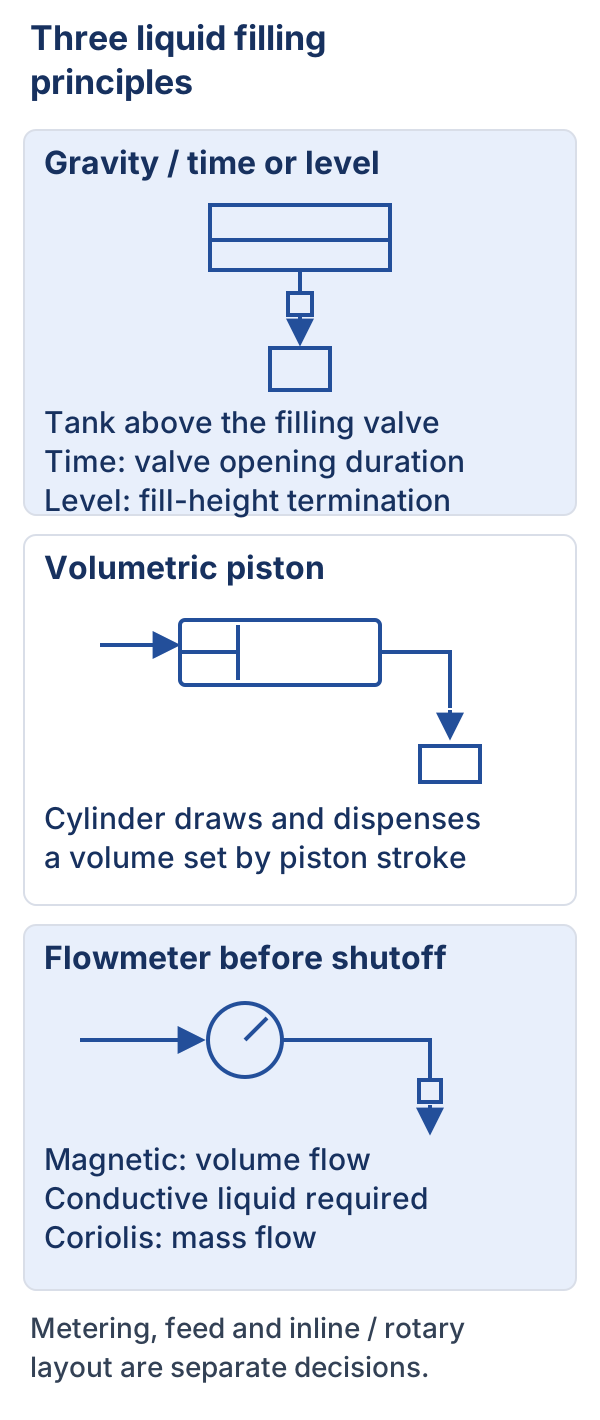
Three categories to keep separate
Ask for metering, feed and structure in that order. A proposal that says only “rotary gravity filler” still leaves fill termination unspecified.
Common mistake: treating every machine label as a mutually exclusive type. Compare all three axes before comparing output or price.
Metering principle 1: time or level
Time-based gravity filling opens a valve for a set time while product flows from a tank positioned above the nozzle. Because the flow rate depends on the liquid head and product properties, the amount delivered changes if the head, temperature or viscosity changes. One supplier describes gravity fillers as suited to free-flowing, low-viscosity products such as water, oils and juice, with low cost and few moving parts.
Level filling (overflow) controls the fill by height instead of by volume. Nozzles let excess liquid return to the supply tank, so each container fills to the same level. The same supplier associates overflow fillers with thin and moderately viscous products in clear containers, and notes the focus is a consistent fill level, not a precise volume. If container internal volumes vary, the level is the same but the contents are not. Check whether your requirement is a visual level or a declared volume.
Pressure-gravity is a variation where the container is sealed to the valve and pressurized, sometimes used for carbonated products. It varies the feed and the container interface and is not a separate metering principle. Ask the supplier whether fill termination is by level, time or sensor.
Limits to check for time and level methods:
- Foaming products, because fill level and foam collapse can mask real volume.
- Viscous or particulate products, which flow unevenly through the same valve.
- Temperature changes, which alter flow rate in time-based filling.
- Return lines on overflow systems: they add surfaces that need cleaning and may expose recirculated product to extra handling. Confirm how the system is cleaned and how returned product is managed.
Metering principle 2: volumetric piston
A piston filler draws a set volume into a cylinder and then pushes it out through the nozzle. The volume is set mechanically by the stroke. Supplier documentation positions piston fillers for thicker or more viscous products, including sauces, creams and gels, and some suppliers note that wide nozzles allow products with pieces. One supplier lists more maintenance for piston systems (seal replacement, lubrication and calibration checks).
Points to confirm:
- Stroke range: one cylinder size covers a limited volume range, and very different fill sizes may need different cylinders or additional parts.
- Valve design: the valve between the cylinder, the supply and the nozzle must pass your largest particle.
- Shear: for delicate products, ask how the valve and piston movement affect the product.
- Disassembly: piston, seals and valve must be dismantled or cleaned in place; ask for the sequence and the time.
- Speed: higher-speed lines may require multiple pistons per machine. The relationship between pistons and output depends on the product and the design, so ask for the supplier’s calculation.
Metering principle 3: flowmeter
In flowmeter filling, a meter in the product line measures the quantity delivered and the valve closes when the target is reached. Two meter types dominate.
Magnetic (electromagnetic) flowmeters measure volume flow in conductive liquids. A supplier document notes that they are typically used when PET bottles, pouches and cans are filled with water, lemonade, tea and milk products. It also notes a dependence on product conductivity: when water from osmosis installations (5 to 10 μS/cm in the supplier’s example) replaces well water, the accuracy of electromagnetic flowmeters can deteriorate. If your product has low or variable conductivity, ask the supplier for the minimum conductivity specified by the meter manufacturer.
Coriolis (mass) flowmeters measure mass and can handle products regardless of conductivity. The same supplier states they measure regardless of viscosity, conductivity or inlet runs and can be used for products with different conductivities. The trade-off is that they can cost more per filling station and need to be sized to the fill range. Ask how air and foam in the product line are handled before the meter.
One filling supplier positions flowmeter filling for homogeneous, fluid liquids and piston filling for thicker or more viscous products. That simplification is a useful starting point for questions but not a rule. Particulate content, temperature and cleaning method all shift the answer.
Machine structure: inline or rotary
Inline machines move containers in a straight line past a bank of valves. Rotary machines carry containers around a carousel while filling. Neither structure fixes the metering principle.
Scroll horizontally for any hidden columns →
| Dimension | Inline | Rotary |
|---|---|---|
| Typical fit | Lower to moderate output, frequent product or format changes | Higher output, continuous operation |
| Container handling | Containers indexed or stopped under valves | Containers carried on a carousel with star wheels |
| Footprint | Long and narrow; can be extended | Compact for its output, but a fixed size |
| Changeover | Often adjustments and fewer change parts | More change parts (star wheels, guides) |
| Related risks | Container stability at stop and start | Complex hygiene zones around carousel |
These columns are general and a specific machine may differ, so ask for the supplier’s layout drawing. Because the structure drives conveyor interfaces and floor space, review it together with the capper and the rest of the line.
Comparison of metering principles
Scroll horizontally for any hidden columns →
| Dimension | Time / level | Piston | Magnetic flowmeter | Coriolis flowmeter |
|---|---|---|---|---|
| What is controlled | Time open, or level reached | Cylinder volume (stroke) | Measured volume flow | Measured mass flow |
| Typical product fit (per supplier documentation) | Thin, free-flowing; level for clear containers | Viscous, creamy, sometimes with particles | Conductive, fluid liquids such as water, tea, milk products | Wide range, including variable conductivity |
| Main limits | Foam, viscosity, head and temperature drift | Wear parts, stroke range, disassembly effort | Needs minimum conductivity | Meter sizing, entrained gas, cost |
| Size changes | Valve time or level setting | Stroke adjustment or cylinder change | Recipe change in controls | Recipe change in controls |
| Cleaning checks | Return lines, valve cavities | Seals, valve, cylinder | Meter and hygienic connections | Meter and hygienic connections |
Hygienic class is separate from all of the above. EHEDG Guideline 46 assigns filling machine classes according to the design principles implemented and covers decontamination and microbiological qualification, so a machine of any metering principle can be built to different hygiene classes. Cleanability expectations for any food-contact equipment are set out in 21 CFR 117.40.
Which conditions point where
Use these as discussion prompts, not as decisions.
- Thin juice or water-like beverage in clear PET bottles. Level (overflow), magnetic flowmeter, or time-based methods are commonly considered. Check foaming, fill-level appearance, and conductivity. See the juice packaging guide for product and preservation context.
- Drinkable yogurt or products with some viscosity. Piston or Coriolis-based options are worth comparing; verify behavior with a trial.
- Products with fruit pieces. Piston with wide ports or pump-based systems; verify particle size limits in writing.
- Frequent changes between volumes. Flowmeter or servo-driven piston systems reduce mechanical part changes; verify recipe control and changeover cleaning.
- Carbonated products. Pressure-gravity or counter-pressure systems; confirm container and closure compatibility.
Candidate comparison record
Copy one row per machine; put the candidate reference before its four fields. Record document names and trial results, rather than marking every feature as confirmed.
Scroll horizontally for any hidden columns →
| Metering | Product feed | Structure | Cleaning |
|---|---|---|---|
| Candidate ____: dose quantity / termination ____ | Gravity / pressure / pump; conditions ____ | Inline / rotary; handling drawing ____ | CIP / COP / manual; removed parts and timed record ____ |
What are the different types of filling machines?
Names can describe different axes. Piston describes volumetric metering; rotary describes container movement. Ask for both, plus feed and cleaning, instead of treating “piston or rotary” as a single choice. Magnetic meters measure volume flow in conductive liquids; Coriolis meters measure mass flow.
What needs project-specific validation
- Fill performance on your product at filling temperature, including foaming and dripping.
- Fill performance at the start-up, stop and restart of the line.
- Conductivity range of your product measured against the flowmeter specification.
- Particle passage through valves and nozzles at the largest particle size.
- Disassembly and cleaning steps for each product-contact component.
- Format change time with the actual change parts.
- Measurement of fill accuracy with a method agreed in advance, with sample size and acceptance range in the contract.
Questions to ask suppliers
- State the metering principle, the product feed method and the machine structure of the proposed filler.
- Which products and viscosity or particle ranges does the proposed valve support, and what is documented evidence for each?
- For flowmeter systems, what meter type is used and what minimum conductivity does the meter manufacturer specify?
- For piston systems, what is the stroke range per cylinder and which parts must change for the next size?
- How is fill termination controlled (time, level, volume or mass), and what happens if no container is present?
- How is the filler cleaned (CIP, COP, manual), and which components must be removed?
- Which hygienic design guideline is the machine built to, and what documents confirm it?
- What is the stated fill tolerance, how was it measured, and how will it be verified at factory acceptance?
- Which wear parts need replacement and at what interval?
- How will you handle foam, drips and bottle-neck contact at the valve?
Add these to the packaging machine RFQ checklist so every supplier answers in the same terms.
Summary
A filling method choice has three layers: measure, feed and arrange. Decide the product’s behavior first (viscosity, particles, foaming, conductivity), then the metering principle, then the layout and output. Supplier descriptions of what each method suits are useful for framing questions, but this publication has not verified them. Confirm every claim with a trial on your product.
Sources and method
This article is based on documentary research of the sources listed. It is not a hands-on equipment test. Supplier statements and editorial judgement are identified in the text.
- Equipping a filling machine with Coriolis mass flowmeters Supports: electromagnetic meters as the typical choice on beverage fillers, the conductivity dependence, and Coriolis meters as an alternative that measures regardless of viscosity or conductivity.
- Understanding the Four Main Types of Liquid Filling Machines Supports: the supplier's description of gravity, overflow, piston and pump fillers and the products each is associated with.
- Guide to liquid filling and dosing Supports: that flowmeter filling is positioned for homogeneous, fluid liquids, piston filling for thicker or more viscous products, and that product type, container, viscosity and production rate drive selection.
- EHEDG Guideline 46: Aseptic and Hygienic Filling Machines - Planning, Installation, Qualification and Operation Supports: that hygienic classification of filling machines depends on design principles, which is a separate question from the metering method.
- 21 CFR 117.40 Equipment and utensils Supports: the cleanability and material requirements for food-contact equipment.
Next reading
How to Choose a Liquid Filling Machine for Food and Beverages
A buyer's framework for choosing a liquid filling machine: project inputs, filling approaches compared, what to validate with samples, and supplier questions.
Read the guide
Juice Filling and Packaging: Choosing a Process Before a Machine
Plan juice packaging product-first: chilled, hot fill, HPP or aseptic, then container and filler. Concepts only; process validation stays with the processor.
Read the guide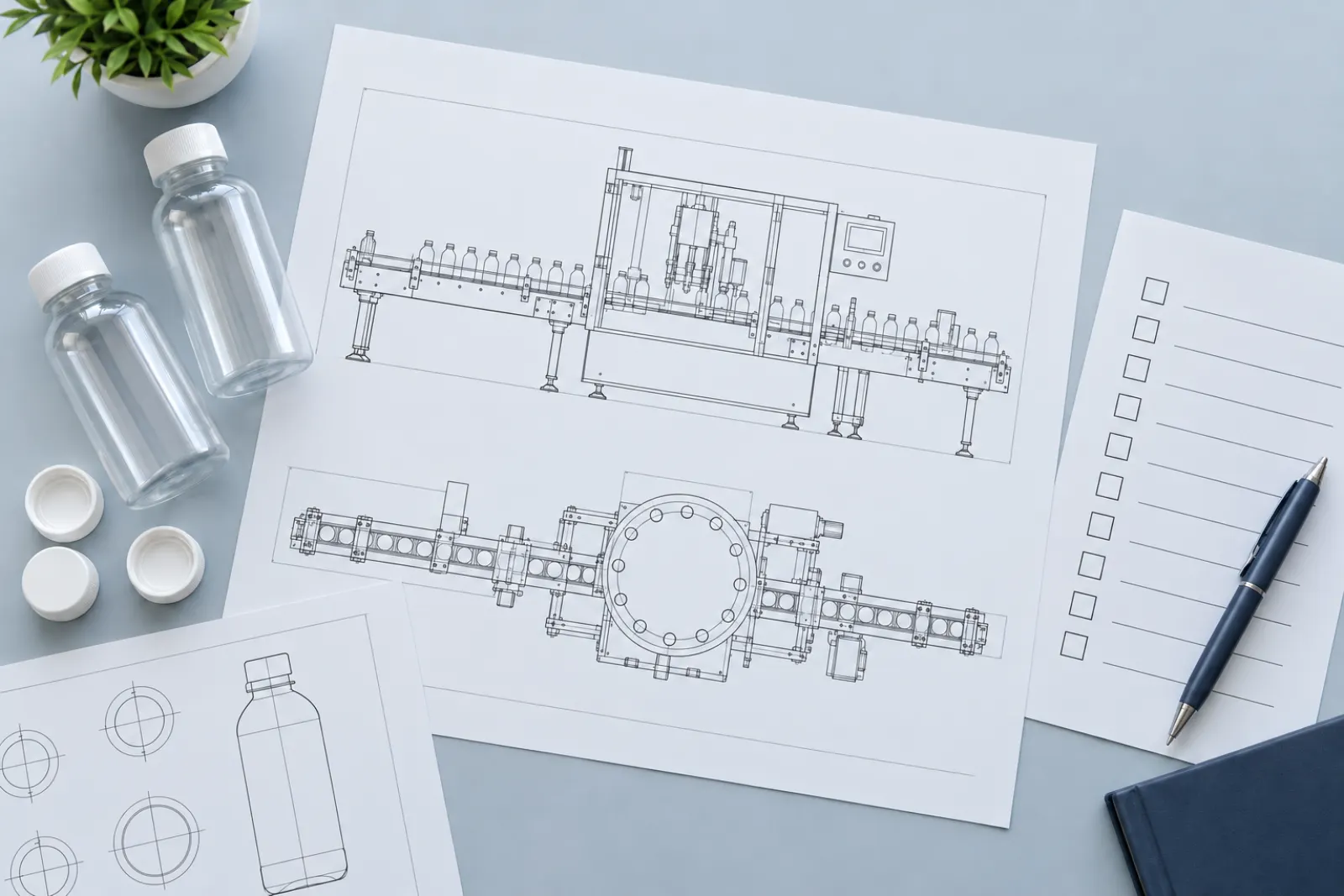
Packaging Machine RFQ Checklist for Food and Beverage Buyers
A copy-ready request-for-quotation structure for packaging machines, with eight modules of fields to fill in and a method for comparing quotes line by line.
Read the guideMore in Equipment
Bottle Capping Machine Selection: Caps, Torque and Changeover
How to match a capping machine to the closure and bottle finish: cap types, application vs removal torque, heads, change parts and pre-purchase validation.
Read the guide
Labeling Cold and Wet Bottles: Label, Adhesive and Machine Checks
A technical checklist for labeling cold, condensing bottles: container surface, label stock, adhesive and labeler settings, plus a trial on production bottles.
Read the guide
Cup Filling and Sealing Machines for Yogurt: A Buyer’s Checklist
A buyer's checklist for yogurt cup filling and sealing machines: stations, cup and lid compatibility, seal checks, cleaning, and questions to put to suppliers.
Read the guide