
Juice Filling and Packaging: Choosing a Process Before a Machine
Plan juice packaging product-first: chilled, hot fill, HPP or aseptic, then container and filler. Concepts only; process validation stays with the processor.
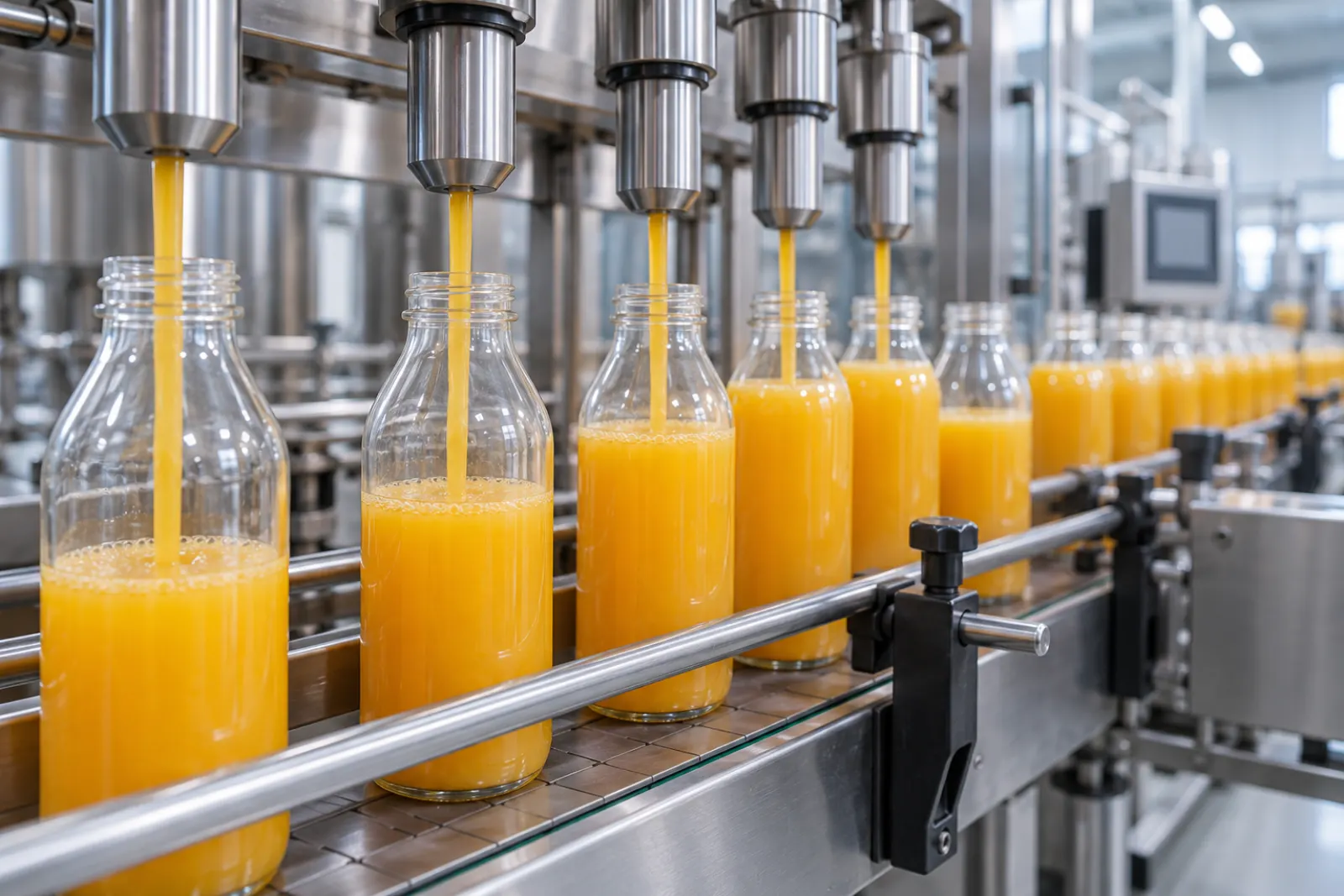
What this article covers
This guide helps juice producers and equipment buyers decide on the product and preservation approach before selecting a container and filler, and it explains why process validation sits with the processor and a process authority, not with the packaging supplier.
Covered
- Preservation approaches at concept level: chilled, hot fill, HPP after filling and aseptic filling
- How each approach constrains container, closure and filler choice
- FDA juice HACCP (21 CFR Part 120) as regulatory background
Not covered
- Process lethality design, validation and shelf-life determination, which require a process authority
- Juice formulation, nutrition or consumer topics
Choosing the filler before the preservation route can leave the juice, container and process incompatible. Define the product, choose chilled, hot-fill, in-pack HPP or aseptic processing, then match the container and filler.
Scroll horizontally for any hidden columns →
| Approach | What drives the container | Filler consequences |
|---|---|---|
| Chilled, short shelf life | Cold-chain handling, condensation, light and oxygen barrier | Cold fill; cleaning and hygiene design are critical |
| Hot fill | Heat resistance and vacuum behavior | Product heating and holding, cap-and-hold step, cooling tunnel |
| HPP after filling | Container and closure must tolerate pressure cycle and handling | Cold fill, then pressure treatment as a separate step |
| Aseptic | Container sterilization compatibility | Sterile zone, container and closure decontamination, validation |
This is a concept comparison; use the validation section to assign process and package checks.
Regulatory background: what the processor owns
In the United States, juice sold as such or used as an ingredient is covered by FDA’s Juice HACCP rule, 21 CFR Part 120. The text of 21 CFR 120.24 states that juice processors must include in their HACCP plans control measures that consistently produce at least a 5-log reduction in the “pertinent microorganism,” for a period at least as long as the product’s shelf life under normal and moderate abuse conditions. The text lists exemptions, including processors using a single thermal processing step sufficient to achieve shelf stability, and requires the 5-log treatment and the final packaging to take place in a single production facility.
FDA’s Hazards and Controls Guidance advises every juice processor to consult a process authority when setting up the 5-log controls. It also states that the HACCP plan must be validated initially, at least annually, and when process changes could affect it, and that moderate abuse (such as a pallet briefly sitting on a hot dock) is part of what the controls must withstand. The guidance discusses refrigerated low-acid juices, such as carrot juice, separately and notes specific botulism-related considerations, including controls and “Keep Refrigerated” labeling.
For equipment buyers, this means a machine supplier can state what the machine does. Whether the whole system achieves the required reduction for your juice, in your container, through your shelf life, is for the processor and a process authority to answer.
Step 1: Define the product
Start with the facts that drive everything else.
Scroll horizontally for any hidden columns →
| Product attribute | Why it matters for packaging |
|---|---|
| Acidity (pH) | A hot fill supplier states that hot fill applies to high-acid products with an equilibrium pH of 4.6 or below. Low-acid products need other approaches. |
| Pulp and particulates | Sets the nozzle opening, pump type and, for pouches, the fitment size. |
| Viscosity and foaming | Affects filler principle, fill speed and headspace control. |
| Heat sensitivity | Matters when comparing hot fill with approaches that apply less heat to the finished product. |
| Oxygen and light sensitivity | Drives barrier requirements and container material. |
| Distribution temperature | Chilled distribution allows different containers than ambient distribution. |
Write these down with ranges, not single values. Juice changes with fruit, season and formulation, and a filler must handle the extremes.
Step 2: Choose a preservation approach (concepts)
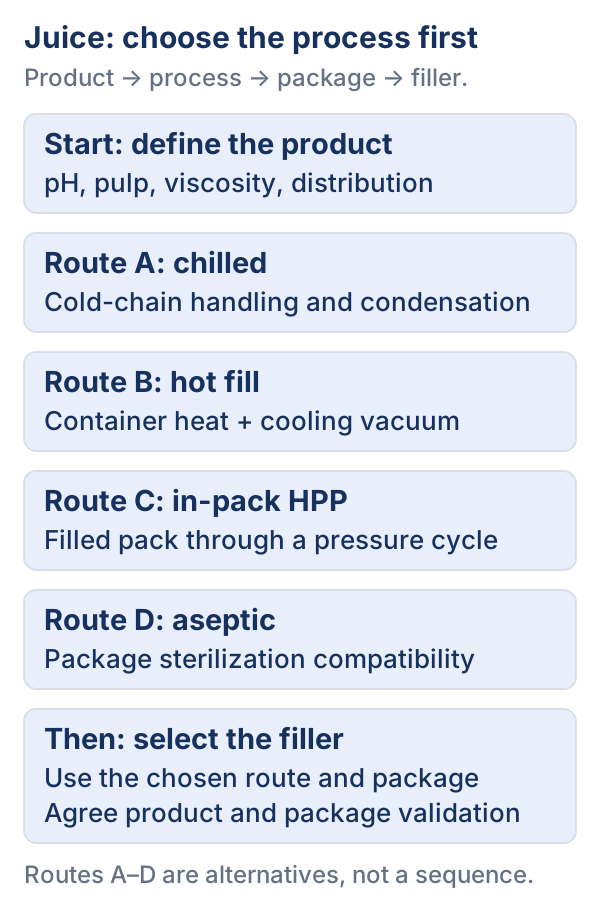
Use the opening comparison to narrow the route, then document the package constraints below.
Chilled, short shelf life
The juice is treated and kept cold through distribution, and refrigeration is part of the control system. For the container this usually opens options for lighter bottles, but the cold chain becomes a design input, and labels, closures and cartons must handle condensation. The 5-log requirement of Part 120 still applies to the process unless a listed exemption applies.
Hot fill
A packaging supplier’s hot-fill article describes filling, capping, holding and cooling, with a partial vacuum developing as the sealed product cools. Check both heat resistance and cooling-vacuum behavior. FDA’s guidance cites a National Food Processors Association example of heating to 90 degrees C for 2 seconds, filling at 85 degrees C and holding for 1 minute. Those are examples from those documents; the time and temperature for your juice and container are for your process authority to set.
HPP after filling
In-pack high pressure processing treats juice after it is sealed. The cited carambola study used soft packaging and refrigerated storage; its microbial and storage results apply to that study, not to an untested juice. Confirm the filled container, closure and label through the actual pressure cycle.
Aseptic filling
DNP’s supplier documentation defines aseptic filling as putting sterilized product into pre-sterilized containers in a sterile environment, with product and packaging sterilized separately and combined under controlled conditions. The same supplier describes a dedicated container sterilization step and a controlled sterile zone; package compatibility follows that system design.
Takeaway: Record the selected preservation route and its container constraints before comparing filler proposals.
Step 3: Check container constraints
The preservation approach narrows the container list:
- Glass is cited by ePac as handling high heat well, which is why hot fill is common in glass.
- PET generally needs heat-setting for hot fill and can then tolerate about 85 degrees C, according to ePac; PET without heat-setting is a different material specification.
- PP: ePac gives a temperature figure for the containers discussed in its hot-fill article, but that is not a ceiling for the whole PP resin family. Obtain the exact bottle-grade material specification and a documented fill/hold/cooling window from the container supplier.
- Flexible pouches can work with high-heat laminates and strong seals, but buyers should confirm film structure, seal strength and temperature rating.
- HPP and aseptic each have their own container questions; ask the supplier what evidence supports the container, closure and label for the exact process.
For a qualitative comparison of resins and glass, see beverage bottle materials. If you are considering a spouted or form-fill-seal pouch, bottle vs. pouch packaging lists the changes to filling, closing, conveying and packing.
Step 4: Select the filler type
Only now does the machine question make sense, and the answer follows from the earlier steps.
- Hot fill needs a filler that tolerates heated product and a way to hold the sealed container at temperature before cooling.
- Aseptic filling needs sterile-zone design and decontamination of both container and closure.
- Cold-filled chilled and HPP products need a hygienic filler and a closure that suits the container and the later process step.
- Pulp, fiber and viscosity set the nozzle opening and the metering principle. Liquid filling methods explains how gravity, piston and flowmeter principles differ, and how to choose a liquid filling machine gives a project-data list for comparing offers.
Project data checklist
- Juice types, pH range and pulp or particulate range for every variant on the line
- Preservation approach under consideration, and who is the process authority
- Fill temperature range and any hold or cooling step
- Container material, volume range, finish and supplier documentation
- Closure type, liner and seal method
- Output per hour, shifts and sizes
- Cleaning approach and changeover frequency between juice types
- Label type and application conditions (hot, cold or wet containers)
- Cold-chain or ambient storage assumptions for the finished goods
- Records and monitoring needed by your HACCP plan
Package questions before a trial
Do foods need to be packaged for HPP?
For the in-pack route considered here, yes. An HPP equipment supplier’s public FAQ describes packaging that flexes during compression, recovers after decompression and resists water. Ask for pressure-cycle results on the actual filled bottle or pouch, closure and label; inspection before treatment alone does not answer this. Bulk HPP before packaging is a different route.
Why do hot-filled containers sometimes deform or panel?
A packaging supplier’s published FAQ links paneling to the partial vacuum created during cooling. Ask the container supplier for its heat and vacuum limits and record shape, closure and seal checks after the agreed cooling cycle. Resin name alone does not establish that the package will pass.
What needs project-specific validation
This guide is not a lethality specification, safety assurance or shelf-life prediction. The processor and qualified process authority own process validation; the packaging supplier supplies package evidence. Record the checks using the FAT planning checklist.
- The preservation process itself: time, temperature, pressure or sterility parameters and the resulting reduction for your juice. This requires a process authority.
- Shelf life: the shelf life you intend to declare, under normal and moderate abuse conditions.
- Container performance: heat, vacuum, pressure and handling behavior of the actual bottle, closure and label.
- Filler performance with your juice: pulp passage, foaming, accuracy and cleaning.
- Hygiene and cleaning: confirm that cleaning reaches all product-contact surfaces, and that changeover between juices is controlled.
- Labeling and coding: adhesion and legibility at the real container temperature.
- Documentation: food-contact and equipment documentation to support your HACCP plan.
Questions to ask suppliers
- Which preservation approaches is this filler or container designed for, and where is that stated in your documentation?
- What fill temperature range, pH range and pulp size can it handle, and what evidence supports those ranges?
- For hot fill: what is the maximum container temperature, how is the hold step handled, and how is the vacuum on cooling managed?
- For HPP: what evidence do you have that this container, closure and label tolerate the pressure cycle?
- For aseptic: how are the container and closure decontaminated, and how is it verified?
- Which parts must be disassembled for cleaning, and what is the changeover between juice types?
- What changeover parts are needed for each container size?
- What records does the machine produce that can support our HACCP plan?
- What trials with our juice and container can be run, and what will be recorded?
- What documentation do you provide for food-contact materials and sanitary design?
- What acceptance criteria apply at factory and site acceptance?
Send the same project data to each supplier using the RFQ checklist so the answers can be compared, and bring your process authority into the review of any response that touches preservation.
Sources and method
This article is based on documentary research of the sources listed. It is not a hands-on equipment test. Supplier statements and editorial judgement are identified in the text.
- 21 CFR 120.24 - Process controls Supports: juice processors must include HACCP control measures that consistently achieve a 5-log reduction in the pertinent microorganism, with listed exemptions and a single-facility requirement.
- Guidance for Industry: Juice HACCP Hazards and Controls Guidance, First Edition Supports: Section V on 5-log controls, process-authority review and the NFPA hot-fill example. Official guidance returned substantive text (HTTP 200), checked 2026-10-08; examples are not project process specifications.
- Juice HACCP Supports: FDA's index of the Juice HACCP rule and related guidance documents.
- Hot Fill Process: Everything You Need to Know Supports: supplier description of hot fill temperatures, the cap-and-hold step, cooling vacuum, and container limits for glass, PET, PP and pouches.
- What is Aseptic Filling? Definition, Differences & Benefits Supports: supplier description of aseptic filling and how it differs from hot fill.
- Comparison of high pressure and high temperature short time processing on quality of carambola juice during cold storage Supports: HPP is applied to juice sealed in soft packaging; one study's pressure range, treatment times and 40-day refrigerated storage result for one juice.
- High Pressure Processing: What is HPP? Supports: the published question 'Do foods need to be packaged for HPP?' and the in-pack flexibility, recovery and water-resistance constraints. Supplier statement, not a recommendation or our test. Accessed 2026-10-08.
Next reading
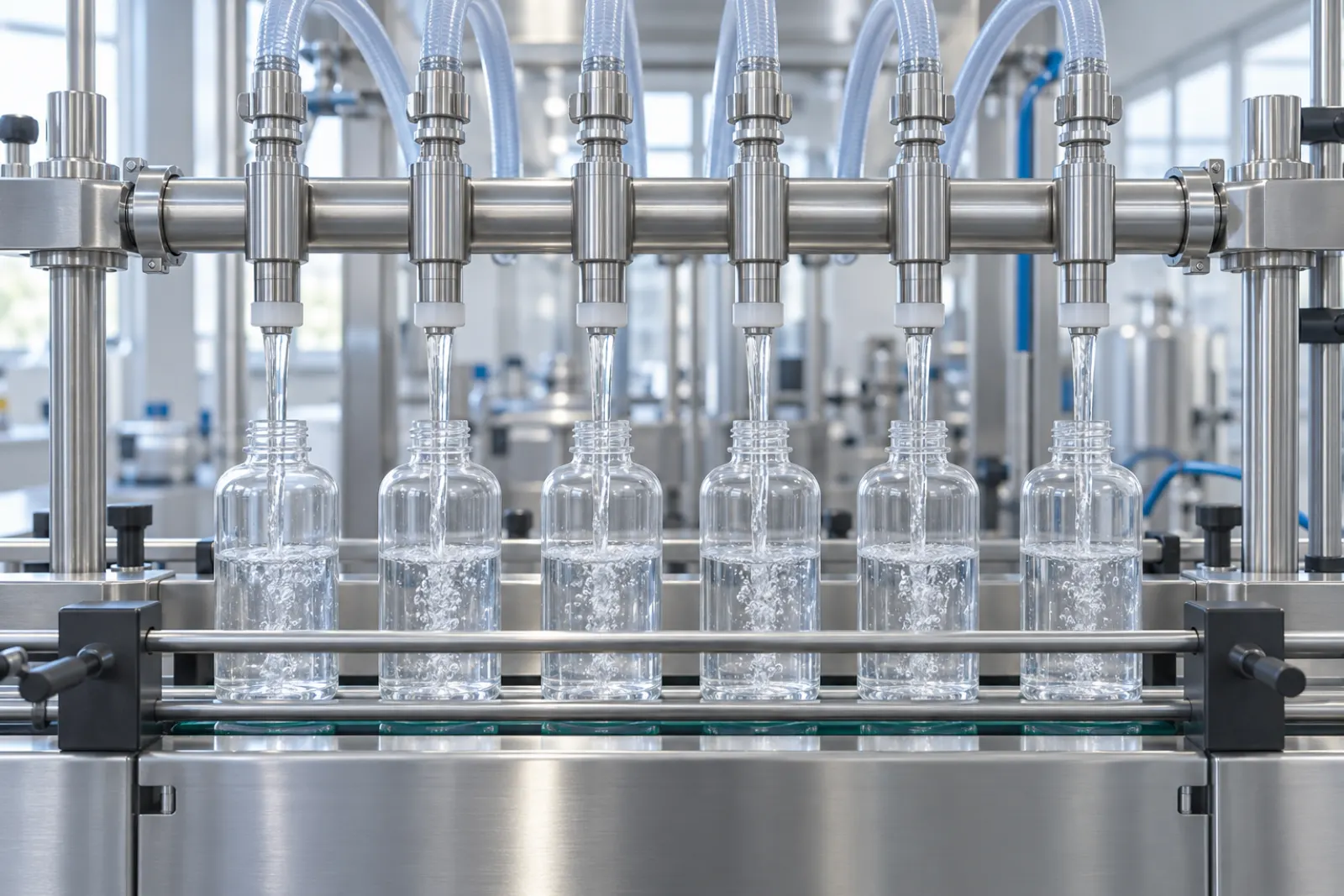
How to Choose a Liquid Filling Machine for Food and Beverages
A buyer's framework for choosing a liquid filling machine: project inputs, filling approaches compared, what to validate with samples, and supplier questions.
Read the guide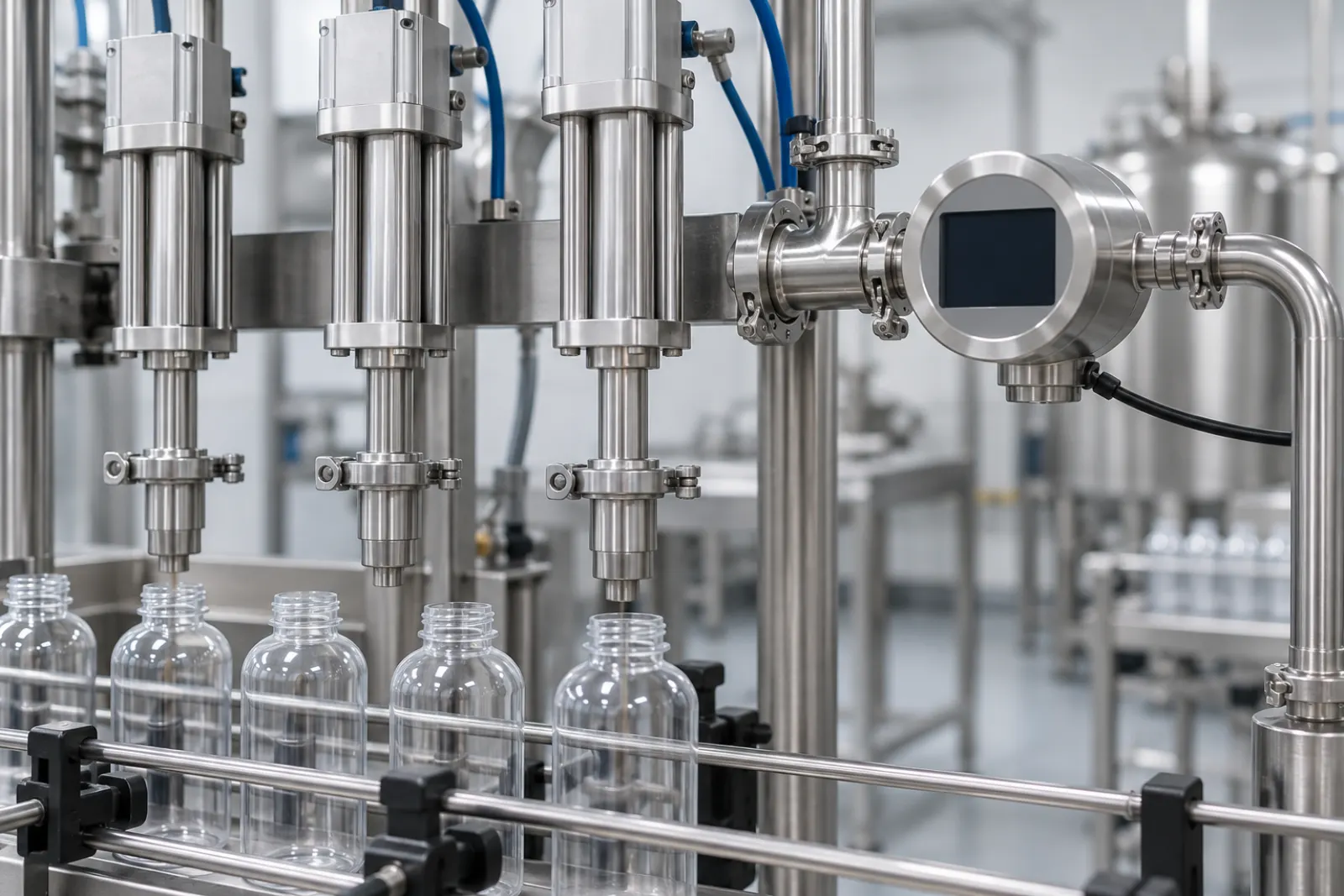
Liquid Filling Methods Compared: Gravity, Piston and Flowmeter-Based Systems
Compare liquid filling methods by metering principle, product feed and machine structure: gravity, overflow, piston and flowmeter systems and their limits.
Read the guide
Beverage Bottle Materials: Comparing PET, HDPE, Glass and PLA
Compare beverage bottle materials (PET, HDPE, glass and PLA) by weight, breakage, heat tolerance, gas barrier and recycling infrastructure, with a requirements checklist.
Read the guide
Bottle vs Pouch Packaging: What Changes on the Production Line?
Moving a liquid product between rigid bottles and flexible pouches changes filling, closing, conveying, changeover and cases. Use this guide to scope the work.
Read the guideMore in Applications
Milk Packaging Formats: Bottles, Cartons and Pouches
How to choose a milk packaging format by heat treatment, cold chain and light exposure, and what bottle, carton and pouch formats mean for filling equipment.
Read the guide
Yogurt Packaging: Cups, Bottles and Pouches for Different Products
Match yogurt packaging to product type: set, stirred, drinkable or squeeze. Compare cups, bottles and spouted pouches and their filling and sealing needs.
Read the guide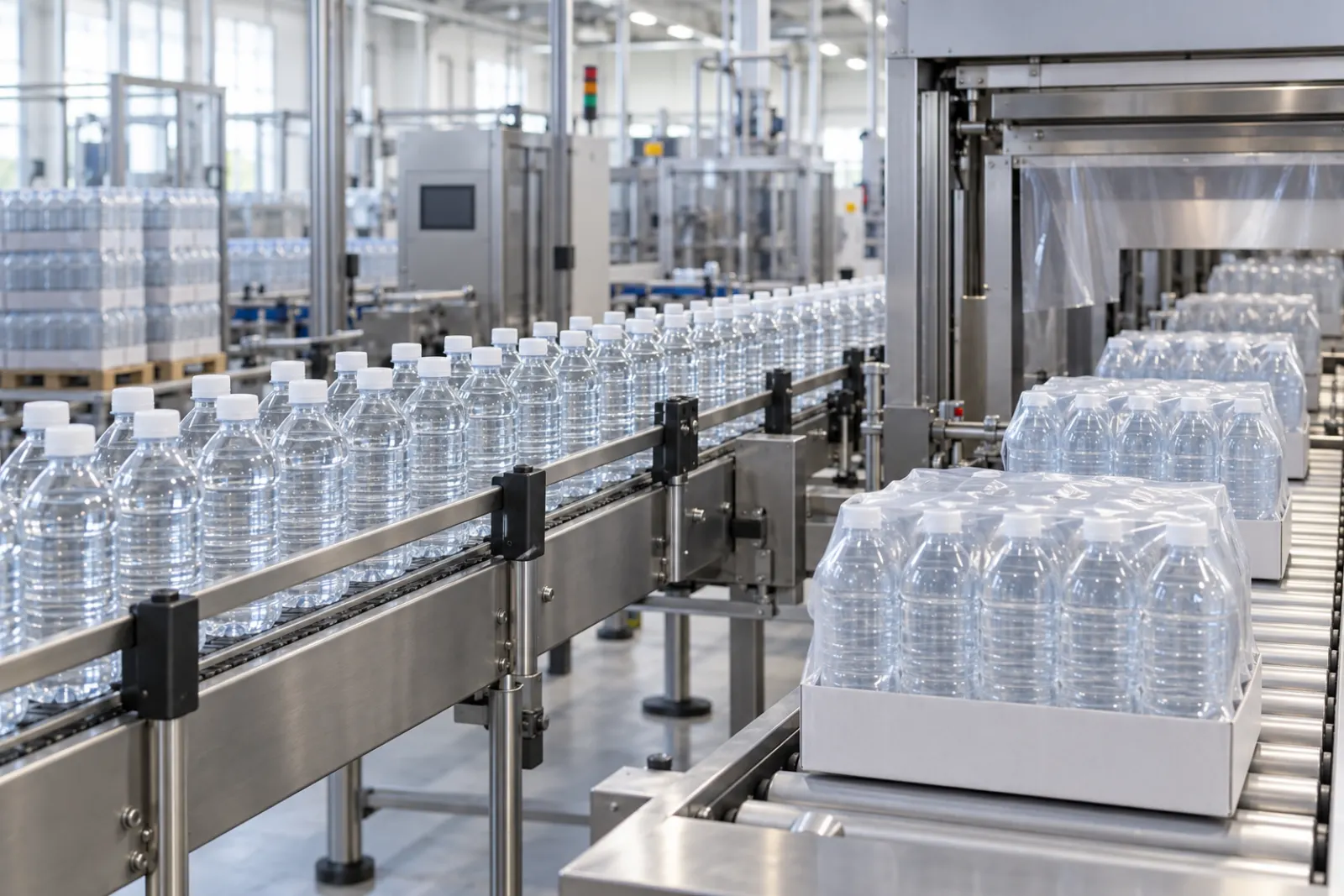
Bottled Water Packaging Lines: From Prepared Containers to Packed Cases
Plan a bottled water packaging line from container supply to palletizing: rinsing, filling, capping, labeling, coding and the interfaces between stations.
Read the guide