
Bottle vs Pouch Packaging: What Changes on the Production Line?
Moving a liquid product between rigid bottles and flexible pouches changes filling, closing, conveying, changeover and cases. Use this guide to scope the work.
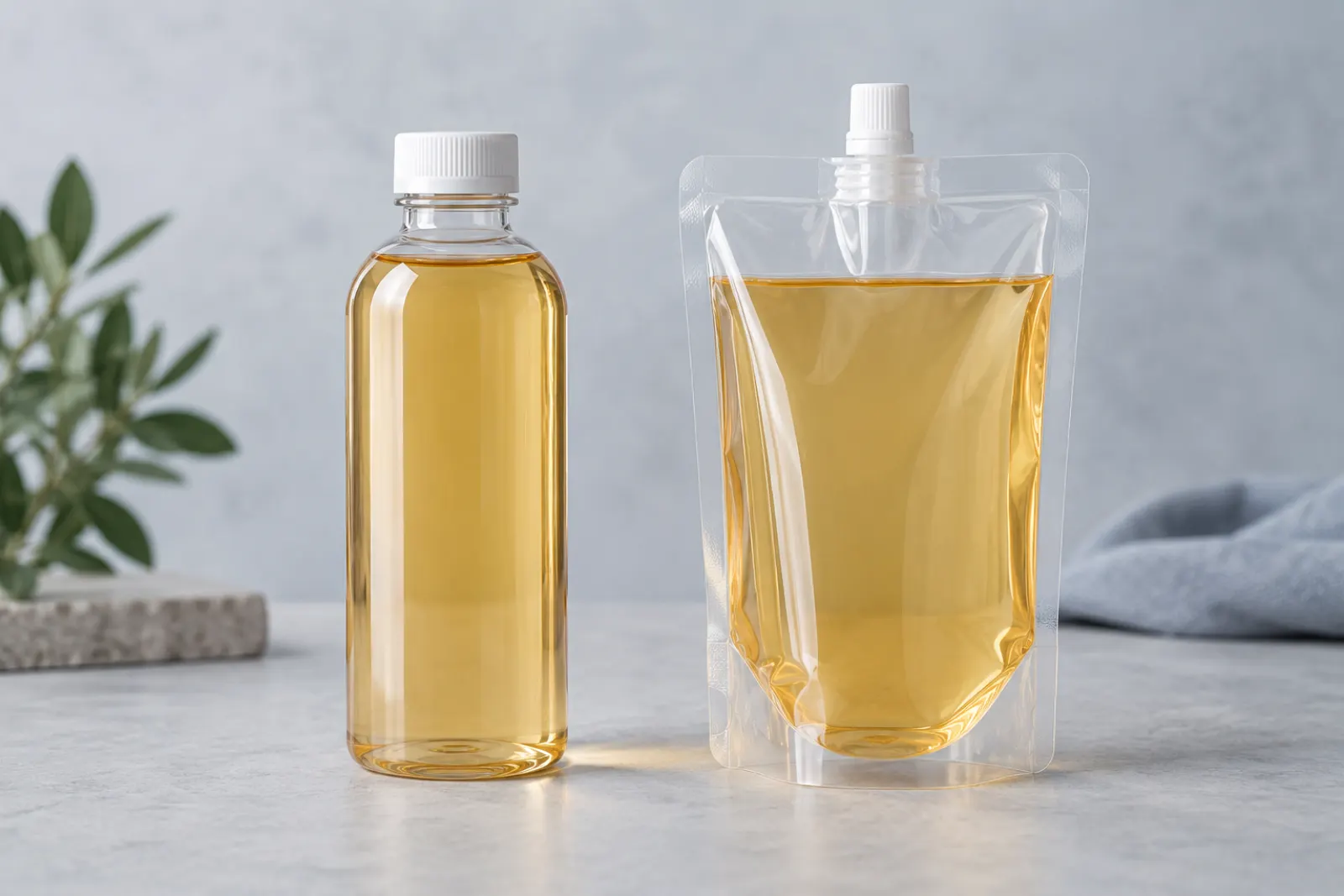
What this article covers
This guide helps buyers and plant teams see which line functions change when a liquid or semi-liquid product moves from rigid bottles to flexible pouches, or back, and which questions to settle before requesting quotes.
Covered
- Container supply, filling, sealing or closing, conveying, and secondary packaging on bottle and pouch lines
- Premade pouch machines compared with form-fill-seal machines that work from rollstock
- Changeover and materials handling differences
- Questions for suppliers and items that need project-specific validation
Not covered
- Product formulation, preservation and shelf-life claims
- Brand, supplier or machine recommendations
- Consumer preference, marketing and environmental impact claims
A bottle-to-pouch change can require new handling, closing and case-packing equipment as well as a filler. Map each existing station to retain, modify or replace before budgeting the whole line.
Scroll horizontally for any hidden columns →
| Station | Retain / modify / replace | Verify before deciding |
|---|---|---|
| Container supply | Record decision | Bottle supply, premade feeder or rollstock FFS |
| Filling | Record decision | Product passage, support and clean seal area |
| Closing / sealing | Record decision | Cap or heat-seal system and integrity |
| Conveying | Record decision | Stability, guides, transfers and rejects |
| Labeling / coding | Record decision | Print area, label need and readable code |
| Secondary packing | Record decision | Case pattern and pallet stability |
| Changeover / handling | Record decision | Parts, tools, film or pouch supply |
This public-source comparison uses seven functions, with labeling and coding grouped together. Premade pouches and rollstock form-fill-seal (FFS) are separate machine routes, not interchangeable feeders.
Two ways to get a pouch onto the line
The Flexible Packaging Association lists bags, pouches and rollstock within flexible packaging; the exact pouch construction is an input to machine selection.
The first decision is how the pouch reaches the filling point.
Premade pouches are manufactured and printed elsewhere, shipped to your plant in cartons or magazines, and loaded onto a fill-and-seal machine that opens, fills and closes them. Form-fill-seal (FFS) machines start from a roll of film (rollstock). According to the PACK EXPO category description, these machines turn printed or unprinted rollstock into pouches, bags or sachets, fill them and seal them in a single operation, in either a vertical or a horizontal orientation. On a vertical machine the film is drawn over a forming collar to make a tube, and the top seal of one bag becomes the bottom seal of the next.
According to the supplier’s documentation reviewed for this guide, premade pouch equipment is associated with more pouch styles, such as stand-up pouches with fitments, and with faster size or style changes. Rollstock equipment is associated with simpler pouch styles, longer runs of one format, and film bought as a roll instead of converted pouches. These are supplier characterizations, not measured results, and they vary by machine design, so put them to each bidder as questions.
A rigid bottle enters the filler already formed and moves on to a separate closing station. A form-fill-seal machine forms, fills and seals the pouch in one operation, so the filler and the container-making step become one machine. A premade pouch machine sits between the two: the container is formed elsewhere, but filling and sealing are tied closely together. Most of the layout changes below follow from this.
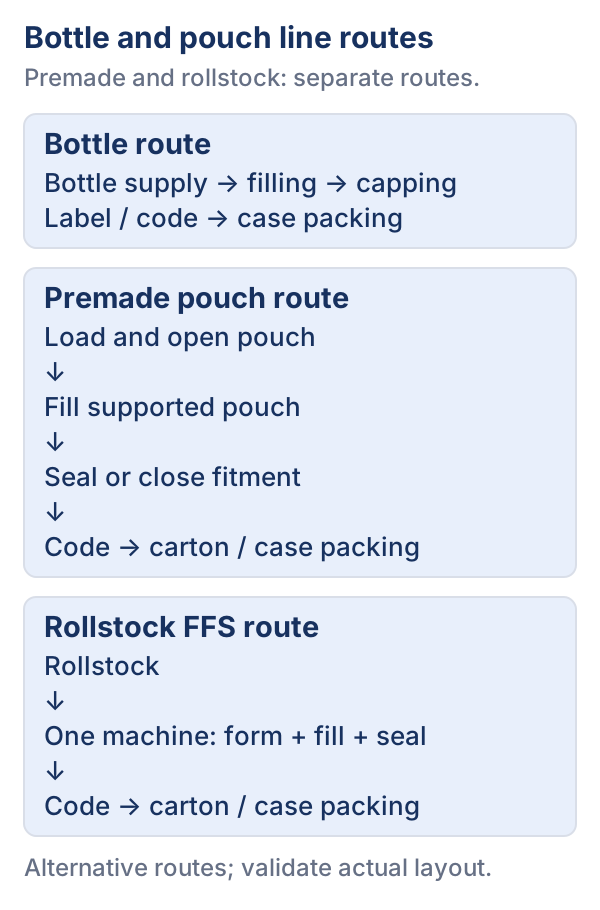
What changes, function by function
Scroll horizontally for any hidden columns →
| Line function | Rigid bottle line | Pouch line | Question to settle |
|---|---|---|---|
| Container supply | Empty bottles, or preforms and a blow molder; unscrambler or bulk depalletizer | Premade pouches loaded to a magazine or feeder, or film rollstock on an unwinder | Who prints and converts the container, and in what lot size? |
| Filling | Nozzle enters or sits over an open, rigid neck | Pouch opened and held; fill through a spout or an opening later sealed | How is the pouch held and the seal area kept clean? |
| Closing or sealing | Cap applied and torqued, sometimes with a liner or induction seal | Heat seal, or fitment plus cap | What defines a good seal or closure, and how is it checked? |
| Conveying | Bottles stand on a belt, in neck or body guides | Filled pouches may lie flat, hang from grippers, or sit in carriers | Can the existing conveyors be reused? |
| Labeling and coding | Wrap or pressure-sensitive labels on the body | Usually pre-printed film; coding may be a date or lot mark only | Where do lot code and date go? |
| Secondary packaging | Bottles in trays, shrink bundles or cases | Pouches in cartons, trays or cases, often stacked or laid flat | Is the case pattern defined by the pouch shape? |
| Changeover | Change parts: starwheels, guides, chucks, nozzles | Gripper sets, pouch magazines, forming tubes or sealing jaws | Which parts, how long, who does it? |
Container supply and unscrambling
A bottle line needs a way to present bottles upright and oriented. A pouch line needs pouches to be separated from a stack or magazine, picked, and opened, or film to be unwound and spliced. The supplier of a premade pouch machine needs pouch dimensions and tolerances, and the pouch converter needs the machine’s gripper and spout geometry. Get both parties into the same specification conversation early, or you may end up with pouches that run on a bench but not on the machine.
Filling
Product behavior matters more with pouches. According to Tenco’s supplier documentation, a very fluid product may fill quickly but can splash and trap air, a thick product needs pressure, speed and the final cut-off to be managed, and particles or fibers must flow evenly. The same source identifies the spout as a weak point: residue near the thread or closure area can prevent proper closing and increase rejects. The Canadian Food Inspection Agency’s retort pouch defects manual makes a related point for a different pouch type. Product must be kept out of the seal area, post-fill drip from the filler spout must be prevented, and overfilling raises the chance of seal contamination. Ask the supplier whether those controls apply to your pouch and process.
The filling specification should therefore list viscosity range, particulates, foaming tendency and fill temperature, and ask how the supplier controls drip, splash and seal-area contamination. Our guide to how to choose a liquid filling machine lists the product and container data to assemble, and the comparison of liquid filling methods explains the metering principles for either format. Bottle filling valves are built around a rigid neck, so confirm with each bidder whether any part of an existing filler can be reused or whether a new filler or filling module is in scope.
Sealing and closing
A bottle closure is a separate component with a defined finish, torque range and removal torque. Our bottle capping machine selection guide covers that matching. A pouch closure may be a heat seal, a fitment with a cap, or both. Seal quality depends on film structure, seal temperature, dwell time, pressure and cleanliness of the seal area. Write the sealing parameters and the seal-integrity checks into the acceptance criteria instead of leaving them to the supplier’s default settings.
Conveying, labeling and coding
Bottles are rigid and mostly stand on a belt. Filled pouches can slump or tip, and if filling was messy the outside of the pouch may carry product. Ask whether the line transfers pouches by grippers, carriers or belts, and what happens to a pouch after a jam. If the pouch is pre-printed, the labeler disappears, but the coder does not. It needs a defined print area and a surface that will accept the code.
Secondary packaging
Cases, trays and cartons are designed around the filled container. A rigid bottle supports stacking in some patterns. A pouch may need to be laid flat, stood in a tray or loaded into a carton, and the load pattern may be set by how the pouch behaves when it is full. Pallet stability, case dimensions and cartoner or case packer tooling should be reviewed for the new format rather than assumed from the old one.
Changeover and materials handling
Buyers tend to underestimate changeover. The OpX Leadership Network’s total cost of ownership guidelines, published through PMMI, direct buyers to acquisition and operating costs beyond the purchase price, and list changeover options among the equipment design and application costs. A bottle line changes starwheels, guides and nozzles. A pouch line changes grippers, magazines, forming tubes or sealing parts, and may require refilling magazines with a different premade pouch. Rollstock needs film splicing and registration setup.
Materials handling also differs. Premade pouches arrive in cartons that must be opened and loaded to the feeder, which is a labor step. Rollstock arrives as heavy rolls, so ask about lifting aids and storage. Bottles often arrive on pallets of nested or bulk-packed containers. Ask about storage conditions for film and pouches, such as humidity and cleanliness.
A decision framework for the project
To decide how much of the line a format change touches, work through these steps.
- Define the product: viscosity, particulates, fill temperature, hot-fill or cold-fill, carbonation, preservation route.
- Define the container requirement: barrier needs, closure or fitment, pour or dispense behavior, size range.
- Decide how the container arrives: premade pouches, rollstock, or bottles and preforms.
- Map each existing station to reuse, modify or replace.
- Define the case or carton pattern and the pallet configuration.
- Define changeover frequency and the number of SKUs.
- Price the whole line scope, not the filler alone. Our guide to building a packaging line budget lists the other cost components.
Hot-fill, carbonated or high-pressure products can limit the choice. Those constraints come from the product and the container material, so confirm them with the container supplier.
Reuse check
Copy the blank record. Support each reuse decision with a drawing, supplier confirmation or trial result, and name who closes it.
Scroll horizontally for any hidden columns →
| Existing item | Retain / modify / replace | Evidence / drawing / trial | Responsible person |
|---|---|---|---|
| Filler | |||
| Capper / sealer | |||
| Conveyors / transfers | |||
| Labeler | |||
| Coder | |||
| Case / tray packer / cartoner | |||
| Palletizer | |||
| Utilities | |||
| Cleaning path | |||
| Floor space / access |
Takeaway: Cost the complete retain/modify/replace record using the line budget worksheet, including interfaces and pack-out.
How dairy and similar products raise the stakes
Dairy shows why the container question needs process input. Our guides to milk packaging and yogurt packaging note that milk is packed in bottles, cartons and pouches, and that yogurt is packed in cups, bottles and squeeze pouches. The container does not change what the product is, but it changes cold-chain handling, light protection and the cleaning plan. Shelf life under a given container is a project-specific question for the product and process, and this guide does not make any shelf-life statement.
Questions to ask suppliers
- Which container styles and size ranges does the machine handle, and what tolerances does it require on the pouch or bottle?
- How is the container held during filling, and what controls drip, splash and seal-area contamination?
- What defines a good seal or closure, and what in-line checks exist?
- Which parts are changed for each format, how long does a changeover take on your reference installation, and who performs it?
- What does the supplier need from the container converter: drawings, samples, tolerances?
- What are the utilities, floor space and operator roles?
- What documentation and cleaning procedures come with the equipment?
- Which scope items are excluded from the quote: feeders, conveyors, coders, case packing?
What needs project-specific validation
General guidance cannot settle several points. Confirm them with your product, your containers and the supplier’s equipment:
- Fill accuracy and net-content compliance at the real viscosity and temperature.
- Seal or closure integrity under production conditions and after distribution.
- Pouch or bottle performance on the machine at the planned speed, using production-grade containers.
- Conveying stability, jam behavior and reject handling.
- Case and pallet stability.
- Cleaning effectiveness and changeover time on the actual machine.
Close these with a trial on your own product and containers, run to a written protocol. Our RFQ checklist and FAT planning guide show how to write the requirement and the acceptance checks.
Sources and method
This article is based on documentary research of the sources listed. It is not a hands-on equipment test. Supplier statements and editorial judgement are identified in the text.
- Flexible Packaging Association home page Supports: the association's description of flexible packaging as produced from paper, plastic, film, aluminum foil, or any combination of those materials, and its listing of bags, pouches and rollstock as product types.
- Form/Fill/Seal (category description) Supports: the description of form/fill/seal machines as single-operation machines that turn printed or unprinted film rollstock into pouches, bags or sachets, fill them and seal them, in vertical or horizontal orientation, and the vertical-machine detail that the top seal of one bag becomes the bottom seal of the next.
- Flexible Retort Pouch Defects Manual: Identification and Classification Supports: the general principle, stated for retort pouches, that product must be kept out of the seal area during filling, that post-fill drip from the filler spout must be prevented, and that overfilling raises the chance of seal contamination.
- Spouted pouches: flexible packaging and filling challenges Supports: supplier-documentation statements that an empty pouch must be supported, that splash and residue near the spout affect closure, and that stable handling and format changeover matter for multi-SKU producers.
- VFFS vs. premade pouch filling Supports: supplier-documentation statements on how premade pouch machines and rollstock machines differ in changeover, pouch features and labor. Treated as supplier content, not as verified performance data.
- Revamped industry tool allows manufacturers to understand total cost of machinery purchase Supports: the OpX Leadership Network's position that acquisition and operating costs, not only the purchase price, belong in a machine purchase decision.
- Total Cost of Ownership (TCO): Packaging and Processing Machine Guidelines Supports: changeover options listed among equipment design and application cost considerations.
Next reading
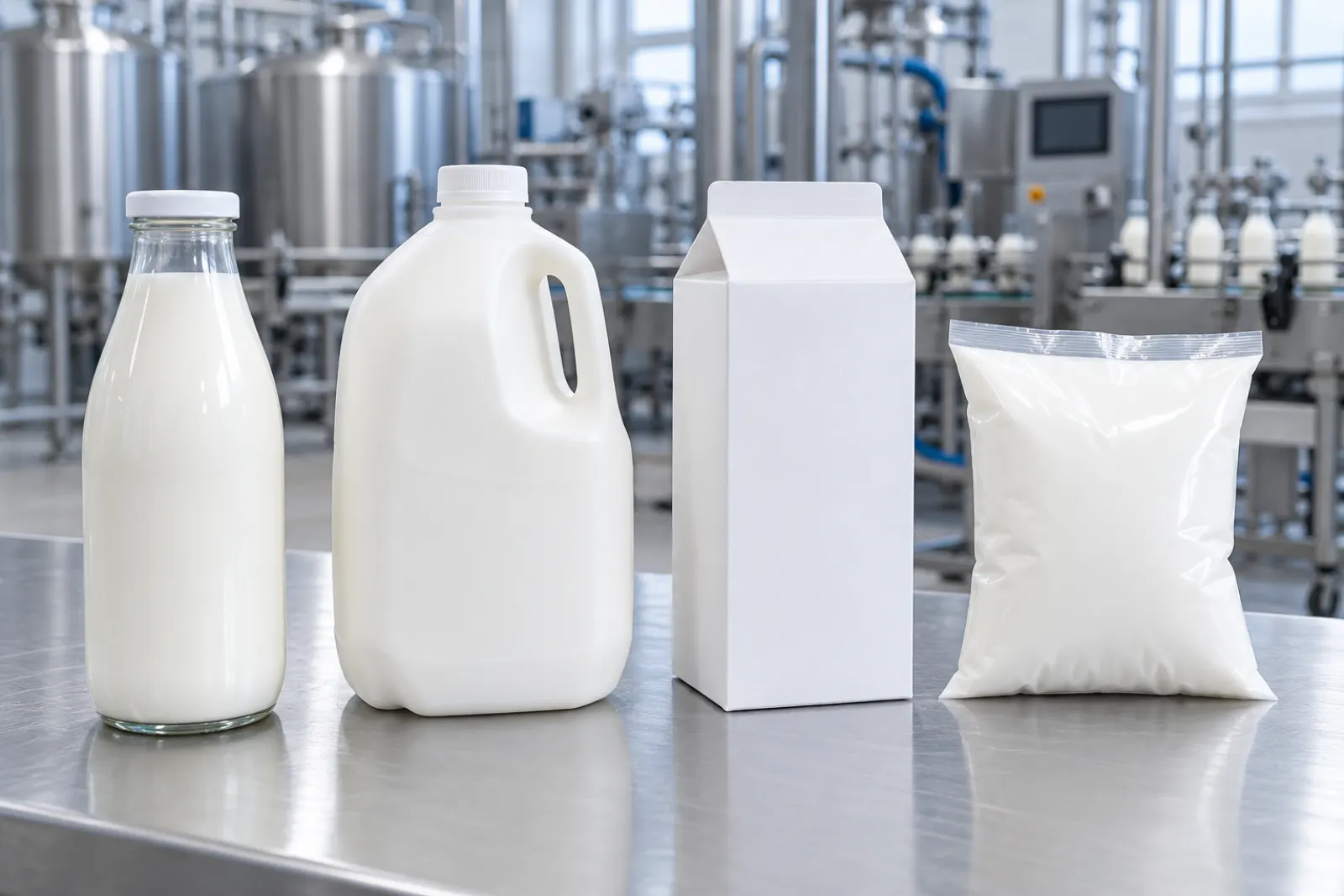
Milk Packaging Formats: Bottles, Cartons and Pouches
How to choose a milk packaging format by heat treatment, cold chain and light exposure, and what bottle, carton and pouch formats mean for filling equipment.
Read the guide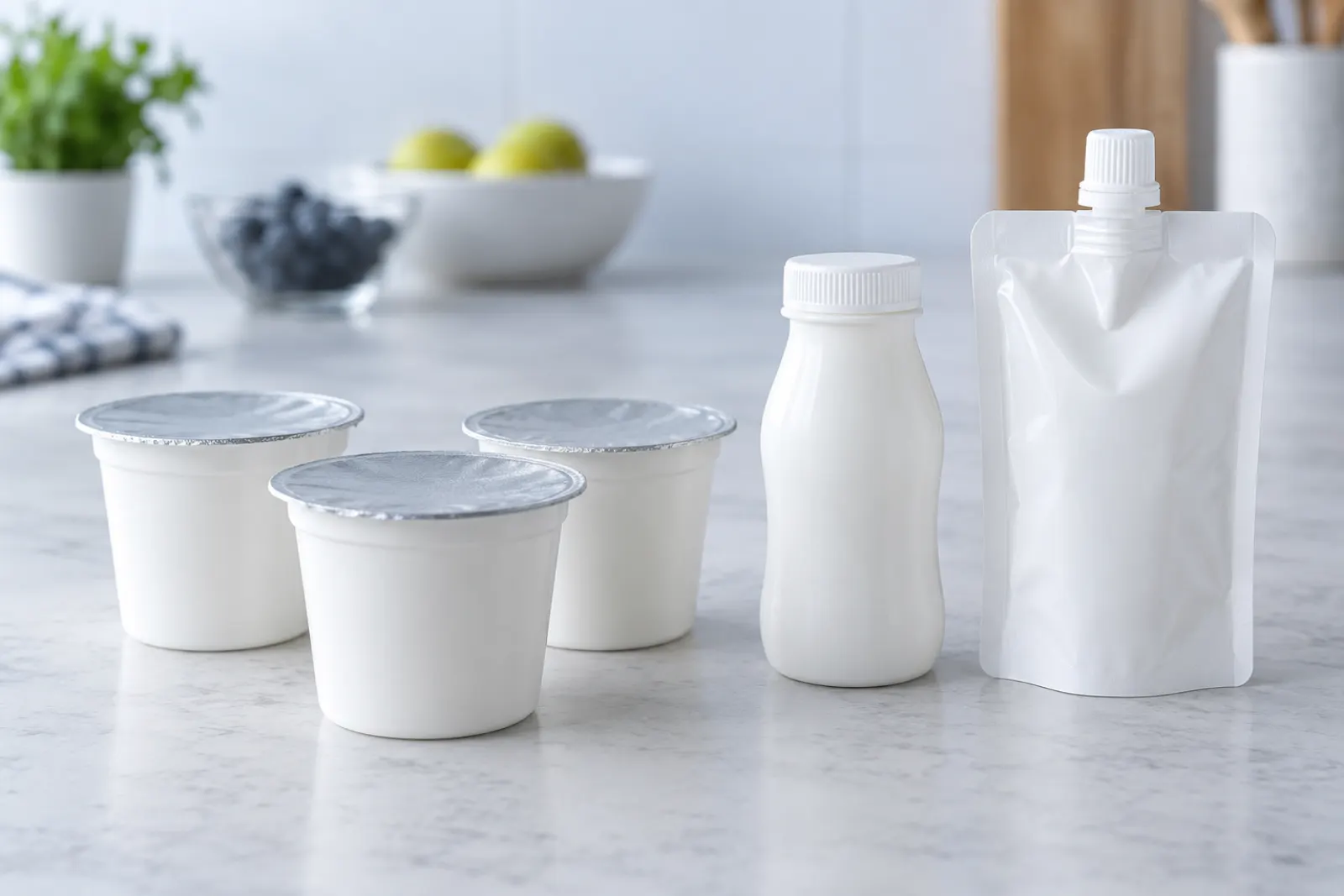
Yogurt Packaging: Cups, Bottles and Pouches for Different Products
Match yogurt packaging to product type: set, stirred, drinkable or squeeze. Compare cups, bottles and spouted pouches and their filling and sealing needs.
Read the guide
Packaging Line Cost: Building a Project Budget Beyond the Machine
Build a packaging line budget from nine components, from machines and change parts to FAT, SAT, training and contingency, and learn how to collect each figure.
Read the guideMore in Buying Guides
Packaging Machine RFQ Checklist for Food and Beverage Buyers
A copy-ready request-for-quotation structure for packaging machines, with eight modules of fields to fill in and a method for comparing quotes line by line.
Read the guide
Factory Acceptance Testing for Packaging Equipment: Planning the Checks
Finding defects after shipment can delay installation. Prepare a FAT protocol, representative materials, raw test records and an agreed punch list.
Read the guide
Food Packaging Costs: Materials, Quotes and Cost per Pack
Build a food packaging cost worksheet for materials, conversion, printing, freight and waste, with qualitative PLA and dairy-container examples.
Read the guide