
Food Packaging Costs: Materials, Quotes and Cost per Pack
Build a food packaging cost worksheet for materials, conversion, printing, freight and waste, with qualitative PLA and dairy-container examples.
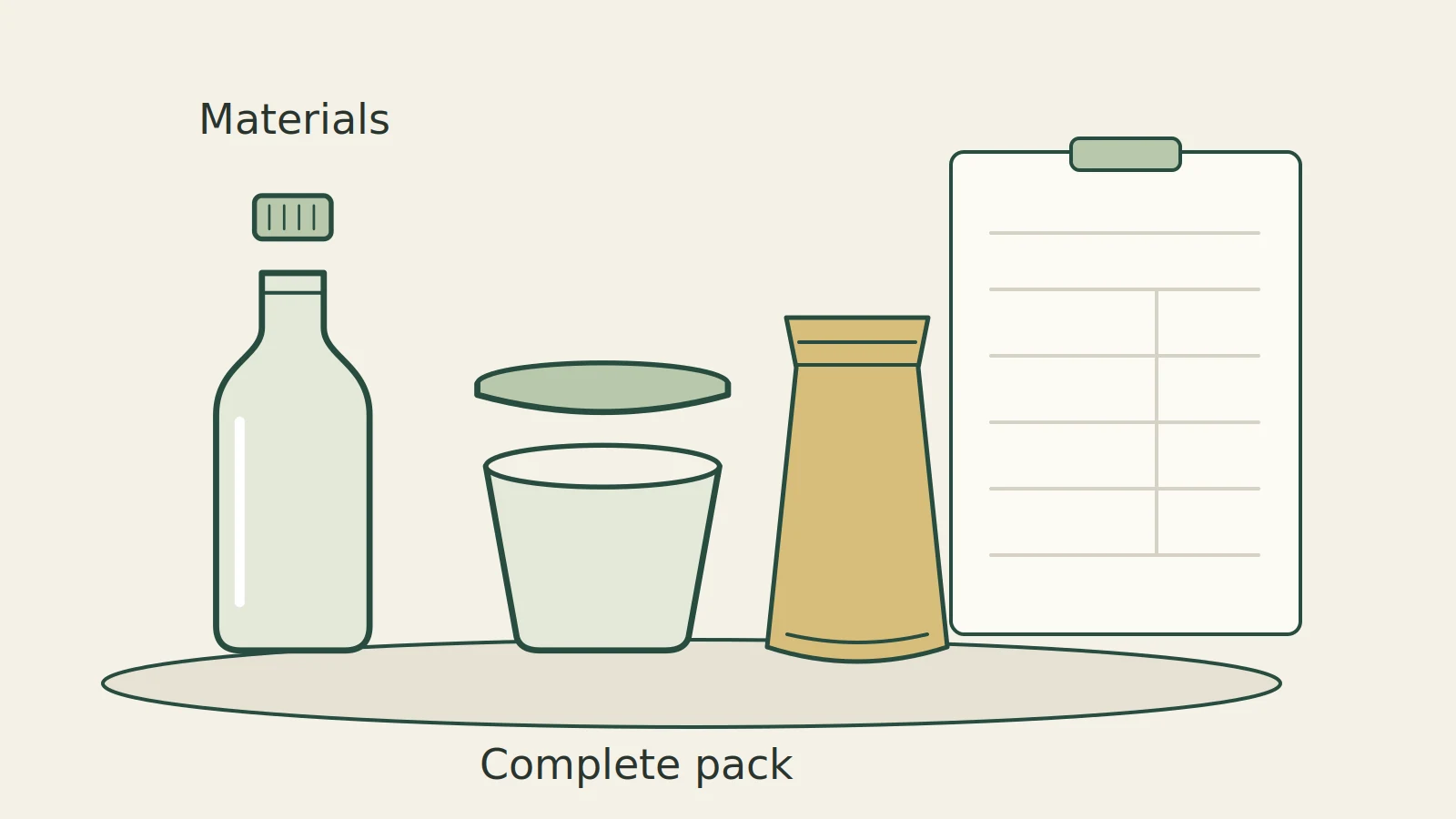
What this article covers
Compare packaging quotes using a consistent cost scope and accepted-pack denominator, without importing market prices or equipment budgets.
Covered
- Cost categories and comparable quotes
- Qualitative PLA resin and dairy-container examples
- A copyable worksheet without price numbers
Not covered
- Market prices or supplier rankings
- Machine capital budgets
- Milk production and farm costs
A cheap packaging quote can waste money when it leaves out closures, freight or rejected packs. Compare food packaging costs by defining the complete pack, listing included charges and dividing the chosen cost total by accepted packaging output.
For food brands comparing the cost of packaging materials, the useful starting point is a written pack specification and a common delivery basis. A resin quotation, a printed rollstock quotation and a finished-container quotation buy different things. This guide supplies a blank cost record, a qualitative PLA conversion example and a dairy-container example; it contains no market prices, supplier ranking or assumed savings. Use it alongside the food packaging buying guides to prepare a comparison your purchasing and production teams can reproduce.
Scroll horizontally for any hidden columns →
| Input or item | Value or source to record | Why it matters |
|---|---|---|
| Complete pack | Approved component list | A cup without its lid is an incomplete comparison |
| Material and construction | Supplier specification | Names such as PLA do not define the finished article |
| Order and release quantities | Written purchasing schedule | Annual demand and one delivery are different quantities |
| Printing and artwork | Approved design revision | Decorations and setup charges need a common basis |
| Delivery basis | Supplier terms and destination | Freight is either included or separately added |
| Accepted output | Receiving or production record | Purchased quantity does not establish usable quantity |
| Quote date and validity | Dated offer | Quotes from different periods need a fresh check |
Define the unit before comparing the price
Choose an accepted empty package or an accepted filled pack as the unit, then use it consistently. The first supports a materials-purchasing comparison; the second can include packaging operation costs. Our suggested worksheet keeps these scopes separate so a supplier’s invoice is not mistaken for the plant’s full cost of packing food.
Start with a component list. A beverage bottle comparison can include bottle, closure, tamper feature, decoration and the allocated outer case. A cup comparison can include cup, lidding material and any additional cover. Record only the parts your actual design uses. The milk packaging format guide helps identify candidate formats, while bottle versus pouch packaging explains why format changes alter the purchasing scope.
Write down currency, delivery location, order quantity, release schedule and the period represented. Keep a quote for a trial order separate from an annual supply arrangement. If one offer includes printed finished packs and another covers undecorated blanks, mark the missing printing work before comparing their totals.
Common mistake: Comparing an annual quantity discount with a small release price while assuming both suppliers will hold and deliver the same inventory.
Takeaway: Define the complete pack, purchasing period and accepted-output unit before ranking offers.
Build a cost worksheet with included-charge markers
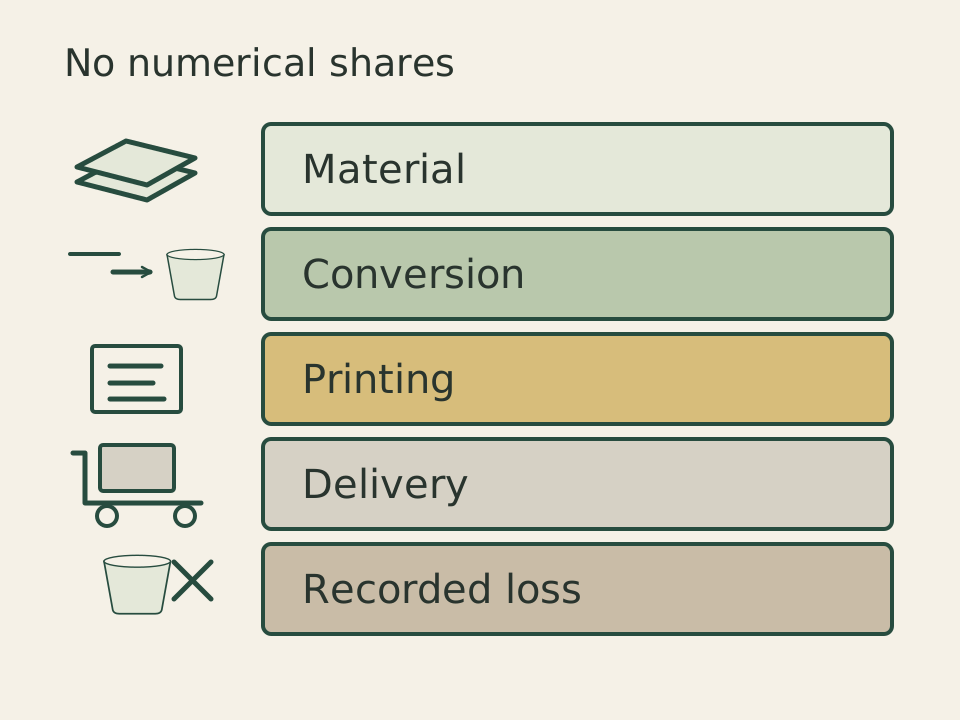
Use categories as prompts, then mark each charge as included, separate or outside scope. Conner Industries’ public total-cost guidance includes materials, logistics, labor, administration, warehousing and handling. PakFactory discusses manufacturing, artwork, printing and shipping. The table below is our editorial grouping of those considerations for food-packaging purchasing, not a prescribed accounting standard.
Scroll horizontally for any hidden columns →
| Cost row | Supplier or plant input | Included in quoted pack price? | Evidence or allocation basis |
|---|---|---|---|
| Material or purchased components | Component description and quantity | Fill in | Specification and offer |
| Conversion | Extrusion, forming or other work actually supplied | Fill in | Supplier’s stated scope |
| Artwork and printing | Design revision, print process and setup | Fill in | Approved artwork and itemized charges |
| Closures and accessories | Parts in the agreed complete pack | Fill in | Component list |
| Inbound delivery | Freight, handling and agreed commercial terms | Fill in | Delivery quotation |
| Storage and administration | Costs included in the chosen comparison | Fill in | Your organization’s allocation method |
| Loss and replacement | Rejected or unusable packs in the recorded period | Fill in | Receiving and production records |
| Once-only charges | Tooling or setup charge, if applicable | Fill in | Contract and written allocation period |
Add a calculation area below the scope record. The entries are blank because they belong to your quotation, inventory and acceptance records.
Scroll horizontally for any hidden columns →
| Calculation field | Your value | Supporting record |
|---|---|---|
| Currency and quoted pricing unit | Fill in | Dated offer |
| Delivery lot or production batch | Fill in | Receipt or batch identity |
| Applicable unit purchase cost | Fill in | Offer and invoice |
| Quantity attributable to this output; resin in kg where relevant | Fill in | Receipt or material-consumption record |
| Charge already included? | Fill in | Offer scope |
| Extra charge to add; only when excluded above | Fill in | Invoice or agreed allocation |
| Once-only charge allocated to this output | Fill in | Written allocation rule |
| Total attributable scoped cost | Fill in | Sum of included rows, without duplicates |
| Accepted complete packs in this lot/batch | Fill in | Receiving or output acceptance record |
| Cost per accepted pack | Fill in | Total attributable scoped cost ÷ accepted packs |
The included-charge column prevents double counting. If conversion and print are already in a finished-pouch price, do not add them again as estimates. Ask for clarification when the offer is bundled; an unresolved line remains unresolved rather than becoming zero. Use the specification discipline in the packaging RFQ checklist to keep revisions and assumptions visible, adapting it to materials purchasing.
For a purchasing comparison, use the costs attributable to one delivery lot and that lot’s accepted complete empty packages. For production, use material consumption attributable to the accepted output batch, including material consumed in its rejects, plus the agreed allocations. Do not divide current purchases by current production output when inventories carry between periods; reconcile opening stock, receipts, consumption, returns and compensation with finance. If packaging-operation labor and utility costs are added, label the result as a broader packing-cost comparison. Keep equipment purchase and installation in the separate packaging line investment budget.
Takeaway: Mark what the quote already includes before adding any plant-side cost.
PLA resin: follow the purchased product through conversion
A polylactic acid price per kg is a resin input, not the price of a food container. NatureWorks describes its extrusion and thermoforming resin series as suitable for extruded rollstock that can be thermoformed. That public process description supports a qualitative cost route: resin purchase, conversion to sheet, forming, and the finished pack’s other components.
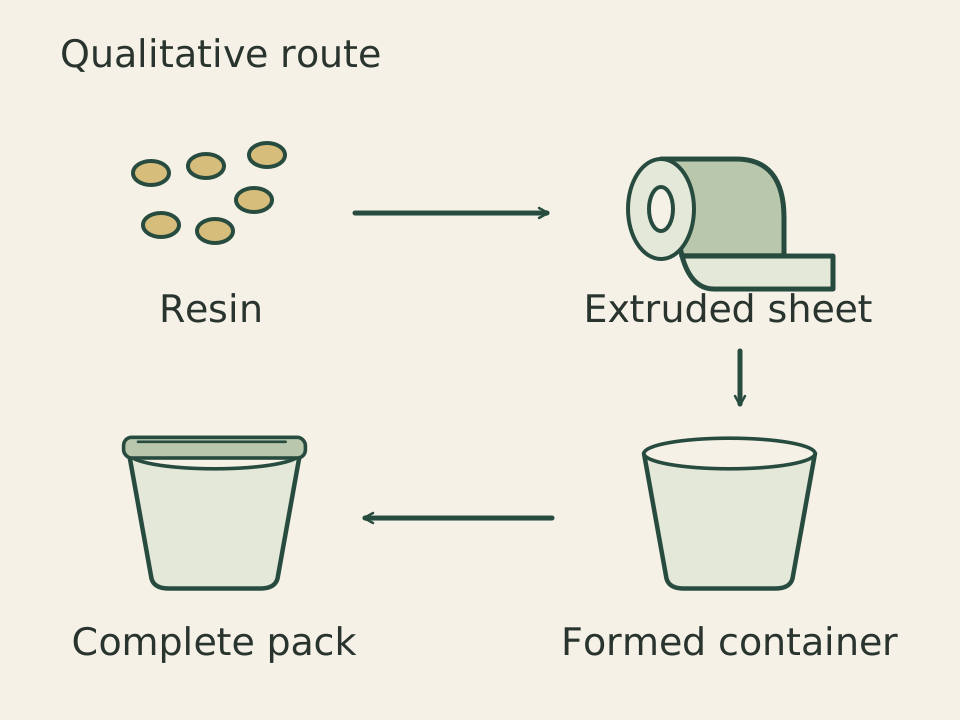
This is a qualitative structure example compiled from public material literature, with no assumed price or yield. For a resin purchase, record the specified grade, delivery quantity, supplier terms and resin kg consumed in the defined output batch. Its resin-only cost per accepted container is attributable consumed kg × the applicable purchase cost per kg ÷ accepted containers in that batch. This is an accounting identity, not a recipe or yield assumption; conversion and other pack components are separate unless already included. For a finished-container purchase, the converter’s offer is the relevant starting cost; avoid adding a separate resin cost already embedded in that offer.
Scroll horizontally for any hidden columns →
| PLA purchasing stage | Input to obtain | What remains outside that input |
|---|---|---|
| Resin | Grade, quantity, delivery basis and offer validity | Finished-pack conversion, print and closures |
| Extruded sheet | Construction, usable dimensions and supplied quantity | Forming work unless included |
| Formed container | Design revision and accepted unit definition | Lid, decoration and freight unless included |
| Complete pack | All selected components and delivery scope | Plant operation costs unless explicitly included |
The PLA food-packaging guide addresses material selection; the PLA versus PET bottle comparison keeps the comparison tied to intended use. Neither substitutes for a quotation for the actual design.
For discussions about resin price changes, separate market context from your contract. BLS defines the Producer Price Index as a measure of changes in prices received by domestic producers and describes its use in contract adjustments. An index is not a delivered PLA price. If a supplier proposes index-based adjustments, document the named series, reference periods, covered share and adjustment rule rather than assuming the entire finished-pack price follows the index.
Takeaway: Compare offers for the same purchased stage; trace grade, batch size and delivery terms instead of importing a generic resin price.
Dairy containers: keep format and output in the denominator
For dairy, build the cost record around the container system used by the product. A bottle, yogurt cup and carton comparison starts with different components. The worksheet does not prescribe a dairy package; it asks you to cost the selected design against its own accepted output and distribution requirements.
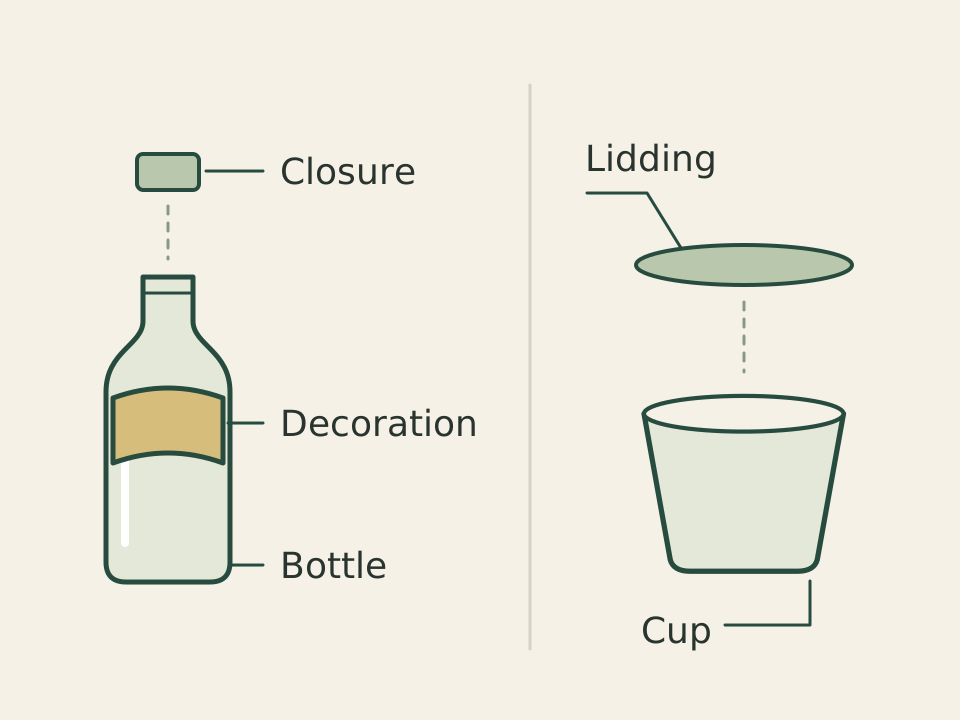
For a milk bottle, list the selected bottle, closure, decoration and outer packaging. For a yogurt cup, list the cup, lidding and any cover used in the design. Consult yogurt packaging formats before comparing a cup offer with a pouch offer, and beverage bottle materials before treating material names as equivalent specifications.
Scroll horizontally for any hidden columns →
| Reporting question | Record required | How to interpret the result |
|---|---|---|
| Cost per accepted container | Defined component cost and accepted containers | Materials basis for that design |
| Packaging cost per gallon | Same-scope packaging costs and accepted packed gallons | Specify the gallon convention and product mix |
| Annual packaging expenditure | Actual or planned accepted units by SKU, with separate once-only charges | Forecast if planned; historical if measured |
| Dairy production spreadsheet | Packaging rows kept separate from milk and farm costs | This guide covers the packaging rows only |
Packaging cost per gallon is the packaging cost attributable to the defined production batch divided by accepted gallons packed in that batch; reconcile inventory consumption and charges so the numerator represents that output. It is not the cost of producing milk. An annual forecast can sum the expected accepted units for each SKU multiplied by that SKU’s scoped unit cost, adding any separately allocated charges once. Record the assumptions and identify it as a forecast; do not treat a trial run’s losses as an established annual rate.
Takeaway: Keep package format, product mix and reporting period visible in dairy cost comparisons.
Check usable output and compare written offers
Use accepted-output records to investigate the difference between purchased packs and usable packs. Syntegon’s public material-waste discussion identifies startup and reel-change losses in vertical bagging as possible sources of waste. This supports measuring losses; its customer savings claims do not supply a loss rate for your plant.
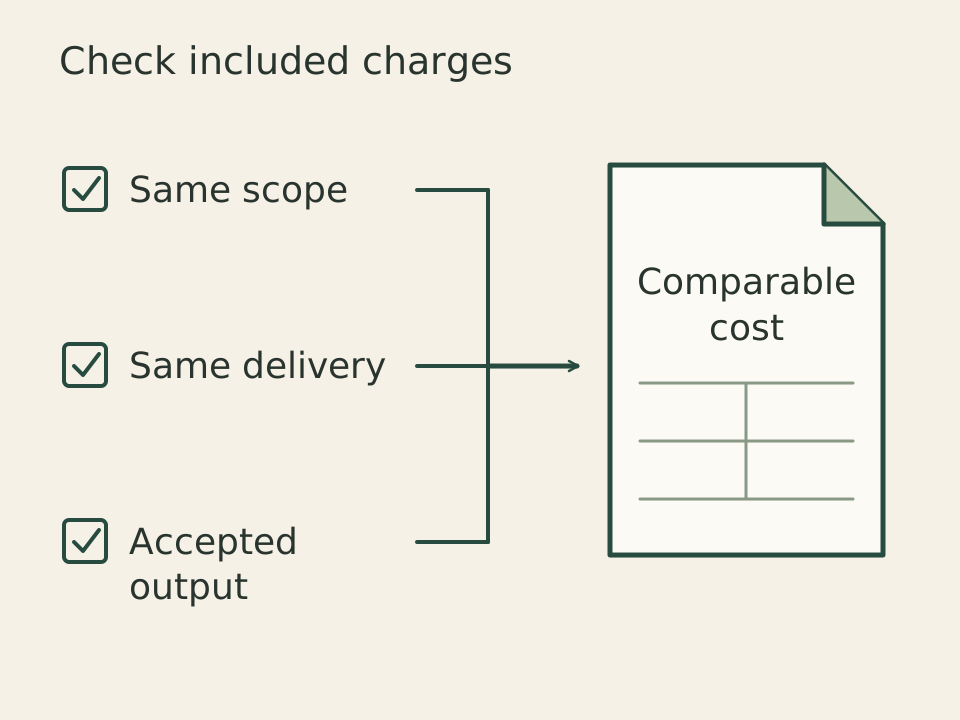
Common mistake: Adding a scrap surcharge while also dividing a total that already includes all consumed materials by good output, counting the same material loss twice.
Agree the loss boundary with production and finance. If the numerator includes all materials consumed and the denominator includes only accepted output, consumed rejected material is already represented. A separate replacement cost belongs only where it is an additional cost outside that numerator. Keep food discarded with failed packaging separate when the chosen scope is empty-pack purchasing.
Scroll horizontally for any hidden columns →
| Compare this field | Offer A | Offer B | Decision before comparison |
|---|---|---|---|
| Specification and artwork revision | Fill in | Fill in | Same revision? |
| Components and conversion scope | Fill in | Fill in | Same complete pack? |
| Order quantity and delivery releases | Fill in | Fill in | Same schedule? |
| Freight and storage responsibility | Fill in | Fill in | Same delivery basis? |
| Once-only charges and validity | Fill in | Fill in | Same period and allocation? |
| Acceptance and replacement terms | Fill in | Fill in | Same responsibility for defects? |
For a material change, agree the validation record before forecasting losses. The packaging FAT checklist explains documented acceptance planning for equipment; adapt its record-keeping approach to a material trial rather than assuming a factory machine test approves a new food-contact material. Review the packaging applications section for the product-specific questions to carry into that plan.
Takeaway: Compare itemized written offers and measured accepted output; leave missing inputs open.
When this does not apply
This worksheet does not estimate equipment investment, farm economics, current resin markets, food safety or shelf life. It also cannot establish whether a material substitution is technically suitable. Use it after identifying an appropriate candidate pack and defining the cost boundary. For a broader operating-cost model, finance should agree depreciation, labor, utilities and product losses separately.
Do not assign a low cost to a material merely because an end-of-life claim sounds attractive. Its suitability, accepted disposal route and quoted scope need their own evidence. The immediate next step is to copy the blank rows into your purchasing record and reconcile omissions with each offer.
Takeaway: A transparent worksheet supports comparison; it does not replace specifications, quotations or validation.
FAQ
What is the average cost for packaging?
There is no usable average in the sources checked here for your food, construction and delivery basis. An average without component scope, quantity and date does not establish a purchasing budget. Use a dated offer for the specified complete pack.
How to calculate the cost of packaging?
For purchasing, divide one lot’s attributable cost by its accepted complete empty packs. For production, use consumed material cost attributable to the good-output batch, plus agreed allocations, divided by that output; reconcile inventory rather than dividing period purchases by production. Label a result that also includes packing labor or utilities separately, and agree any once-only charge allocation with finance.
How much are disposable food containers?
A container listing needs its size, material, lid inclusion, order quantity and delivery basis before it becomes comparable. This guide supplies no current retail or wholesale prices; check whether the quoted item includes every component your design requires.
Where can I get cheap food containers?
Begin with suppliers able to document the required pack specification and intended use. Compare written offers on the same delivery and acceptance basis. A low listing price is not evidence that the pack will perform suitably for your food.
What is the cheapest packing material?
The lowest purchase price and the lowest cost per accepted pack are different questions. Screen the candidates for the food and process first, then compare the full scoped cost. This worksheet cannot rank materials without those project inputs.
What is the cost of PLA?
Specify whether you mean resin, sheet, a formed container or a complete pack. Public resin process descriptions do not give a delivered container price. Obtain a grade-specific, quantity-specific offer and keep its conversion and delivery inclusions visible.
Method and evidence boundaries
Compiled from public supplier procurement guidance, NatureWorks’ material process description and BLS’ index definition, checked on October 8, 2026. Cost categories, blank tables and reporting formulas are editorial organizing suggestions. No supplier prices, plant measurements, loss percentages or market forecasts are reproduced. The automated Sources and Next reading sections provide the references and further guides.
Sources and method
This article is based on documentary research of the sources listed. It is not a hands-on equipment test. Supplier statements and editorial judgement are identified in the text.
- The Total Cost Approach to Integrated Packaging Supplier procurement guidance: materials, logistics, labor, administration, warehousing and handling; not food-contact performance. Retrieved 2026-10-08.
- How Much Does Custom Packaging Cost? Supplier guidance on materials, conversion, artwork, printing and freight; no prices reproduced. Retrieved 2026-10-08.
- 2 Series for Extrusion & Thermoforming Resin-to-rollstock-to-thermoforming route; qualitative PLA example, not a finished-container quote. Retrieved 2026-10-08.
- Producer Price Index overview Price-change indexes and contract adjustment; no PLA-specific index or market price asserted. Retrieved 2026-10-08.
- The Hidden Cost Factor: Why Packaging Material Waste Deserves a Second Look Supplier explanation of startup and reel-change waste; savings figures are excluded. Retrieved 2026-10-08.
Next reading
Packaging Line Cost: Building a Project Budget Beyond the Machine
Build a packaging line budget from nine components, from machines and change parts to FAT, SAT, training and contingency, and learn how to collect each figure.
Read the guide
PLA Packaging for Food and Beverages: Uses, Constraints and Buyer Questions
PLA food packaging explained for buyers: where polylactic acid fits, its heat and barrier limits, end-of-life conditions, and what to request from suppliers.
Read the guide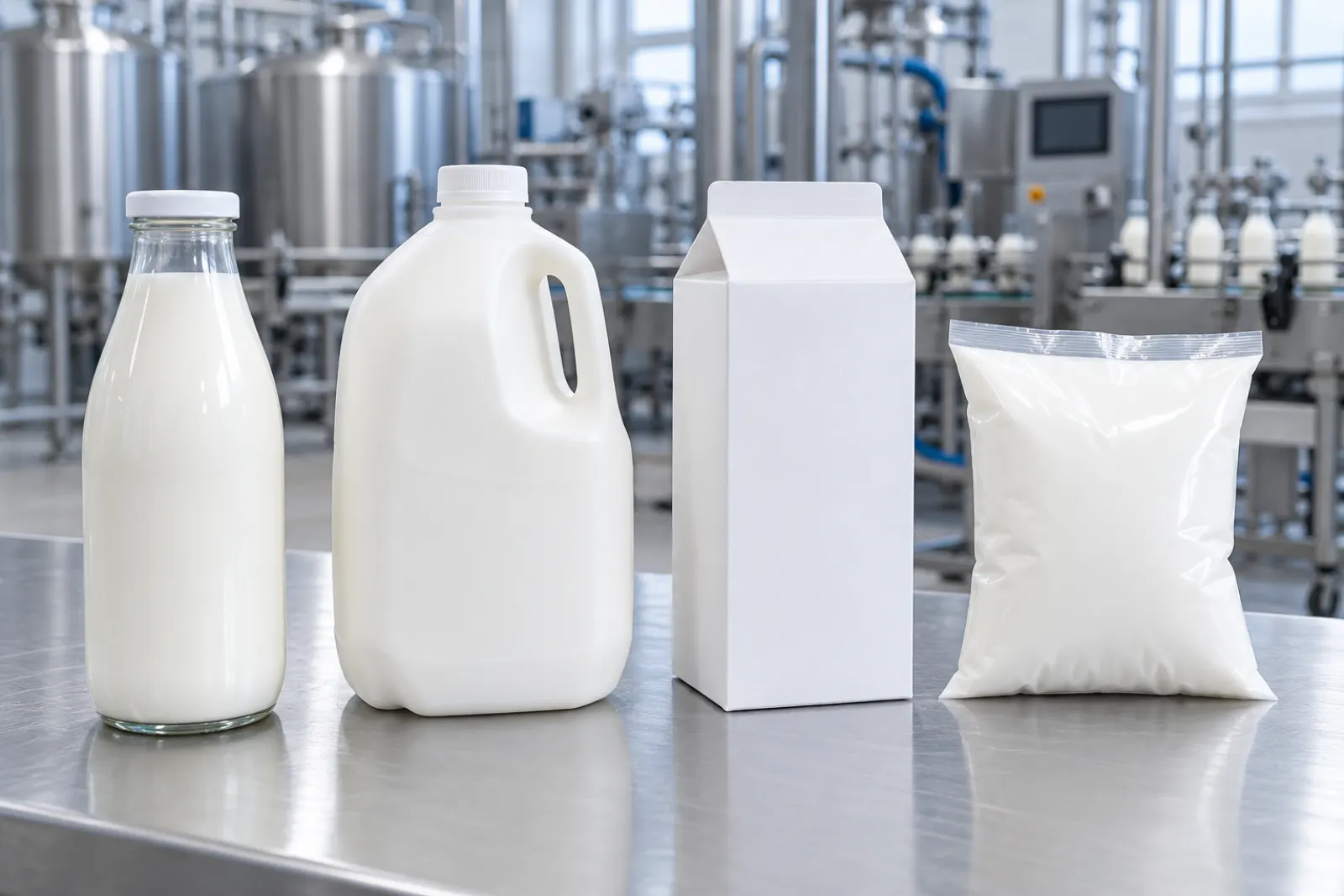
Milk Packaging Formats: Bottles, Cartons and Pouches
How to choose a milk packaging format by heat treatment, cold chain and light exposure, and what bottle, carton and pouch formats mean for filling equipment.
Read the guideMore in Buying Guides

Bottle vs Pouch Packaging: What Changes on the Production Line?
Moving a liquid product between rigid bottles and flexible pouches changes filling, closing, conveying, changeover and cases. Use this guide to scope the work.
Read the guide
Packaging Machine RFQ Checklist for Food and Beverage Buyers
A copy-ready request-for-quotation structure for packaging machines, with eight modules of fields to fill in and a method for comparing quotes line by line.
Read the guide
Factory Acceptance Testing for Packaging Equipment: Planning the Checks
Finding defects after shipment can delay installation. Prepare a FAT protocol, representative materials, raw test records and an agreed punch list.
Read the guide