
Commercial Disclosures
Naturally Iowa Packaging Review is operated by DeltaSpark, a commercial organization. This page explains how commercial relationships are disclosed.
Naturally Iowa Packaging Review is operated by DeltaSpark, a commercial organization. We do not describe this site as free of commercial interests.
Why disclosures matter to buyers
Packaging equipment is a large purchase, and a reader who is comparing suppliers needs to know whether the person explaining the options has a financial stake in the outcome. A commercial relationship does not make information wrong, but it affects how a reader should weigh it. Naming the relationship lets you apply that judgment yourself.
Current status
As of October 8, 2026, this site publishes no sponsored articles, no paid placements, and no affiliate or referral links. This page and any affected content are updated when that changes.
How disclosures work
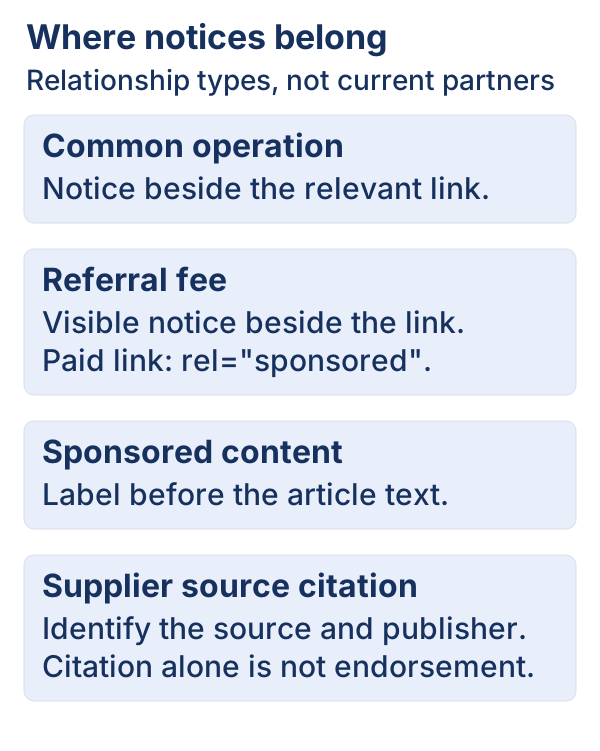
If a commercial relationship applies to content, the disclosure appears with that content and on this page, worded to match the actual relationship. The four reference rows in the diagram above are explained below; the examples are hypothetical notices, not announcements of partners.
Common operation by DeltaSpark. The publication and the linked business would both be operated by DeltaSpark. The notice would sit beside the relevant link, so the connection is visible where the reader decides to follow it:
Commercial relationship: [Brand or website] and this publication are both operated by DeltaSpark. The linked page is a commercial equipment resource.
Referral fee. DeltaSpark would receive money if a reader bought through a link. The notice would sit beside that link:
Disclosure: DeltaSpark may receive a referral fee if you make a purchase through this link.
Sponsored article. A third party would have paid for publication. The label would appear before the first paragraph:
Sponsored content: [Sponsor] paid for the publication of this article.
Supplier documentation. The text names whose document is cited and what it supports. The source citation describes evidence; it does not by itself establish a paid placement or recommendation. A financial relationship, if applicable, needs its own notice.
Advertising and paid links, including referral links, would carry rel="sponsored". The visible notice and this link attribute are separate: readers need an explanation beside the content; the attribute identifies paid links to search engines. Common operation alone does not determine the attribute.
Historical companies and products
Companies and products discussed in the History section are not commercial partners of this publication. Past media coverage of the historical business is not an endorsement of this publication.
See also the Editorial Policy.
Citing supplier documentation is not a commercial relationship
Many technical articles cite a supplier’s own documentation, because that is often the only source for how a machine or method works. This is attribution, not endorsement. In Bottle Capping Machine Selection, for example, a capping equipment supplier’s public FAQ is cited to explain why motor output is not the torque applied at the closure. The passage is a source attribution; the supplier did not pay for that mention. See the Editorial Policy for how supplier statements are labeled.
What a reader can check for
When you read any article here, check three places: the top of the article, for a label that says the content is sponsored; the text around outbound links, for a note about common operation or a referral fee; and the sources list at the end, which names the publisher of each source so you can see whose documents the article relies on. Links to sources, such as a standard or a trade publication article, are citations, and they are not commercial links unless a notice says otherwise.
In the History section, naming a company or product describes the historical record; it does not mean that company is a partner. DeltaSpark’s role as operator is stated on the About page.
If you think a disclosure is missing
If you believe an article or link should carry a notice that it does not, write through the Contact page. Give the article URL, the link or passage concerned, and the reason you think a relationship applies. The request is reviewed against the facts, and if a notice is needed it is added to the article.
A disclosure check you can record
Copy these fields into your notes when a notice needs clarification.
- Article URL and the date you read it.
- Exact passage or outbound link concerned.
- Visible notice, if one is shown beside the link or above the article.
- Relationship described by that notice: common operation, payment for publication, or a referral fee.
- Source publisher and document title, where the passage is a citation.
- The explanation you need: whose interest is involved, where the notice should appear, or which statement appears inconsistent.