
Cup Filling and Sealing Machines for Yogurt: A Buyer’s Checklist
A buyer's checklist for yogurt cup filling and sealing machines: stations, cup and lid compatibility, seal checks, cleaning, and questions to put to suppliers.
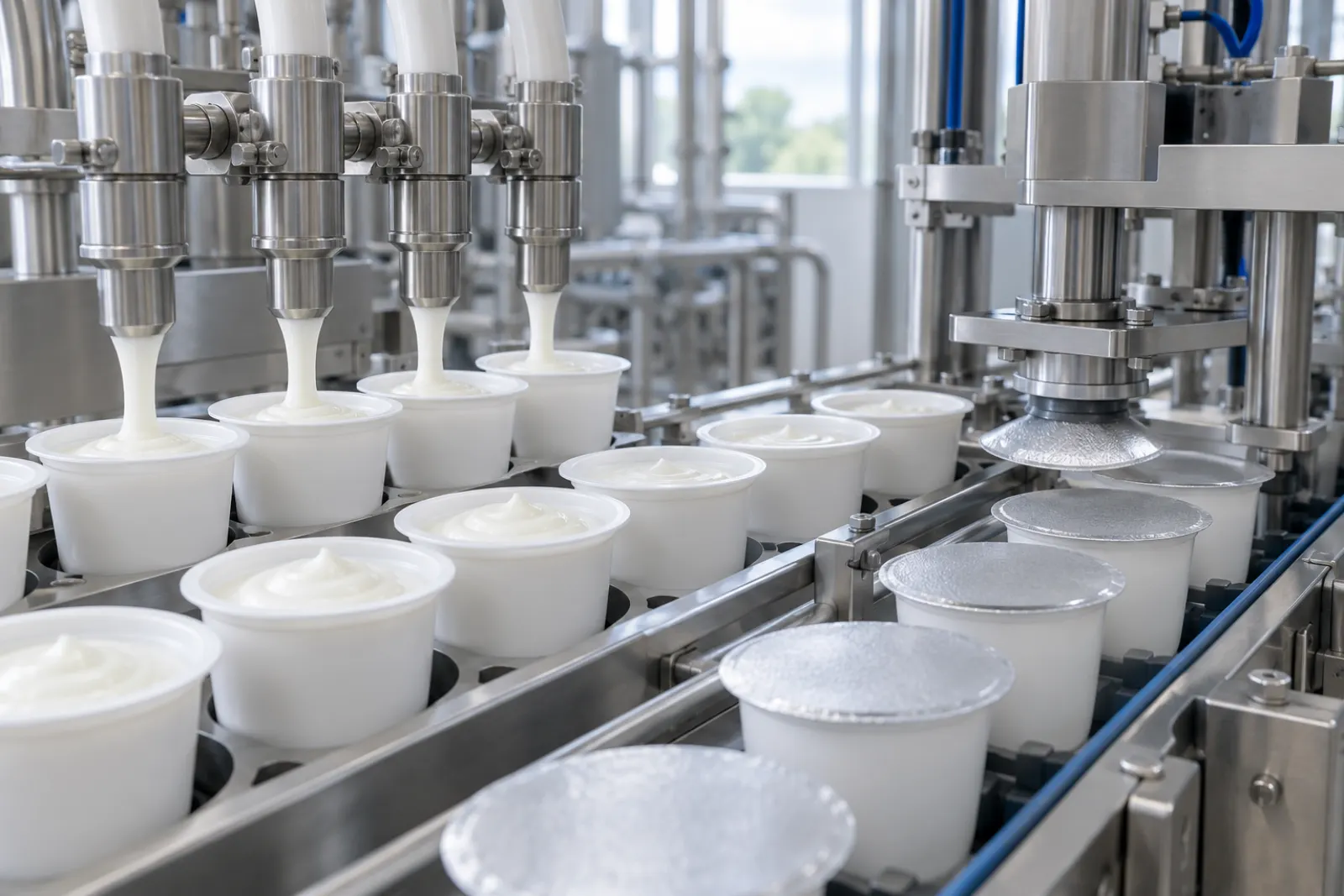
What this article covers
This checklist helps buyers and plant managers specify a yogurt cup fill-seal machine by walking through each station, the cup and lidding compatibility questions, seal integrity checks and cleaning requirements.
Covered
- Fill-seal station sequence from denesting to discharge
- Cup and lidding material compatibility and seal integrity checks
- Cleaning, hygiene and changeover considerations
- Supplier questions
Not covered
- Yogurt culture, formulation or shelf-life design
- Thermoforming tool design and cup manufacturing
A mismatched cup, lid or filling setup can leave product on the rim and a leaking package. Specify the yogurt state, machine family, cup/lid combination and acceptance methods before comparing the stations.
This checklist turns those inputs into a project record; the yogurt packaging guide explains the product formats.
Scroll horizontally for any hidden columns →
| Input | Record or source | Decision |
|---|---|---|
| Product state | Cup-set before incubation, or stirred/cooled; particles | Match filler and handling to the yogurt at fill |
| Machine family | Pre-formed cups or rollstock FFS | Define denesting versus forming and change parts |
| Cup / lid | Drawing, material, sealant and supplier compatibility evidence | Trial the actual flange and lid |
| Acceptance methods | Strength, leak/integrity, rim contamination, cleaning and changeover | Agree separate rules and records before FAT |
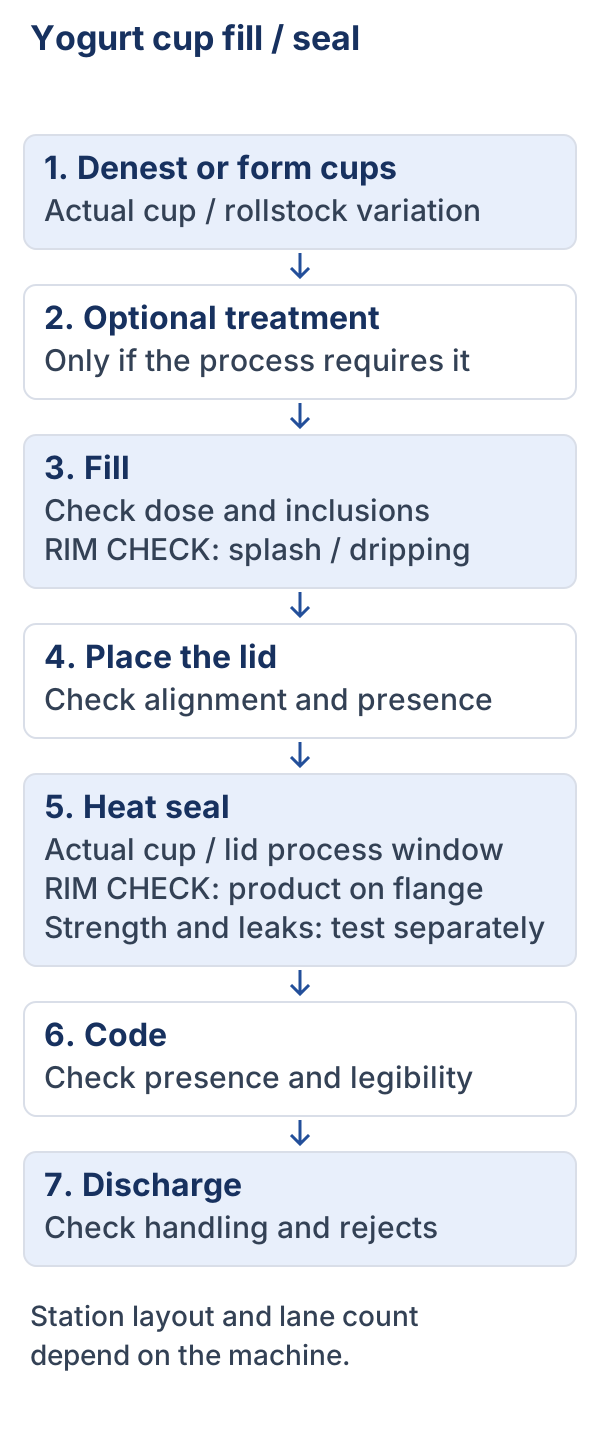
Start with product and machine type
Yogurt reaches the filler in different states. According to South Dakota State University Extension, cup-set yogurt is inoculated, filled directly into cups (often with fruit on the bottom) and then incubated in the cups before cooling, while vat-set yogurt is incubated in a vessel, then stirred, cooled, blended with flavor and filled into the final cup. The difference changes the machine requirements:
- Cup-set (filled before culturing). The product is still liquid when filled, and the filled cups then move to incubation. Ask how the cups are handled between sealing and incubation, and whether the cup and lid tolerate that step.
- Vat-set or stirred (filled after cooling). The product is thicker and may contain fruit pieces or inclusions. Ask about piston or valve port size and particle limits.
Two machine families exist. According to a trade article citing Synerlink, form-fill-seal (FFS) machines form cups from roll stock with heat, then dose, fill and seal them in one machine, while fill-seal machines take pre-formed cups from a hopper through a denester and only fill and seal. The article says FFS machines are suited to high volumes, and that pre-formed cups can use a wider range of materials, such as plastic, paperboard or aluminum. It also notes that changing FFS cup shape or size involves changing thermoforming molds. The article is a vendor-sourced, archived trade piece, so treat these as points to verify, not conclusions.
Scroll horizontally for any hidden columns →
| Dimension | Form-fill-seal | Fill-seal (pre-formed cups) |
|---|---|---|
| Cup source | Thermoformed in the machine from roll stock | Purchased, loaded into a denester |
| Cup materials | Thermoformable materials | A wider range of materials per the cited article |
| Format change | Mold change for new cup shapes | New cup stock and denester parts |
| Supply chain | Rollstock; fewer stored cup shapes | Cup inventory and cup quality from the supplier |
| Hygiene points | Forming section adds a zone to manage | Denesting and cup storage are the entry points |
| Fit | Higher volumes in the cited article | Smaller volumes and frequent changes, per the cited article |
This table reflects the cited article’s statements; your own volumes and number of formats should drive the decision.
Station-by-station acceptance record
Copy this table for the candidate machine and packaging lots. Enter the agreed method and criteria before the FAT; assign each result to an owner. Optional treatment depends on the preservation concept, not on a general requirement for all yogurt cups.
Scroll horizontally for any hidden columns →
| Item | Acceptance method | Record | Owner |
|---|---|---|---|
| Denesting / forming | Run actual cups or rollstock; check variation, orientation and loading | Lots, jams, change parts ____ | ____ |
| Optional decontamination | If required, review the proposed treatment and validation scope | Method, packaging effects, safety evidence ____ | ____ |
| Filling | Run yogurt at fill temperature; check dose, inclusions, no-cup/no-fill and rim splash | Fill results; rim photos; rejected samples ____ | ____ |
| Lid placement | Check lid format, alignment and magazine/roll change | Misplaced/missing lids; stop time ____ | ____ |
| Heat sealing / rim contamination | Establish the actual cup/lid window; include realistic dirty-flange trials | Temperature/dwell/pressure; contamination results ____ | ____ |
| Seal strength | Agreed strength/peel method and sample plan; F88 or whole-lid method as applicable | Force, failure mode and limit ____ | ____ |
| Leak / integrity | Quality team selects a separate method suited to this cup | Method, sensitivity and results ____ | ____ |
| Coding | Check presence and legibility on chosen surface | Code samples and rejects ____ | ____ |
| Discharge | Check sealed-lid handling, seeded rejects and downstream interfaces | Damage, reject separation, interface results ____ | ____ |
Serac’s public documentation describes volumetric dosing in rotary and linear formats and several lid and optional treatment technologies. Those supplier descriptions do not establish this machine’s acceptance results. Use the filling-method comparison to record its metering principle separately from layout.
Cup and lid compatibility
The lid’s sealant and the cup’s sealing surface must be designed to work together. Ask the cup and lid suppliers as well as the machine builder.
- Cup material (PP, PS, PET or other) and its flange design are stated. Supplier documentation lists PET, PP, PS, glass and paperboard as cup options on cup lines; availability depends on the machine.
- Lid sealant is specified as compatible with the cup sealing layer.
- Peelable or weld-type seal is chosen deliberately, because it affects opening force and seal testing.
- The cup withstands the heat and pressure of sealing without distortion.
- The packaging tolerates any thermal step in your process, such as incubation for cup-set yogurt.
- Cup and lid dimension tolerances are agreed, and incoming quality checks defined.
Seal integrity checks
ASTM F88/F88M describes seal strength testing of flexible barrier materials and states that seal strength is a quantitative measure for process validation, capability and control. It also notes that a lower limit helps confirm that a package is closed and that an upper limit usually applies to peelable seals so they remain easy to open. For whole-lid peel testing of round containers, the F88 page points to ASTM F2824. Neither standard replaces a leak or integrity test for your risk assessment.
ASTM F2029 laboratory heat-seal curves are a starting point for production settings; the practice does not validate production equipment. Establish the window on the actual cups, lids and sealing station.
A seal-check plan can include:
- Visual inspection of every cup for wrinkles, channels and product in the seal.
- Seal strength at agreed intervals using a defined method and sample size.
- Leak or integrity checks chosen with your quality team, such as a vacuum or pressure method, as applicable to your package.
- Seal window establishment on your cups: temperature versus seal strength at fixed dwell time and pressure, with a process window set within the stable region.
- Contamination trial. Run with realistic fill and splash conditions, not clean flanges only.
- Records. Define what the machine and the QC lab document.
Seal checks left undefined before the factory acceptance test tend to become disputes at the test. The FAT checklist shows how to write acceptance criteria and sample plans in advance.
Cleaning and hygiene
Under 21 CFR 117.35, equipment and food-contact surfaces must be cleaned and sanitized as frequently as necessary to protect against allergen cross-contact and contamination of food. For yogurt, dairy residue, product on rims and sticky inclusions are common cleaning problems.
EHEDG Guideline 46 covers aseptic and hygienic filling machines, including selecting a machine class by design principles, decontamination requirements and microbiological qualification tests. The catalogue description is what this publication has reviewed; the full guideline is for sale or available to EHEDG members.
Checklist:
- Cleaning method defined: CIP, COP, manual or combined. Serac states CIP is available on its yogurt lines; verify the extent for any machine you consider.
- The product path is drainable and free of dead legs; drawings are provided.
- Cleaning access to the sealing area, nozzle area and lid path is described.
- Cleaning time per cycle is stated by the supplier and checked at the factory acceptance test.
- Materials of product-contact parts are stated, and are suitable for your cleaning chemicals.
- Hygiene zoning, covers and airflow are discussed if the cups are exposed.
- Waste handling for rejected cups is defined.
What needs project-specific validation
- A fill-and-seal trial using your yogurt at filling temperature, your cups and your lids.
- A seal window study and seal strength results on your materials.
- A rim contamination test, with the splash and drip conditions of your product.
- Cleaning verification after a product run, with swab or visual inspection criteria agreed in advance.
- A timed changeover between two formats.
- Reject handling test with seeded defects such as missing lids.
- Interface check with downstream packing.
Questions to ask suppliers
- Is the proposed machine form-fill-seal or fill-seal, and why for our volume and number of formats?
- How many lanes, and what is the net output you expect for our cup size and product, and on what basis?
- Which filling principle and nozzle design do you propose, and how does it prevent product on the sealing flange?
- Which sealing method (conduction or induction) and lid construction does the machine support, and which cup and lid combinations are you familiar with?
- What temperature, dwell time and pressure ranges does the sealing station provide, and how are they monitored and recorded?
- Is there an optional cup decontamination station, which technology, and what validation documents exist?
- How is the machine cleaned (CIP, COP, manual), how long does it take, and which parts are removed?
- Which hygienic design guideline does the machine follow, and is there a document that supports it?
- What changes are required for the next cup size, and what is the changeover time?
- How are defective cups detected and rejected (no cup, no lid, no fill, poor seal)?
- Can you run our cups and lids, with a product simulant or our yogurt, before shipment?
- What do you include in FAT and SAT, and what do we need to provide?
Add them to the RFQ checklist so each answer is comparable.
Summary
Specify the yogurt state, the cup and the lid first, then walk each station from denesting to discharge and write the seal and cleaning checks into the contract. Treat supplier descriptions of what a machine can do as unverified until a trial on your cups, lids and yogurt confirms them.
Sources and method
This article is based on documentary research of the sources listed. It is not a hands-on equipment test. Supplier statements and editorial judgement are identified in the text.
- Yogurt: A Bright Future for Dairy? Supports: the distinction between cup-set yogurt (filled before incubation) and vat-set or stirred yogurt (filled after stirring, cooling and flavoring).
- Form-Fill-Seal Cups vs. Pre-Formed Cups Supports: the description of form-fill-seal versus pre-formed fill-seal machines, denester feeding, and the stated trade-offs in cup material range and changeover.
- Filling Machines for Yogurt in Cups and Bottles (U.S. and Canada) Supports: the supplier's description of volumetric cup filling, foil sealing options, optional packaging decontamination technologies and cup material options.
- ASTM F88/F88M-23: Standard Test Method for Seal Strength of Flexible Barrier Materials Supports: seal strength as a quantitative measure for process validation, capability and control; that lower limits help confirm closure and upper limits relate to peelable seals; and that F2824 covers peeling a whole lid from a round container.
- ASTM F2029-16(2021) Standard Practices for Making Laboratory Heat Seals for Determination of Heat Sealability of Flexible Barrier Materials as Measured by Seal Strength Supports: that a laboratory heat-seal curve study gives only a starting point for production sealing settings, because laboratory sealers and production equipment can differ, and that the practice does not cover validation of production equipment.
- EHEDG Guideline 46: Aseptic and Hygienic Filling Machines - Planning, Installation, Qualification and Operation Supports: machine class selection by design principles and the role of decontamination and microbiological qualification for liquid food filling machines.
- 21 CFR 117.35 Sanitary operations Supports: the requirement that equipment and food-contact surfaces be cleaned and sanitized as necessary to protect against allergen cross-contact and contamination.
Next reading
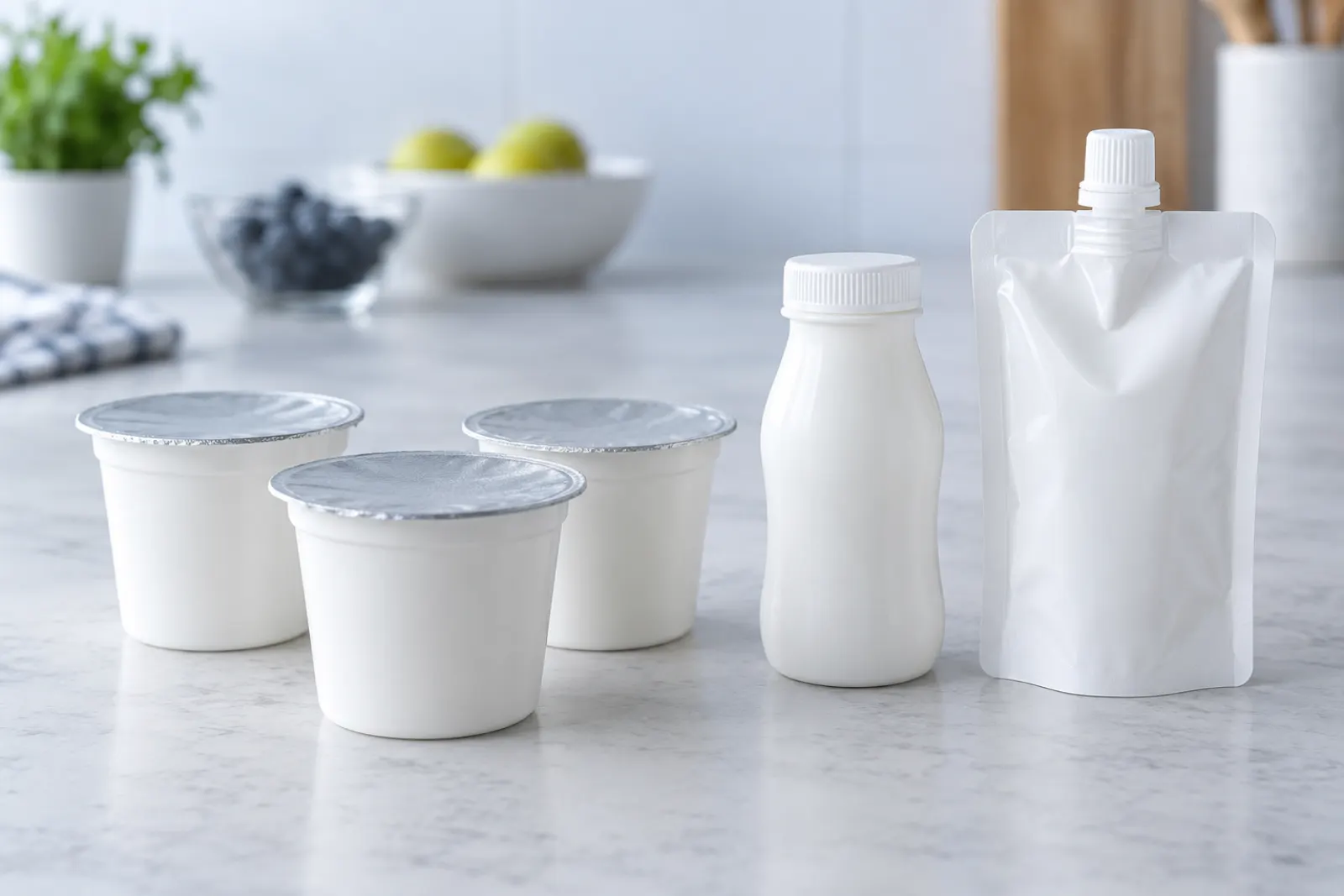
Yogurt Packaging: Cups, Bottles and Pouches for Different Products
Match yogurt packaging to product type: set, stirred, drinkable or squeeze. Compare cups, bottles and spouted pouches and their filling and sealing needs.
Read the guide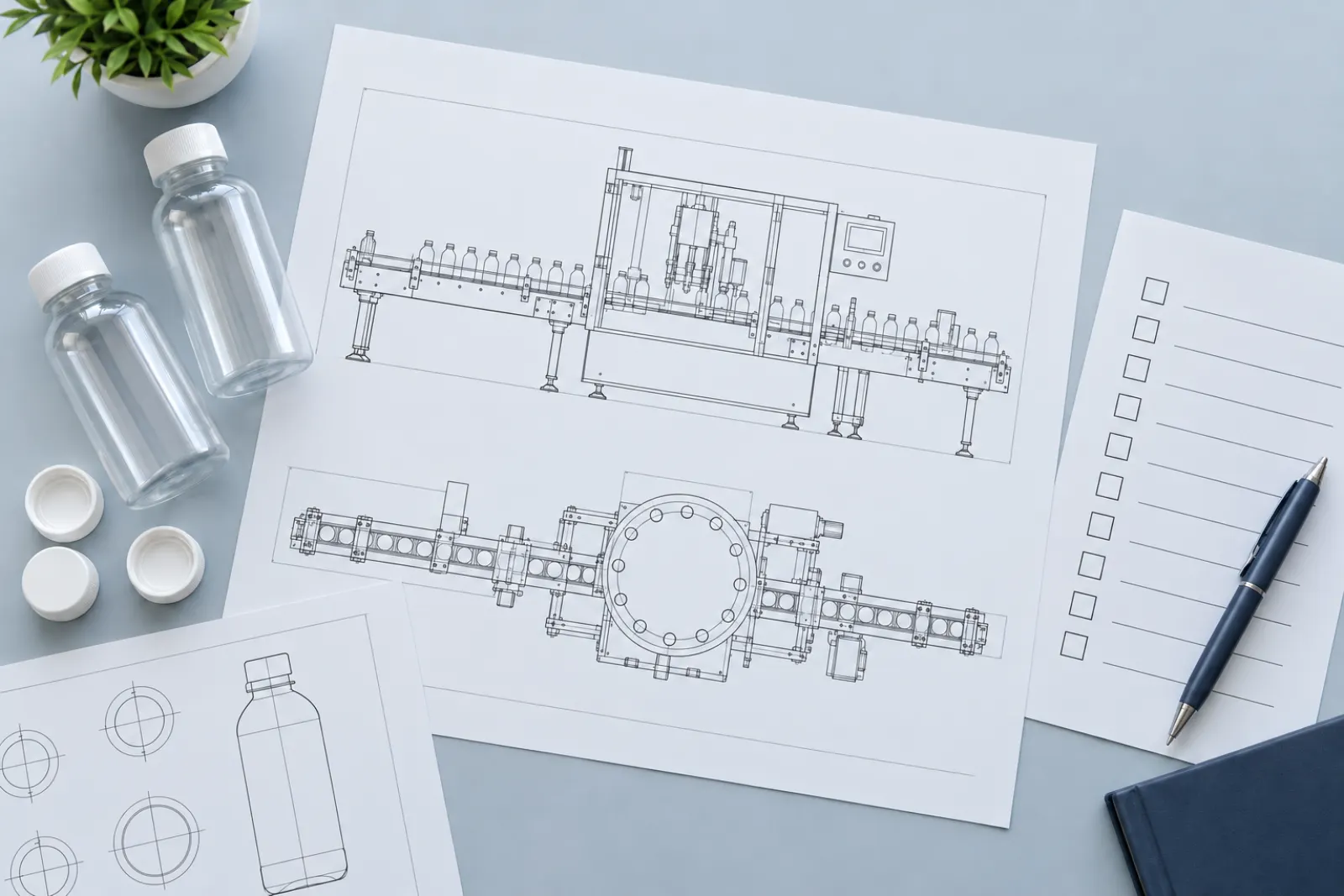
Packaging Machine RFQ Checklist for Food and Beverage Buyers
A copy-ready request-for-quotation structure for packaging machines, with eight modules of fields to fill in and a method for comparing quotes line by line.
Read the guide
Factory Acceptance Testing for Packaging Equipment: Planning the Checks
Finding defects after shipment can delay installation. Prepare a FAT protocol, representative materials, raw test records and an agreed punch list.
Read the guideMore in Equipment
How to Choose a Liquid Filling Machine for Food and Beverages
A buyer's framework for choosing a liquid filling machine: project inputs, filling approaches compared, what to validate with samples, and supplier questions.
Read the guide
Liquid Filling Methods Compared: Gravity, Piston and Flowmeter-Based Systems
Compare liquid filling methods by metering principle, product feed and machine structure: gravity, overflow, piston and flowmeter systems and their limits.
Read the guide
Bottle Capping Machine Selection: Caps, Torque and Changeover
How to match a capping machine to the closure and bottle finish: cap types, application vs removal torque, heads, change parts and pre-purchase validation.
Read the guide