
SunDance Coffee Valve Pouches: Checks Before a Small Run
SunDance has announced digitally printed coffee valve pouches. Separate valve function, whole-pack validation and small-run order questions before choosing.
What this article covers
Interpret the SunDance announcement through coffee protection, artwork revisions and evidence required before a short-run order.
Covered
- Announced pouch capability
- Coffee product and complete-pack checks
- Small-run planning and undisclosed terms
Not covered
- Shelf-life estimates
- Prices, minimum-order numbers or lead times
- Recyclability and food-contact certification claims
A small coffee launch can waste packaging if a low-minimum claim is mistaken for confirmed order terms or shelf-life evidence. SunDance has announced customizable coffee valve pouches with digital printing; evaluate the complete food pack and the written order scope before choosing it for a short run.
For US specialty roasters, the SunDance coffee valve pouches announcement is a reason to investigate a packaging candidate, not a tested freshness guarantee. Separate the valve’s stated role from the pouch material, seal and artwork program. This review translates the September release into product questions, a small-run record and a timeline of what is known. The food packaging applications overview helps place the coffee project in a wider product-and-process review.
- The release is a company announcement, supplied by SunDanceUSA.
- Digital printing and low minimums are described without a numerical minimum.
- Whole-pack performance needs material, seal and food-product evidence.
- Ordering, sampling and delivery dates require a supplier response.
What did SunDance announce?
On September 28, 2026, SunDanceUSA announced an expansion of its flexible packaging capabilities to include custom coffee valve pouches. The Orlando, Florida company described digital printing and low minimum order quantities. The original PR Newswire release is evidence of that announcement; it is not a purchase contract or independent performance evaluation.
Scroll horizontally for any hidden columns →
| Announced element | What the company describes | Detail still needed for a project |
|---|---|---|
| Coffee valve pouch | Customizable pack for whole-bean and ground coffee | Actual format, dimensions and construction |
| One-way valve | CO2 release while resisting oxygen entry | Valve specification and whole-pack evaluation |
| Digital printing | Brand graphics and product information | Artwork, finish and approval requirements |
| Low minimums | Quantities intended to match brand demand | Numerical minimum and its unit of application |
SunDance names specialty roasters, seasonal blends, subscriptions and product launches among intended uses. No specific price, minimum quantity or delivery date appears in the release. For the broader format choice, the food pouch guide explains that a pouch description still needs its food and process context.
Takeaway: Record the capability as announced and keep the commercial details open until documented.
What does the valve tell you about coffee protection?
The release says the valve allows carbon dioxide from freshly roasted coffee to escape while preventing oxygen from entering through that mechanism. Our recommendation is to assess that stated function within the complete pack. It does not independently establish the performance of the pouch body, sealing operation or food stored inside it.
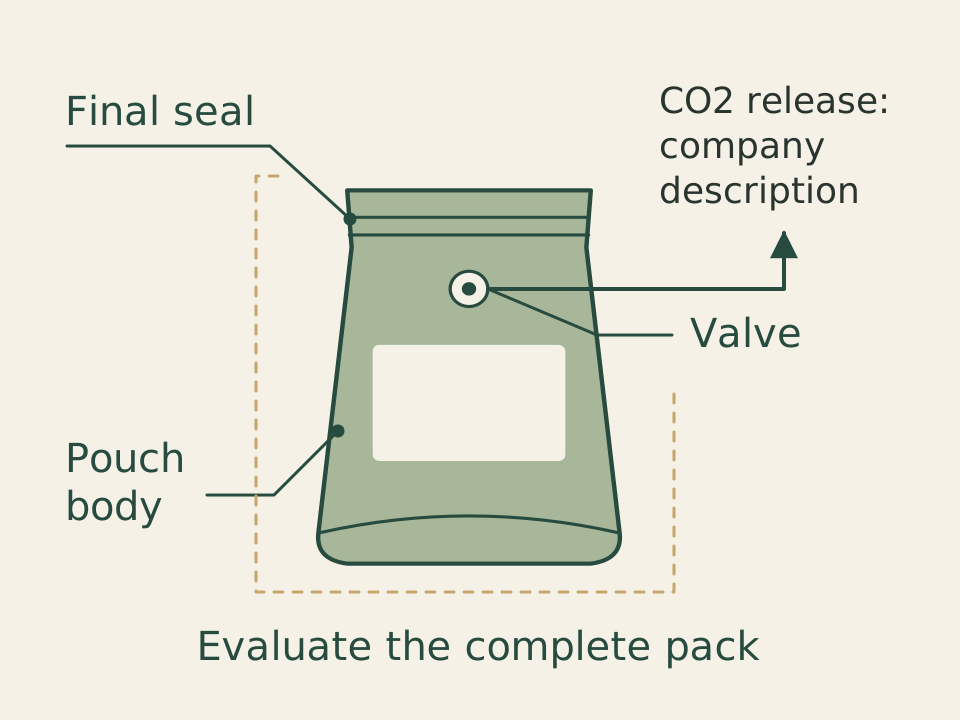
Ask separate questions about the pouch construction, valve assembly and final seal. For example, request the material specification and relevant supplier test report rather than filling a blank barrier field with an assumption. Record how the pouch will be filled and closed, who checks the finished seal and which production conditions the trial represents.
The flow-wrapped food guide shows why a packaging format and a preservation claim are separate decisions. It does not establish that the coffee pouch is flow wrapped. Likewise, bottle versus pouch packaging helps separate container supply from filling and sealing; its workflow is context, not a specification for SunDance equipment.
Common mistake: Treating a degassing valve as proof that the entire bag protects coffee for a particular storage period.
Takeaway: Review valve function, pouch construction, sealing and the food evaluation as separate evidence requirements.
Which coffee projects deserve a closer look?
Projects involving frequent artwork or product changes deserve an early packaging review because the release explicitly positions this capability around short-run branding needs. That is an editorial reason to investigate, not evidence that the pack is cheaper or better for every roaster. Start with the actual coffee and distribution plan.
Scroll horizontally for any hidden columns →
| Project | Question the food team should resolve | Question the packaging team should resolve |
|---|---|---|
| Whole-bean coffee | What roast and packing conditions will the evaluation cover? | Which valve and complete construction are proposed? |
| Ground coffee | Which actual product and storage conditions will be assessed? | What filling and seal-area checks are agreed? |
| Seasonal blend | What stock period and channel does the pack represent? | Is the minimum per design or shared across designs? |
| Subscription pack | Which delivery conditions should the evaluation include? | How are repeat orders and artwork versions controlled? |
| New product test | What evidence is required before releasing saleable packs? | What sample, proof and production approvals are needed? |
A single “coffee” line in a request leaves those decisions unresolved. List each product and intended pack as a separate record. Use the material selection overview when checking whether the proposed structure supports the intended use, then keep the supplier’s answer attached to that exact record.
For projects extending the pack to other dry foods, first ask for an application-specific explanation. The release’s broader suggestion does not establish compatibility with every food. Avoid transporting assumptions from milk packaging or other unrelated food formats into the coffee evaluation simply because both involve barrier questions.
Takeaway: The affected buyer is defined by the food, design changes and distribution plan, not by brand size alone.
How should a small-run program be recorded?
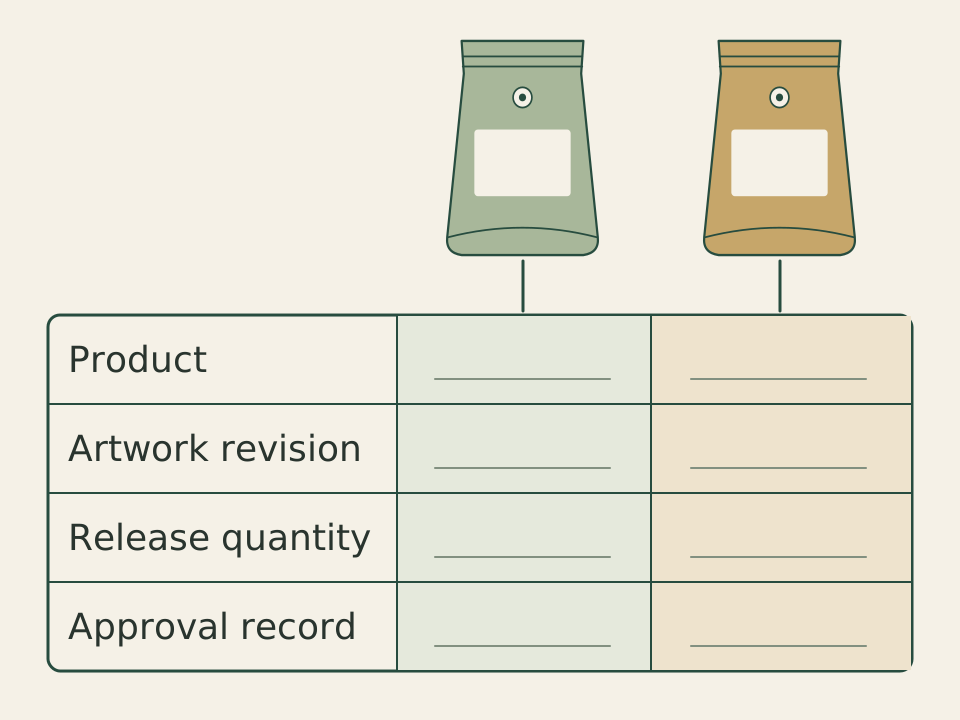
Record design count, units per design and release timing separately. “Low minimum order quantities” has no usable purchasing meaning until the supplier states whether the minimum applies to a design, size, material construction or total order. This is our proposed planning record; it does not set a minimum or assert a savings threshold.
Scroll horizontally for any hidden columns →
| Planning input | Record before approval | Supplier detail to reconcile |
|---|---|---|
| Product and pack | Product identity, target format and component scope | Proposed pouch configuration |
| Artwork | Approved revision for each SKU | Proof, finishing and revision rules |
| Quantity | Intended units per design and per release | Minimum and order aggregation conditions |
| Timing | Target packing and release dates | Proof, sample and production schedule |
| Repeat supply | Planned reorder and stock strategy | Version retention and supply conditions |
PakFactory’s public cost guide discusses artwork, printing, manufacture and shipping as separate quote considerations. That general guidance supports checking the scope; it does not establish SunDance’s charges or prove that digital production has lower total cost. The packaging buying guides explain how documents connect specification and comparison.
Keep an obsolete design decision explicit. If artwork changes, identify which stock is still usable and what the supplier would need to change on the next release. This gives purchasing a traceable basis for comparison without claiming a numerical waste reduction.
Takeaway: A small-run decision needs a design-by-design order record, even when the supplier describes low minimums.
When can a food team act?
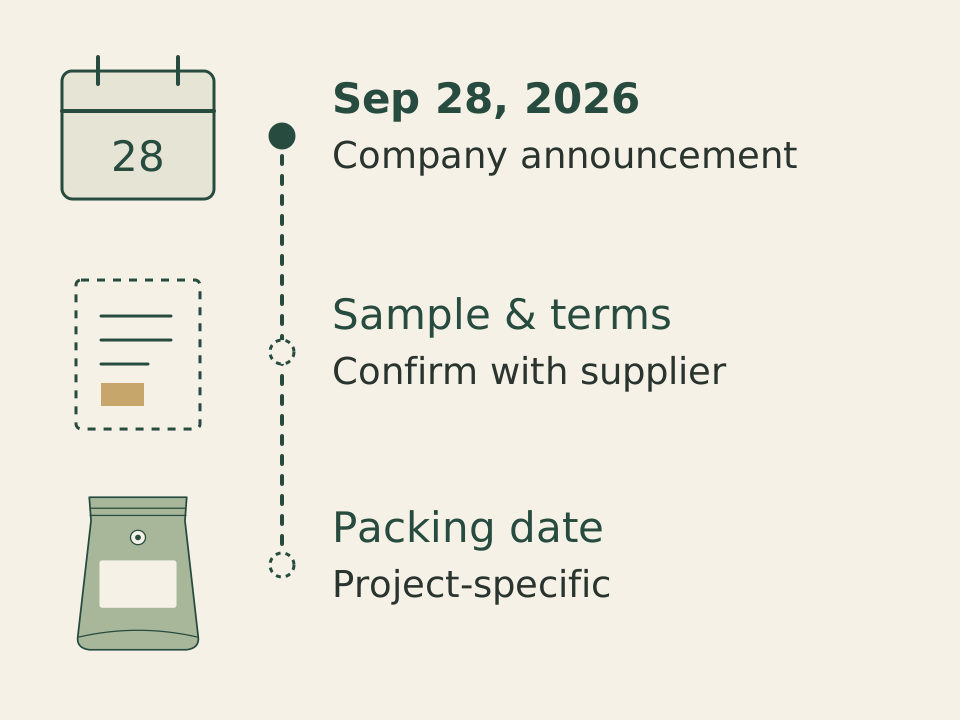
The current action is to resolve specifications and order terms. The announcement provides a date for the news event but no disclosed date for opening orders, supplying samples or delivering a particular configuration. Packaging Europe’s October 2 report retells the same event; a retelling is not a second independent source of availability or performance.
Scroll horizontally for any hidden columns →
| Event or decision | Date/status | What it establishes |
|---|---|---|
| SunDanceUSA release | September 28, 2026 | Company announced the capability |
| This editorial review | October 8, 2026 | Public evidence and unknowns checked |
| Sample and order access | Supplier confirmation needed | Configuration and commercial terms |
| Production packing date | Project-specific | Depends on approval and confirmed supply |
Use a responsibility record rather than guessing lead time. The RFQ checklist is written for equipment but provides a useful way to name assumptions, revisions and acceptance owners. Adapt those fields for a material order. Put any additional line work in the separate line-project cost record instead of silently including it in a pouch-price comparison.
Takeaway: Investigate now, but plan production against a confirmed specification and schedule.
Which documents are still missing?
Ask for documents that answer the actual food-pack question. Our checklist is intended to make omissions visible, including whether the proposed pouch and the production sample represent the same construction. The announcement supplies no test method, numerical barrier result or food-specific shelf-life record for this pack.
Scroll horizontally for any hidden columns →
| Open question | Owner to involve | Evidence to obtain |
|---|---|---|
| Material and valve construction | Pouch supplier | Configuration-specific specification |
| Barrier and pack integrity | Supplier with food technical team | Relevant test method and report |
| Intended food-contact use | Supplier and responsible food team | Documentation for the actual use conditions |
| Sealing and filling fit | Packaging operations | Written production trial and seal checks |
| Minimums and repeat orders | Supplier commercial team | Written terms per configuration/design |
| Recycling statement | Supplier and target collection program | Complete-pack information and local acceptance |
The FAT planning guide helps define a reproducible demonstration record; it does not turn a pouch trial into a complete food-safety approval. For disposal questions, the EPA advises checking local acceptance. The site’s compostable packaging guide explains why an end-of-life claim needs an applicable route and cannot be inferred from appearance.
Takeaway: The missing specification and food-pack records matter more than the promotional freshness wording.
When this does not apply
This review does not establish shelf life, a sealing setting, a material structure or approval for a particular food. It does not connect the announcement to a specific award-winning pouch or assert that it represents a newly installed production line. Features reported for another SunDance product are not evidence about this coffee pack.
Common mistake: Carrying another pouch’s recycling claim or material-reduction figure into this announcement. Check the exact product and construction behind every claim.
Takeaway: Use this checklist for an early candidate review, then obtain evidence for the actual pack and food.
FAQ
Why do coffee bags have valves, and what does SunDance’s announcement establish?
SunDance describes the announced valve as a route for carbon dioxide from freshly roasted coffee to leave the package. It does not define a roast-to-pack waiting period. Ask which packing schedule and valve configuration the proposal covers, and have the food team evaluate the actual coffee rather than importing timing from another brand.
What are coffee bags made of, and does this announcement specify the layers?
The announcement does not disclose its coffee pouch’s material layers or thickness. Obtain the proposed construction rather than assuming a laminate from a photograph or from another coffee bag. For repeat supply, record the construction revision alongside the artwork revision so a graphic approval is not mistaken for approval of the pack’s materials.
Are coffee bags recyclable, including the announced SunDance pouch?
The release does not establish the recyclability of these pouches. Assess the whole construction, including components, and check acceptance in the intended collection system. When reviewing instructions, identify the valve and any closure as well as the pouch body; a disposal instruction for one component does not settle the complete pack.
Method and evidence boundaries
The event facts come from SunDanceUSA’s original PR Newswire release, checked October 8, 2026. Supplier cost guidance and EPA recycling guidance add general context without proving this pouch’s cost or performance. Product matrices and approval records are editorial suggestions. No shelf-life, minimum-order, price or lead-time values are invented; references are rendered below.
Sources and method
This article is based on documentary research of the sources listed. It is not a hands-on equipment test. Supplier statements and editorial judgement are identified in the text.
- SunDance Adds Coffee Valve Pouch Capabilities to Support Freshness-Focused Packaging 2026-09-28 original company release; digital printing and low minimums are company claims, no numeric MOQ or shelf life. Retrieved 2026-10-08.
- How Much Does Custom Packaging Cost? General printing and quote-scope context; does not establish SunDance costs. Retrieved 2026-10-08.
- How Do I Recycle Common Recyclables? Local acceptance differs; this source does not certify the announced pouch. Retrieved 2026-10-08.
Next reading
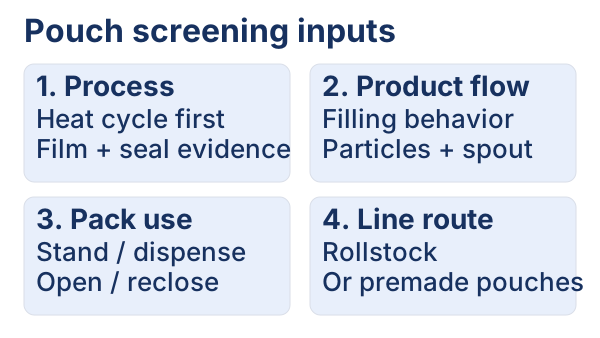
Pouch Packaging for Food: Stand-Up, Retort, Spouted and Pillow Pouches by Product
A pouch unsuited to heat processing can fail. Select by preservation route, product flow and use, then check film, fitment and filling compatibility.
Read the guide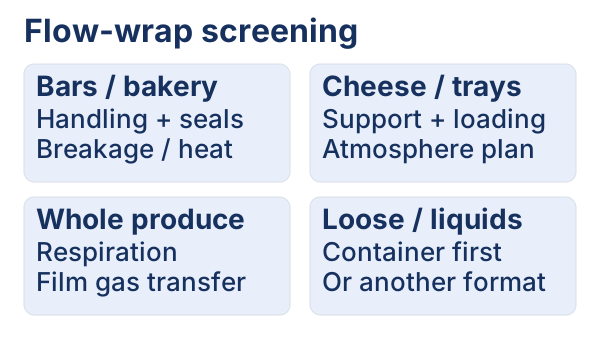
Which Foods Are Flow Wrapped? Bars, Bakery, Cheese and Produce Compared
Poor conveyor handling or a mismatched seal can damage food. Screen flow wrapping by solid unit, stack or tray, then check film and atmosphere.
Read the guide
Packaging Machine RFQ Checklist for Food and Beverage Buyers
A copy-ready request-for-quotation structure for packaging machines, with eight modules of fields to fill in and a method for comparing quotes line by line.
Read the guideMore in Applications
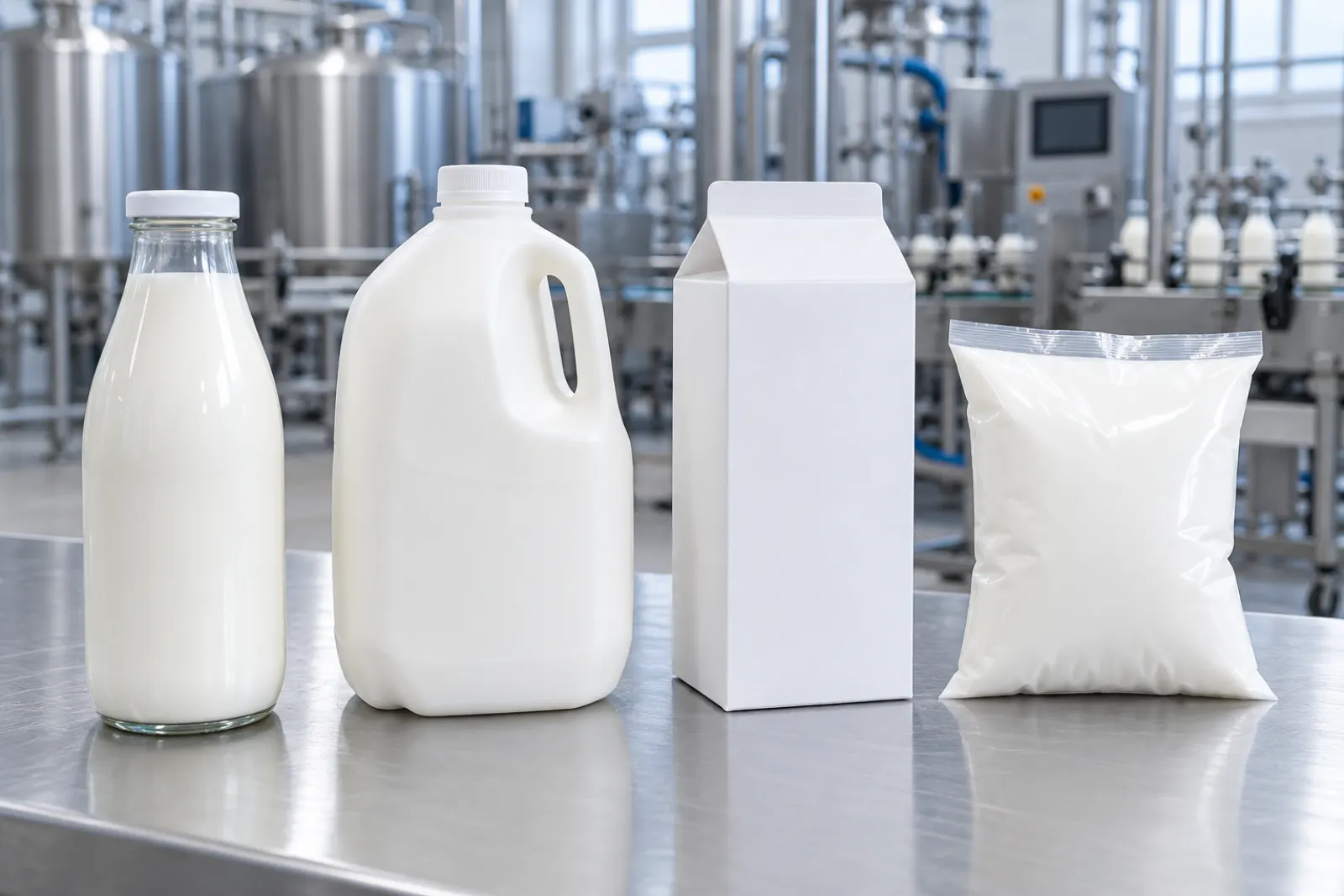
Milk Packaging Formats: Bottles, Cartons and Pouches
How to choose a milk packaging format by heat treatment, cold chain and light exposure, and what bottle, carton and pouch formats mean for filling equipment.
Read the guide
Yogurt Packaging: Cups, Bottles and Pouches for Different Products
Match yogurt packaging to product type: set, stirred, drinkable or squeeze. Compare cups, bottles and spouted pouches and their filling and sealing needs.
Read the guide
Bottled Water Packaging Lines: From Prepared Containers to Packed Cases
Plan a bottled water packaging line from container supply to palletizing: rinsing, filling, capping, labeling, coding and the interfaces between stations.
Read the guide