
Fresh-Produce VFFS: Handling, Cleaning and Film-Trial Checks
Vertical drop damage or wet leaves in the seal ruin a produce trial. Separate loose VFFS bagging from tray flow wrapping and log handling and cleaning.
What this article covers
For fresh-produce teams evaluating vertical form-fill-seal bagging: separate loose vertical drop paths from unit or tray wrapping, review supplier handling and washdown evidence, and record actual produce, drop, film and seal checks during a sample trial.
Covered
- Entry routing between loose vertical VFFS drop bagging, premade or wicketed pouches, and horizontal unit or tray paths
- Supplier-documented handling, forming-tube contact and top-to-bottom cleaning access conditions
- A copyable sample trial record for the produce lot, drop behavior, film type, seal margin and sanitation access
Not covered
- Frozen french fries or IQF vegetables treated as fresh respiring produce
- Universal MAP gas ratios, perforation specifications, bag speeds, OEE figures, IP ratings, prices and shelf-life days
- Unrelated apparel or regional directory queries
Dropping fragile produce down a vertical tube or trapping wet leaves in the seal jaws will damage the product and cause leaky reject bags during a line trial. Start a VFFS machine for fresh produce evaluation by separating loose items that tolerate a vertical drop from whole or tray-supported produce that needs a horizontal wrapper or tray sealer.
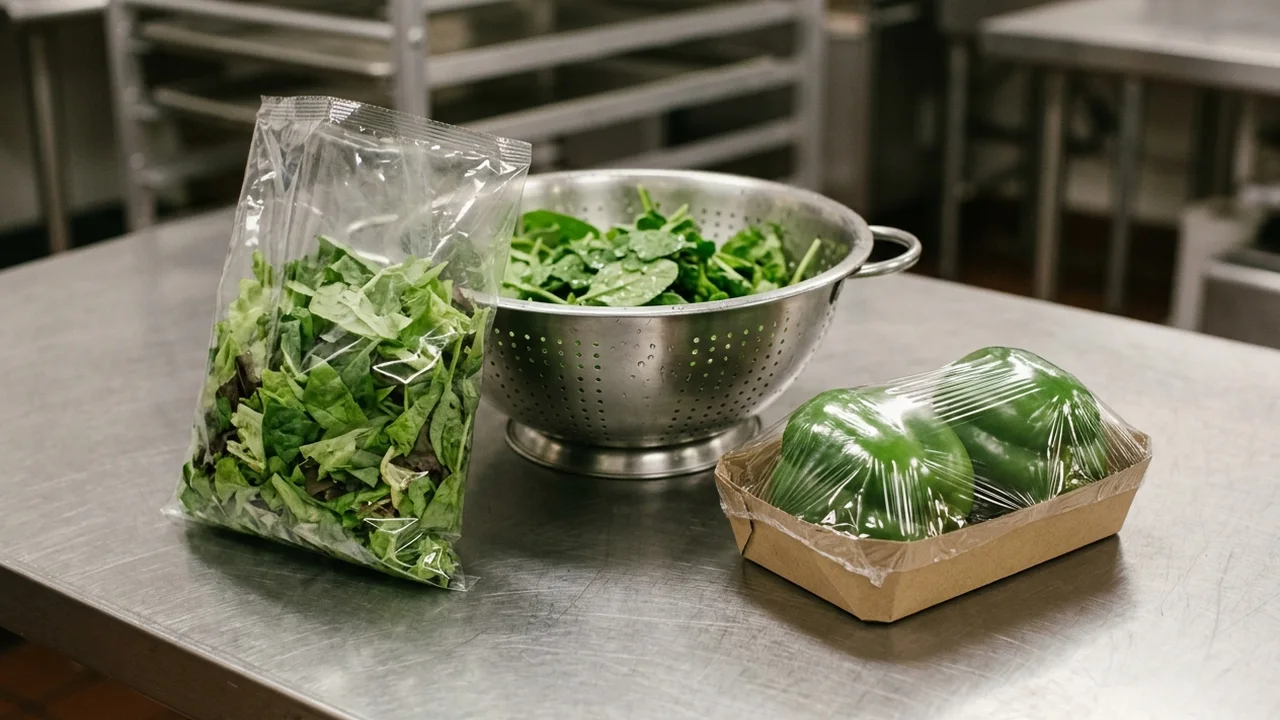
A vertical form-fill-seal (VFFS) machine for fresh produce forms roll film around a vertical tube, drops a weighed dose of washed or cut produce through the tube, and seals the bag before discharge. Public equipment descriptions from BW Packaging (cached 6 October 2026; verified 17 October 2026), Paxiom (updated 11 September 2024; retrieved 17 October 2026), and Rovema North America (published 13 August 2026; verified 17 October 2026) place washed, cut leafy greens, salad mixes, diced vegetables, green beans, broccoli florets, and potatoes on vertical roll-film bagging lines. By contrast, ULMA Packaging’s 16 June 2026 produce release places trayed Conference pears on a horizontal flow wrapper and tray-packed fruit and vegetables on a traysealer. Where public pages omit a project’s drop height, gas ratio, film perforation, or line rate, the trial record below leaves the cell blank.
The food and beverage applications overview starts from the product rather than the machine catalog. This guide keeps that order for US produce operations: confirm the entry format boundary first, inspect product handling and washdown cleaning access second, and log the actual produce lot and film run on one sample sheet.
Scroll horizontally for hidden columns. The first column stays in view.
| Input or checkpoint | What to record before a machine trial | Why it governs the selection |
|---|---|---|
| Produce state and cut geometry | Whole item, washed cut greens, diced pieces, florets, or root produce | Determines whether the product can drop through a vertical forming tube without bruising or bridging |
| Format entry path | Roll-film vertical drop bag, premade or wicketed pouch, horizontal flow wrap, or sealed tray | Separates VFFS baggers from premade-pouch fillers, flow wrappers, and traysealers |
| Product-contact transfer zone | Scale discharge, catch pans, forming collar, and vertical forming tube | Identifies every surface where wet or fragile produce touches metal before entering the film |
| Film and respiration approach | Anti-fog, breathable or micro-perforated, laminate, or polyethylene film; ambient air or gas flush | Harvested produce continues respiring and releasing moisture inside the closed pack |
| Sanitation and water exposure | Top-to-bottom water washdown access, sloped runoff, continuous welds, and 304 or 316 stainless steel | Wet produce rooms require frequent cleaning without trapping leafy debris or soaking electrical parts |
| Unconfirmed performance numbers | Unknown / verify on the unit | Prevents borrowing catalog speeds, OEE figures, gas mixes, or shelf-life days from another plant |
When does fresh produce fit a loose vertical VFFS drop versus a horizontal tray or flow wrap?
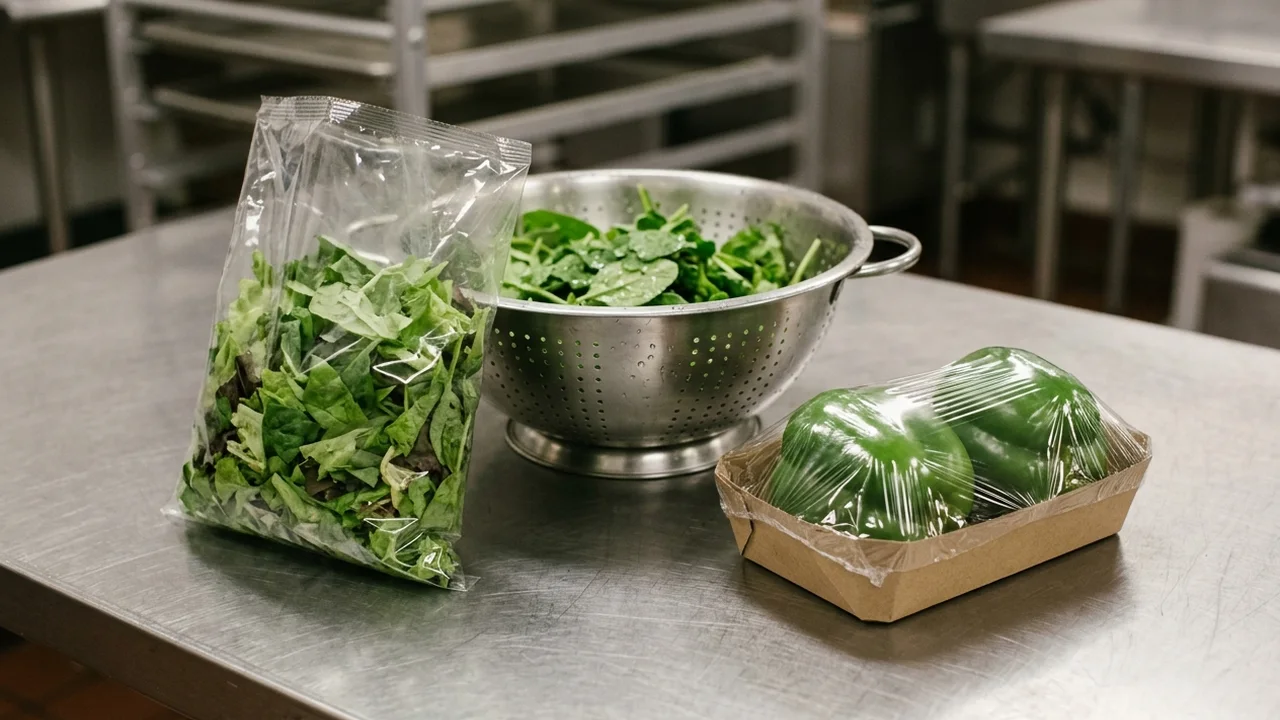
Choose a vertical form-fill-seal machine when the produce is dosed as a loose bulk charge into a bag formed from roll film. Choose a horizontal flow wrapper or a traysealer when the produce travels on a conveyor as a single whole unit or inside a supporting tray. Choose a premade-pouch or wicketed-bag filler when finished open bags are fed to the filling station instead of rollstock film.
Scroll horizontally for hidden columns. The first column stays in view.
| Entry path | How produce and packaging meet on the line | Produce examples named in opened supplier pages | Equipment route in those pages |
|---|---|---|---|
| Loose vertical roll-film VFFS drop | Flat film unwinds over a forming collar into a vertical tube; a scale above drops a weighed charge through the tube into the formed bag | Washed, cut, and bagged leafy greens (BW Packaging Little Bear Produce case study); cut greens, salad, diced vegetables, green beans, broccoli florets, and potatoes (Paxiom); salad, cut vegetables, whole produce, and fruit (Rovema North America) | Vertical form-fill-seal bagger paired with an overhead weigher or scale |
| Premade pouch or wicketed bag | Finished open pouches or wicketed bags are held and opened at a filling station, filled with weighed produce, and sealed | Mini sweet peppers, whole peppers, diced vegetables, green beans, and broccoli florets in stand-up, gusseted, flat-bottom, carry-handle, or zipper pouches (Paxiom Swifty Bagger); foodservice fresh-cut vegetables in wicketed bags (Paxiom Bingo Bagger) | Premade-pouch bagging machine or automatic wicket bagger |
| Horizontal unit or tray flow wrap | Solid whole items or loaded trays travel horizontally on an infeed conveyor into a film tube sealed along the length and at both ends | Whole tomatoes, bell peppers, mini cucumbers, and herbs (Paxiom SleekWrapper); Conference pears in cardboard trays wrapped in paper-based film with a mesh window (ULMA Flow Pack FR 200) | Horizontal form-fill-seal (HFFS) flow wrapper, standard or inverted |
| Rigid container, clamshell, or sealed tray | Produce is weighed into rigid cups, jars, clamshells, or trays on an indexing conveyor and closed with a lid or sealed lidding film | Cherry tomatoes, diced vegetables, and mushrooms in containers or trays (Paxiom PrimoCombi and PrimoLinear indexing lines); fruit and vegetables in recyclable cardboard, RPET, or compostable trays with compostable cellulose lidding film (ULMA TSA 680 P) | Container indexing filler and automatic traysealer |
| Frozen IQF potato and vegetable lines (outside this guide) | Frozen pieces flow as hard, non-respiring solids in freezer conditions | Frozen french fries and IQF vegetables appear in general US search results for VFFS machines | Excluded here; frozen fries do not test fresh-produce respiration, wash moisture, or leaf bruising |
Public US search results for vffs machine for fresh produce (saved 7 October 2026) mix general dry-granule VFFS explainers, a 14-head weigher vegetable video page from Rezpack, and a YouTube video for frozen french fries. Treating a frozen fry bagger or a dry grain bagger as proof of fresh-produce capability skips the two variables that cause fresh-produce trials to fail: living tissue that bruises during a vertical drop, and wet leaves or vegetable scraps that stick to metal chutes and cross-seal jaws.
For whole items or tray-supported produce that travel horizontally on a belt, use the guide to which foods are flow wrapped to screen single-unit, stack, and tray presentation. When the package is a rigid punnet, cardboard tray, or RPET tray closed with lidding film, review tray sealing machine selection before booking a trial. When comparing pillow, gusseted, quad-seal, and stand-up bag geometries across rollstock and premade routes, see pouch packaging for food.
Takeaway: Route the item by how it enters the pack, separating a vertical gravity drop through a forming tube from horizontal conveying as a solid unit or tray, before requesting a VFFS trial.
Which gentle-handling, feeding and washdown cleaning details do public supplier records document?
Verify where the produce touches the machine, where scraps collect between transfers, and whether operators can wash the frame and forming zone from top to bottom with water without damaging electrical assemblies. Public supplier pages document specific design choices for these zones, while line-specific drop damage and cleaning cycle times must be measured on the user’s floor.
Scroll horizontally for hidden columns. The first column stays in view.
| Inspection zone | What cited supplier sources state | What to verify on the candidate unit during a trial |
|---|---|---|
| Scale-to-bagger transfer and catch pans | BW Packaging’s fresh-produce hygiene guide identifies transition points where risk concentrates: loading film rolls, catch pans where product can accumulate, and transfers moving product toward sealing stations. Rezpack’s vegetable VFFS page shows a 14-head weigher above a vertical bagger on video without written drop or transfer conditions | Measure the vertical drop from the weigher buckets to the forming collar; check whether damp leaves or wet pieces bridge in chutes or collect in catch pans |
| Forming tube contact and cushioning | BW Packaging states that within the packaging line, the forming tube is where product touches the machine, and notes that gas flushing at the forming tube can create a pillow that helps protect produce against crushing. BW’s change-parts page also lists Hayssen Forming Tube Assemblies (FTA) swapped with minimal or no tools | Inspect the forming collar and inner tube surface with actual washed produce; record whether pieces bruise, tumble, or hang up on the tube wall |
| Frame geometry and water runoff | BW Packaging’s hygienic-design checklist lists continuous welds instead of spot welds, sloped surfaces so water runs off, flat frames instead of tubular frames to keep moisture out of hollow sections, and standoffs that keep bearings and drives out of product zones. Rovema North America notes that flat horizontal surfaces inside a machine collect water, bacteria, and product residue | Check the frame underneath the forming tube and jaw carriage for flat ledges, spot-welded crevices, or hollow tubing where wash water and leaf fragments can pool |
| Contact metal and chemical resistance | BW Packaging specifies food-grade 304 or 316 stainless steel to resist harsh cleaning chemicals, brine, and acidic produce such as tomatoes or citrus, noting that Clean-in-Place (CIP) or chemical washdowns require corrosion-resistant steel. Rovema notes that water, condensation, and daily sanitation chemicals corrode dry-goods machines | Confirm the stainless steel grade (304 or 316) on all product-contact chutes, forming tubes, catch pans, and splash zones, and match it to the plant’s sanitation chemicals |
| Top-to-bottom washdown and electrical protection | In BW Packaging’s Little Bear Produce case study (Edinburg, Texas), the fresh-cut greens team emphasized getting inside the machine, reaching every nook and cranny, and cleaning from top to bottom without damaging electrical components with water, noting that some baggers on the market cannot get wet | Open the guards after a wet produce run and walk through the plant’s actual washdown step; verify which electrical cabinets, sensors, and HMIs tolerate direct water spray |
| Floor visibility and film-low alerts | Little Bear Produce’s testimonial notes that color-coded status lighting on its Hayssen ISB baggers signals normal operation, low film, or needed attention across the floor, helping supervisors manage lines where product shelf life is measured in days | Record how the machine signals film depletion, jaw faults, or scale starvation during a run and how quickly operators clear a stop |
In the Little Bear Produce testimonial, BW Packaging also reports facility OEE percentages comparing an earlier bagger with two Hayssen ISB baggers on side-by-side lines, and cites IP66 and NEMA 4X enclosure ratings alongside USDA Dairy and USDA Meat and Poultry Acceptance on its product pages. This guide does not use OEE percentages or IP ratings to rank machines, because an OEE figure on one Texas greens line reflects that plant’s upstream washing, scale pairing, operator staffing, and shift schedule, while enclosure ratings must be checked against each plant’s specific washdown pressure, water temperature, and chemical sanitation protocol.
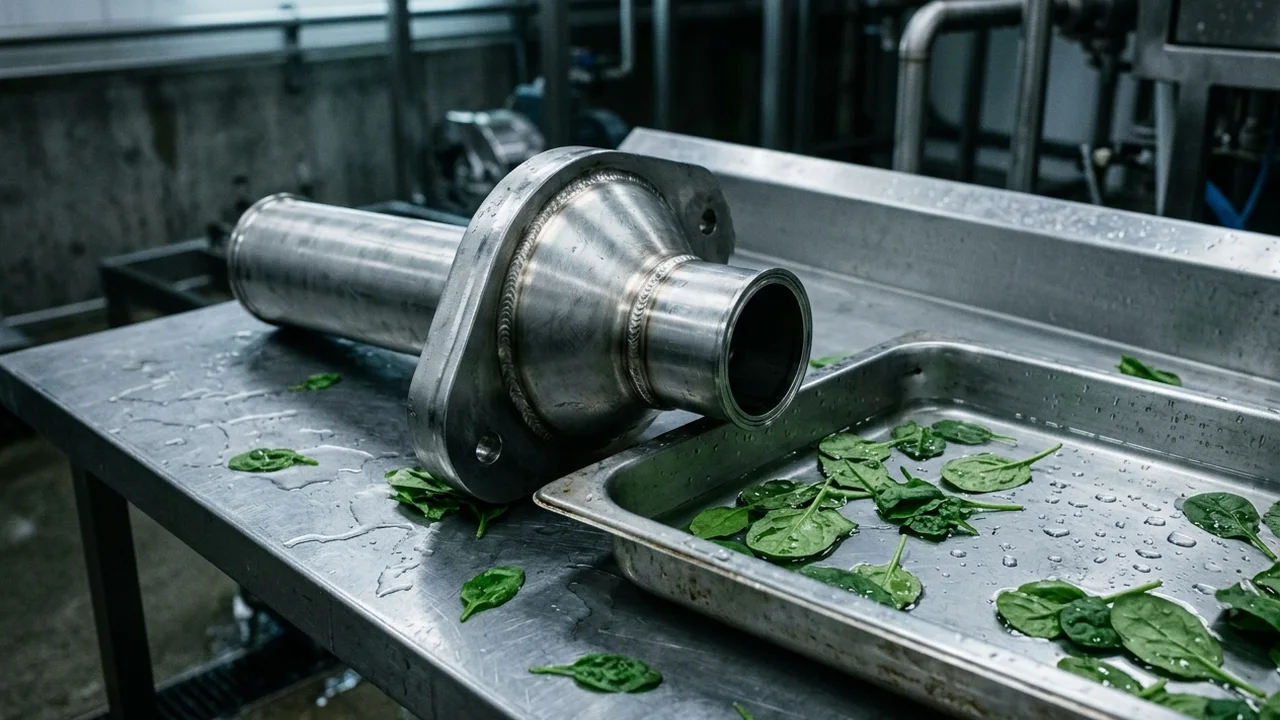
The photograph above shows a generic stainless tube, collar, and catch pan with wet leaves. It does not depict a named supplier’s machine or a completed sanitation audit.
Takeaway: Inspect the forming tube interior, catch pans, weld seams, and water protection during a live teardown rather than relying on a catalog washdown label.
How do respiration, condensation and film choice affect the sealing zone during a trial?
Test the actual produce lot and film roll together at the temperature and moisture conditions of the packing room. BW Packaging’s fresh-produce guide and Rovema North America’s produce page both point out that fruits and vegetables remain alive and continue respiring after harvest, consuming oxygen and releasing carbon dioxide and moisture inside the sealed bag.
Scroll horizontally for hidden columns. The first column stays in view.
| Trial variable | Mechanism described in public sources | Failure mode to watch during the sample run |
|---|---|---|
| Ongoing respiration and gas exchange | Produce consumes oxygen and releases carbon dioxide after harvest; overly restrictive film traps excess carbon dioxide and moisture, while excessive airflow causes dehydration and wilting (BW Packaging) | Bag puffing, off-odors, or rapid wilting after sealing when film permeability or perforation does not match the crop’s respiration rate |
| Room temperature swings and condensation | Moving chilled produce from cold storage into a warm packaging station causes condensation inside the bag and on the film surface (BW Packaging) | Water droplets forming on the inner film wall before the cross-jaws close, weakening the heat seal or fogging the display window |
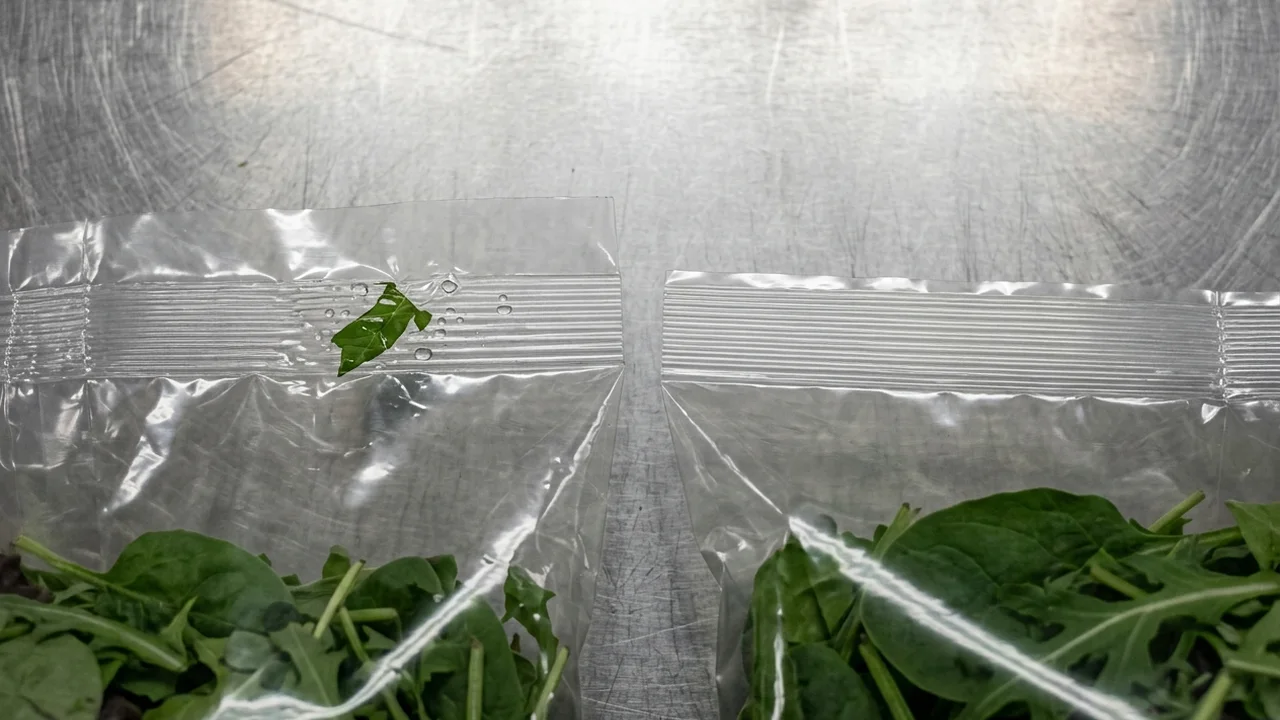
| Leafy scraps and sticky fruit residue | Residue from sticky fruits or leafy scraps can clog sealers or form-fill-seal jaws, throwing off film alignment or sealing temperature (BW Packaging) | Stray leaf tips, stems, or diced fragments trapped in the horizontal crimp seam, creating channel leaks or incomplete cuts |
| Film thickness and material changes | ULMA Packaging notes on its horizontal flow-pack line that switching between plastic and paper-based films of different thicknesses requires jaw pressure adjustment | Wrinkled back seams, burned thin polythene, or unsealed gusset corners when switching between laminated, polyethylene, breathable, or paper-based rollstock |
BW Packaging notes that fresh-produce lines use several film and atmosphere approaches depending on the crop: multi-layer barrier films, anti-fog treatments that keep the bag clear when moisture condenses, micro-perforated or breathable films that allow excess water vapor to escape, and modified atmosphere packaging (MAP) where gas flushing at the forming tube replaces ambient air with a mix of nitrogen, carbon dioxide, and oxygen. Because every crop, cut size, and cold-chain route respires differently, no single gas percentage, perforation hole size, or shelf-life day count applies across fresh produce. Keep those parameters with your food technologist and film converter rather than copying a generic number from a machinery brochure.
Before ordering rollstock for a machine trial, record the film structure, anti-fog or perforation specification, core size, and food-contact declarations using the food packaging material checklist. When turning these handling, sanitation, and film checks into a formal equipment inquiry or factory acceptance test, pair the table below with the packaging machine RFQ checklist and the packaging machine FAT checklist.
Takeaway: Judge a produce VFFS trial by inspecting the sealed seam after wet, chilled product has dropped through the tube, and keep unmeasured gas or shelf-life claims out of the equipment comparison.
What goes into the fresh-produce, drop, film and seal sample trial record?
Copy one record per produce item, cut style, and film roll. Leave a cell blank or mark Unknown / verify on the unit whenever a parameter has not been measured on the actual product and machine. A blank cell prevents a dry-run cycle rate or a dry-granule test from being mistaken for a validated fresh-produce run.
Scroll horizontally for hidden columns. The first column stays in view.
| Field | What to record from your lot and run | Leave blank or mark Unknown / verify on the unit when |
|---|---|---|
| Produce item and cut state | Crop name, variety, and preparation (whole, washed cut leafy greens, shredded cabbage, diced onions, florets, or baby carrots) | The trial uses a substitute product, dry granules, or frozen pieces instead of the real produce lot |
| Incoming produce and room temperatures | Product pulp or surface temperature leaving cold storage and ambient temperature/humidity at the bagger | Temperatures were not logged during the trial window |
| Surface moisture condition | Washed and centrifuged, damp with rinse water, dry-brushed, or sticky cut fruit surface | Moisture state was not recorded before loading the infeed |
| Selected format path | Vertical roll-film VFFS drop, premade pouch, wicketed bag, horizontal flow wrap, or rigid tray seal | The format boundary between vertical drop and horizontal tray/unit conveying is still undecided |
| Scale and infeed configuration | Multihead weigher or linear scale model, bucket surface texture, discharge chute angle, and catch pans installed | The bagger is run without the actual upstream weigher and transfer chute |
| Forming tube and drop geometry | Forming tube assembly identifier, internal tube shape, vertical drop distance from scale to horizontal jaws, and any settling or air-pillow assist | Drop distance or forming tube dimensions have not been measured on the candidate unit |
| Post-drop product condition | Count or weight share of bruised pieces, crushed leaves, broken florets, or bridged clumps inside the tube | Bags were not opened and inspected for mechanical handling damage after the drop |
| Film roll identity | Film structure (polyethylene, laminate, paper-based), anti-fog treatment, breathable or micro-perforated spec, roll width, and core diameter | Film thickness, perforation pattern, or converter spec sheet has not been supplied |
| Atmosphere and gas-flush setup | Ambient air pack or gas-flush port location at the forming tube | Specific gas mixture percentages and target shelf-life days (owned by the processor’s food-safety and shelf-life protocol, not this equipment record) |
| Seal-zone contamination and closure check | Number of sampled bags with leaf fragments, stems, juice, or condensation droplets trapped in the longitudinal or cross seal; leak check result | Only dry empty bags or short hand-fed samples were sealed |
| Contact materials and frame inspection | Confirmed 304 or 316 stainless steel on contact parts, continuous welds, sloped water runoff, flat frame sections, and drive standoffs | Material certificates or physical weld/frame inspection have not been completed |
| Washdown and sanitation access | Parts removed without tools, access inside the forming and jaw zone, electrical/HMI water protection, and residue remaining after washdown | No wet cleaning cycle was performed after the produce run |
After the trial run, keep the labeled bag samples, the post-drop produce inspection notes, and the washdown observations together. If wet leaves bridge in the forming collar or cross the horizontal jaws, record the exact chute angle, forming tube size, and jaw timing before repeating the run. If the produce bruises during the vertical drop and cannot be protected by adjusting the drop path or gas pillow, re-evaluate a horizontal flow-wrap or tray-sealed format rather than forcing the item onto a vertical bagger.
Method, source boundaries and limits
This guide synthesizes public equipment documentation and case studies accessed on 17 October 2026:
- BW Packaging Little Bear Produce case study (cached 6 October 2026; verified 17 October 2026): documents washed, cut, and bagged leafy greens on Hayssen ISB vertical baggers in Edinburg, Texas, and operator requirements for top-to-bottom water cleaning access and floor status lighting. Facility OEE percentages (
25-35%versus65-75%) and IP/NEMA ratings are excluded from our comparison tables because they depend on plant-specific line conditions and sanitation specifications. - BW Packaging Fresh Produce market and hygienic-design pages (cached 6 October 2026; verified 17 October 2026): document gentle handling, forming-tube contact, optional gas flushing, transition-point risks (film loading, catch pans, sealing transfers), hygienic frame construction (continuous welds, sloped surfaces, flat frames, standoffs, accessibility), 304/316 stainless steel selection, post-harvest respiration, condensation, and sealer fouling from leafy scraps or sticky fruit residue. Background foodborne-illness and recall cost statistics cited in the blog introduction are excluded.
- ULMA Packaging produce sector release (published 16 June 2026; cached 7 October 2026; verified 17 October 2026): documents Conference pears in cardboard trays on a Flow Pack FR 200 horizontal wrapper and fruit and vegetables in recyclable cardboard, RPET, or compostable trays on a TSA 680 P traysealer. These examples establish the horizontal unit/tray boundary and are not used as VFFS evidence.
- Paxiom Vegetable Packaging Machines page (modified 11 September 2024; retrieved 17 October 2026) and Rovema North America Fresh Produce Packaging Machines page (published 13 August 2026; cached 15 October 2026; verified 17 October 2026): document how suppliers divide cut greens, diced vegetables, florets, and whole vegetables across vertical VFFS, premade pouches, wicketed bags, container indexing, and flow wrapping, and how fresh-produce VFFS frames differ from dry-goods machines. Catalog speed claims (
180 bags per minute,1,200 bags per hour) are excluded.
Naturally Iowa Packaging Review has not run physical bagging tests on the machines named above. No machine prices, bag speeds, OEE figures, IP ratings, seal temperatures, MAP gas percentages, perforation dimensions, or shelf-life days are asserted for the reader’s project. Verify all operating parameters with your actual produce lot, packaging film, and sanitation team during a documented sample trial.
Sources and method
This article is based on documentary research of the sources listed. It is not a hands-on equipment test. Supplier statements and editorial judgement are identified in the text.
- Hayssen ISB Testimonial - VFFS - Fresh Produce - Little Bear Produce Supports a Texas fresh-cut leafy greens line running washed, cut and bagged greens on a vertical form-fill-seal bagger paired with a scale, plus operator cleaning access from top to bottom with water without damaging electrical components, and status lighting for low film and machine attention where shelf life is measured in days. Reported OEE percentages and IP/NEMA enclosure ratings are outside this guide's comparison scope. Library copy fetched 6 October 2026; live page verified 17 October 2026.
- Fresh Produce Packaging Equipment Supports gentle handling and VFFS bagging with end-of-line equipment, forming-tube product contact and optional gas flushing with nitrogen or carbon dioxide, transfer-point risks at film loading, catch pans and sealing stations, hygienic frame details (continuous welds, sloped runoff, flat frames instead of tubular frames, standoffs and cleaning access), 304 or 316 stainless steel for harsh chemicals and acidic produce such as tomatoes or citrus, post-harvest respiration, condensation from chilled-to-warm room transfers, and leafy scraps or sticky fruit residue on sealers. Background outbreak and recall statistics are excluded. Library copy fetched 6 October 2026; live page verified 17 October 2026.
- Sustainable, flexible and smart packaging solutions for the produce sector Used strictly as a format boundary example showing Conference pears in cardboard trays on a horizontal Flow Pack FR 200 wrapper and fruit and vegetables in recyclable cardboard, RPET or compostable trays on a TSA 680 P traysealer. Not used as VFFS performance evidence. Published 16 June 2026; library copy fetched 7 October 2026; live page verified 17 October 2026.
- Vegetable Packaging Machines Supports routing cut greens, salad, diced vegetables, green beans, broccoli florets and potatoes to vertical form-fill-seal bagging, while routing whole peppers, tomatoes, mini cucumbers and herbs to horizontal flow wrapping, cherry tomatoes and mushrooms to container or tray filling, and whole or fresh-cut vegetables to premade or wicketed pouches. Catalog hourly rates are excluded. Modified 11 September 2024; retrieved 17 October 2026.
- Fresh Produce Packaging Machines Supports the engineering contrast between dry-goods VFFS and fresh-produce VFFS: bagged produce continues respiring, carries surface moisture, bruises under pressure, and requires daily chemical washdowns with water-shedding surfaces instead of flat pooling areas. Catalog bag-per-minute figures are excluded. Published 13 August 2026; library copy fetched 15 October 2026; live page verified 17 October 2026.
Next reading
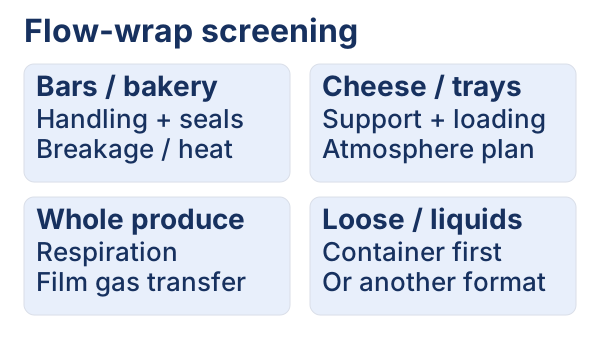
Which Foods Are Flow Wrapped? Bars, Bakery, Cheese and Produce Compared
Poor conveyor handling or a mismatched seal can damage food. Screen flow wrapping by solid unit, stack or tray, then check film and atmosphere.
Read the guide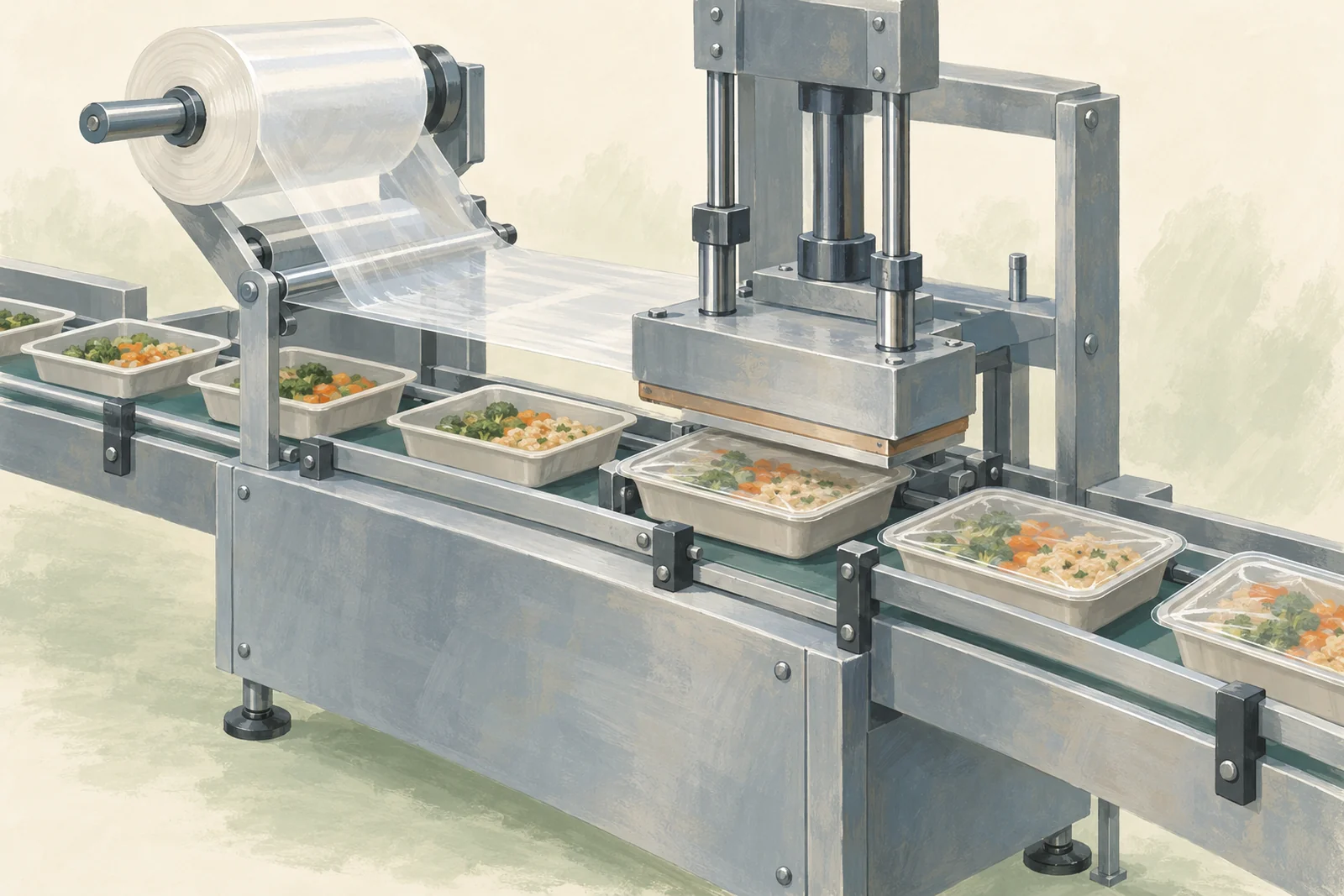
Food Tray Sealing Machine Selection
Select a food tray sealing machine by seal mode and printed output. Vacuum level, gas mix, and seal temperature stay blank until a page prints them.
Read the guide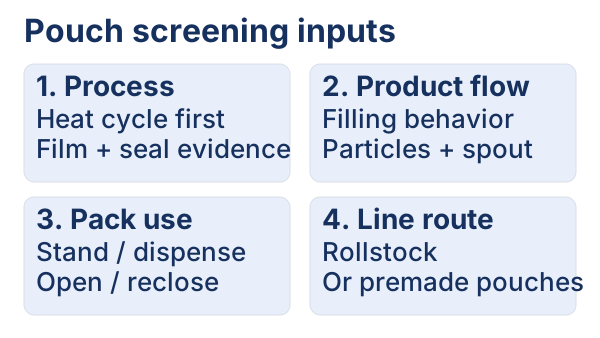
Pouch Packaging for Food: Stand-Up, Retort, Spouted and Pillow Pouches by Product
A pouch unsuited to heat processing can fail. Select by preservation route, product flow and use, then check film, fitment and filling compatibility.
Read the guide
Food Packaging Material Specification Checklist for Buyers
A copyable checklist for food packaging material requests: component specs, FDA and EU documents to ask for, line-fit checks and sample trial records.
Read the guideMore in Applications
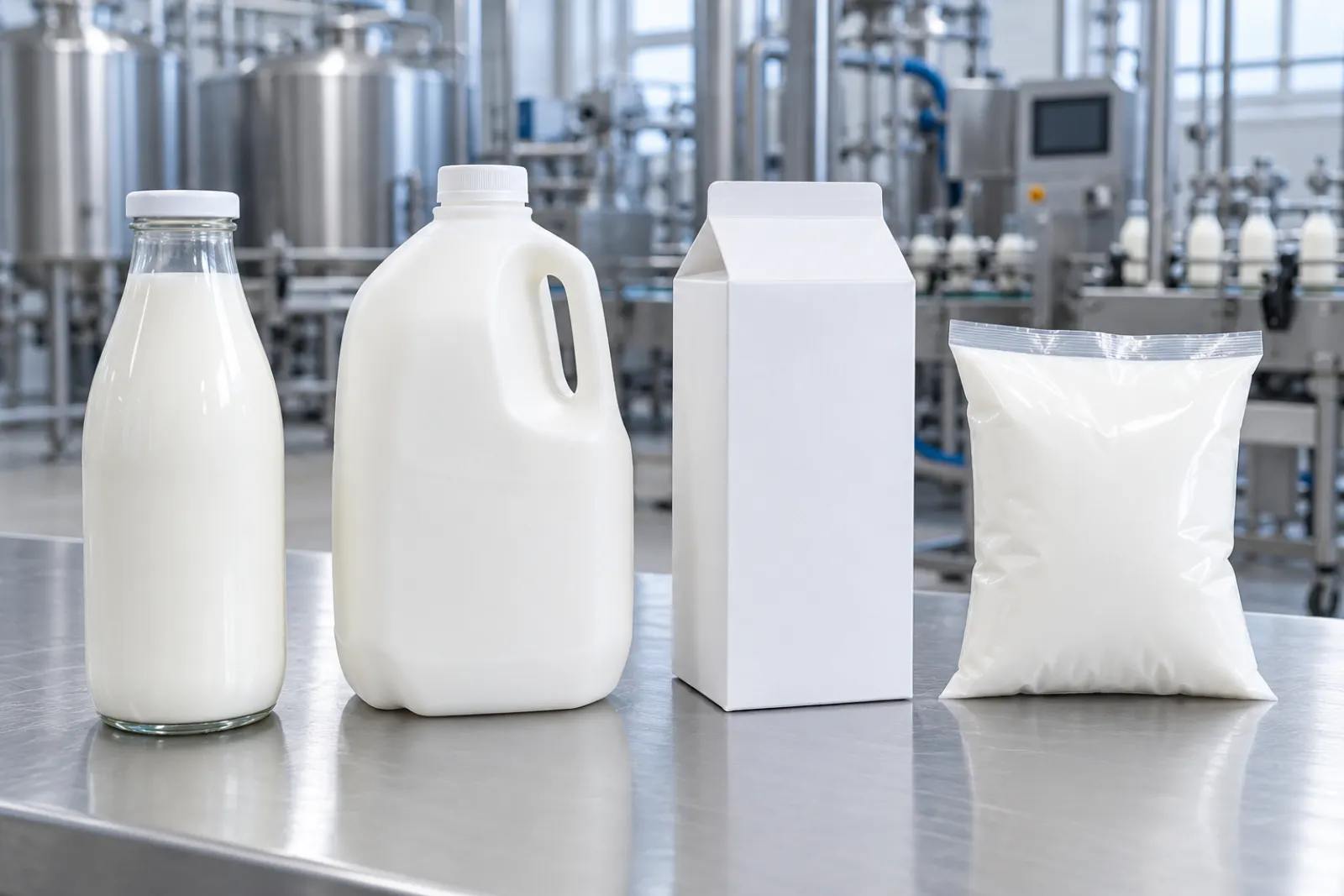
Milk Packaging Formats: Bottles, Cartons and Pouches
How to choose a milk packaging format by heat treatment, cold chain and light exposure, and what bottle, carton and pouch formats mean for filling equipment.
Read the guide
Yogurt Packaging: Cups, Bottles and Pouches for Different Products
Match yogurt packaging to product type: set, stirred, drinkable or squeeze. Compare cups, bottles and spouted pouches and their filling and sealing needs.
Read the guide
Bottled Water Packaging Lines: From Prepared Containers to Packed Cases
Plan a bottled water packaging line from container supply to palletizing: rinsing, filling, capping, labeling, coding and the interfaces between stations.
Read the guide