
Honey Pouch Filling: Premade Pouches, Stick Packs and Sachets
Separate a premade honey pouch, a stick pack and a formed sachet before a trial. Record honey state and dose. Leave speed, size and viscosity blank.
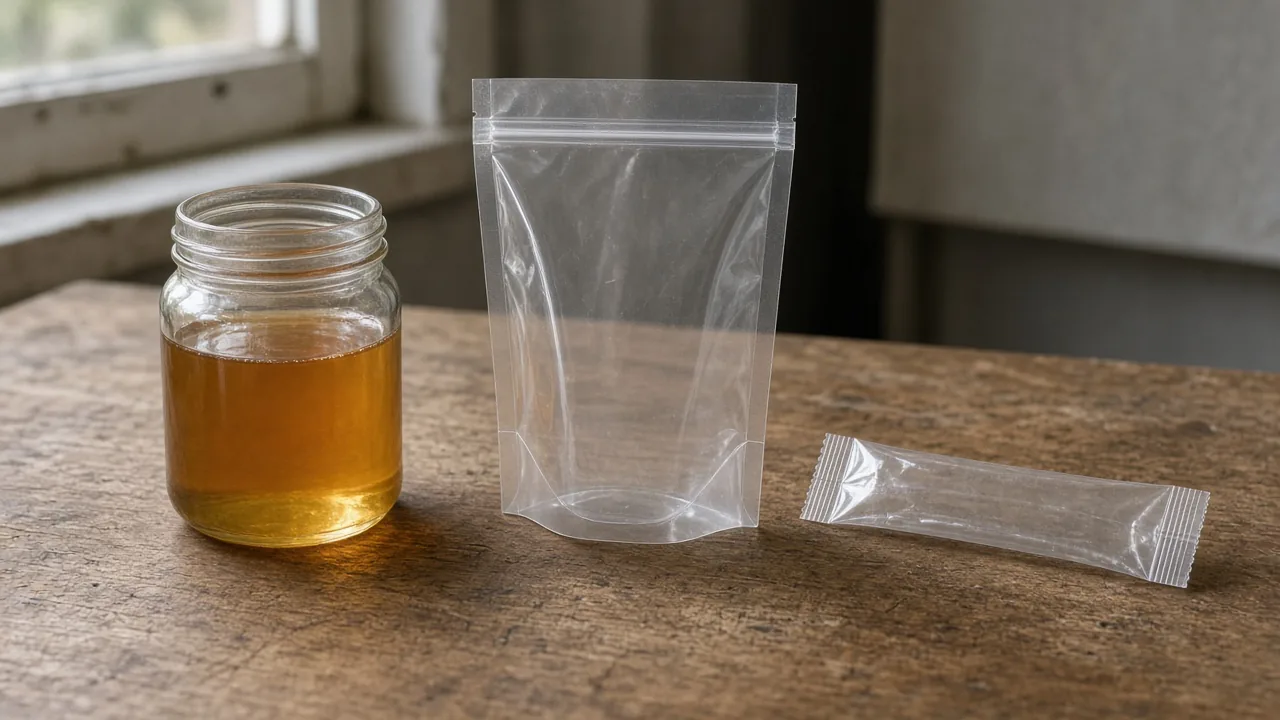
What this article covers
A honey packer choosing a premade pouch, a stick pack or a formed sachet can schedule a trial only after the pack path is named and the honey state is written down, with empty cells where the public pages state no figure.
Covered
- Premade pouch, stick pack and formed sachet as three different machine paths
- A blank trial record for honey state, dose and the seal after a short fill
- The one stick-pack mass range stated for a named model, kept inside that model
Not covered
- US prices, machine speeds, a single warming temperature for crystallized honey, and process-safety guarantees
- Jar and bottle filling as the trial path
- Honeycomb and honeydew, which are not honey packs
Honey on a pouch seal, or a stick that drips after the cut, wastes the sample before the pack path can be judged. Name the path before any trial: a premade pouch that already exists, a stick formed from roll film, or a flat sachet formed from roll film.
A pouch filling machine for honey is the machine that matches that path, not one model that fills every honey pack. If the pack is already a pouch, Rich Packing’s article of 3 July 2026, fetched on 8 October 2026, describes a machine that opens the pouch, fills it, seals it and discharges it. If the pack is a stick or a flat sachet, the same article describes a machine that forms the pack from roll film, then fills, seals and cuts. That article states no speed, no pouch size and no viscosity number. Turpack’s article of 20 April 2026, fetched the same day, states 5 g, 10 g and 15 g only for its TP-L001 stick packs. Where those pages state no figure, the tables below leave the cell empty.
The applications section starts from the product rather than the machine. See food and beverage packaging by application for that order. This page stays on the honey pack path and the trial record for the honey you will fill.
Scroll horizontally for hidden columns. The first column stays in view.
| Input or item | What to write down | Why it decides the trial |
|---|---|---|
| Pack path | Premade pouch, stick formed from roll film, or flat sachet formed from roll film | The machine structure follows the path |
| Honey in this batch | Thick, crystallized, whipped, flavored, or the words your plant already uses | Those states are named as behaving differently. No viscosity number is stated |
| Dose | The mass you will fill. The 5 g, 10 g and 15 g figures apply only to Turpack’s TP-L001 | Other paths state no mass |
| Seal after a short fill | Whether honey sits on the seal area | The pages describe a clean seal area and do not show your film |
| Machine you will run | The machine on the line today | A catalog title is not that machine |
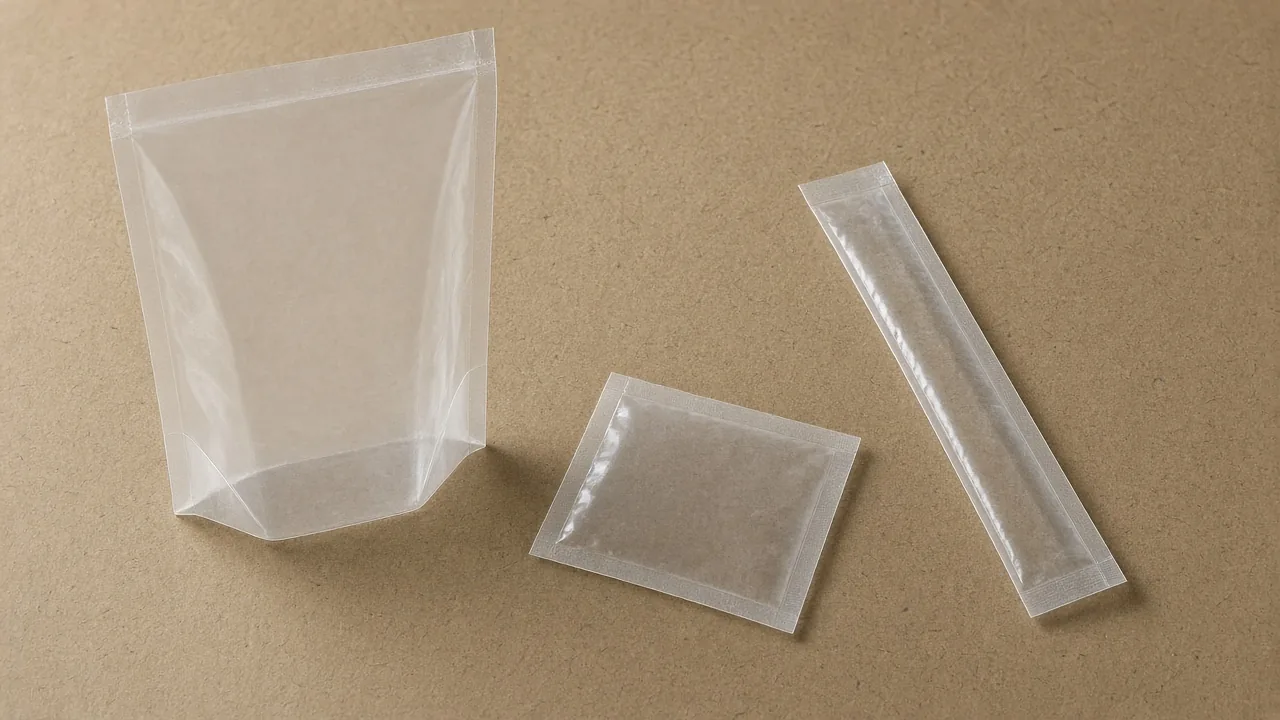
Which path is a premade pouch, a stick pack, or a formed sachet?
Start with the pack you will actually run. If that pack is a finished pouch waiting to be opened, the trial path is the premade pouch. If the machine makes a narrow pack from a roll of film, the trial path is the stick. If the machine makes a small flat pack from a roll of film, the trial path is the formed sachet. A jar or a bottle is a different path. It is not one of these three.
Scroll horizontally for hidden columns. The first column stays in view.
| Path | What the cited page says the machine does | Packs the page names | Fill mass stated | Speed stated |
|---|---|---|---|---|
| Premade pouch | Opens ready-made pouches, fills the honey, seals them and discharges finished packs | Stand-up pouches, spouted pouches and printed retail pouches | ||
| Stick pack | Formed from roll film, then filled, sealed and cut, often on more than one lane. Turpack names the TP-L001 for stick packs | Narrow stick packs. Turpack names hotels, cafes, airlines and takeaway service as uses | 5 g, 10 g and 15 g, stated by Turpack for the TP-L001 only | |
| Formed sachet | Formed from roll film into small flat packs, then filled, edge-sealed and cut | Flat sachets for hotels, cafes, airlines, foodservice and sampling | ||
| Jar or bottle, outside this trial | A honey filling machine using a piston filling system or a pump filling system, then capping. Landpack’s honey category links a volumetric piston bottling, filling and capping page | Glass jars, plastic bottles and squeeze bottles |
The first three rows and the jar-or-bottle machine sentence follow Rich Packing, published 3 July 2026 and fetched on 8 October 2026. That article says thick honey is usually filled by a piston filling system or a pump filling system for jars, plastic bottles and squeeze bottles. It says the choice follows the required volume, speed and viscosity, and it states none of those three values. How a piston fill differs from a pump fill, as methods, is explained in liquid filling methods. Those methods are not a honey result, and they are not a reason to move a pouch trial onto a bottle line.
The same Rich Packing article says a premade pouch machine opens ready-made pouches. It names stand-up pouches, spouted pouches and printed retail pouches. It states no pouch width, no gusset and no fill mass. Stand-up and spouted formats are sorted by product in pouch packaging for food. That guide does not supply a honey dose.
The stick and sachet rows are the roll-film paths in that article. A sachet machine forms small flat packs, fills each portion, seals the edges and cuts the sachets. A stick machine follows the same fill, seal and cut sequence and makes a narrow pack, often with more than one lane at a time. The article states no lane count and no rate. Turpack, published 20 April 2026 and fetched on 8 October 2026, says its TP-L001 is designed to fill 5 g, 10 g and 15 g stick packs, and that stick packs in those three masses are widely preferred. That preference is the supplier’s statement. It is not a mass for a premade pouch or a formed sachet. Turpack also says a multilane machine makes several stick packs at the same time. It states no output rate.
Landpack’s honey packing machine category, fetched on 7 October 2026, links a volumetric piston bottling, filling and capping page. The stored version has no publication date. The link shows that the category includes bottling. It does not state a premade-pouch size, a stick mass or a speed, and it does not show that a premade pouch runs on that bottling machine.
Rich Packing says one machine usually cannot pack every honey packaging type. It says one machine can often handle several sizes within one pack type, while jars, sachets, stick packs, pouches and portion packs need different machine structures. No size window is stated for the pouch, the stick or the sachet on the pages used here.
Takeaway: Book the sample on the path you already run. Leave mass and speed empty where the pages leave them empty.
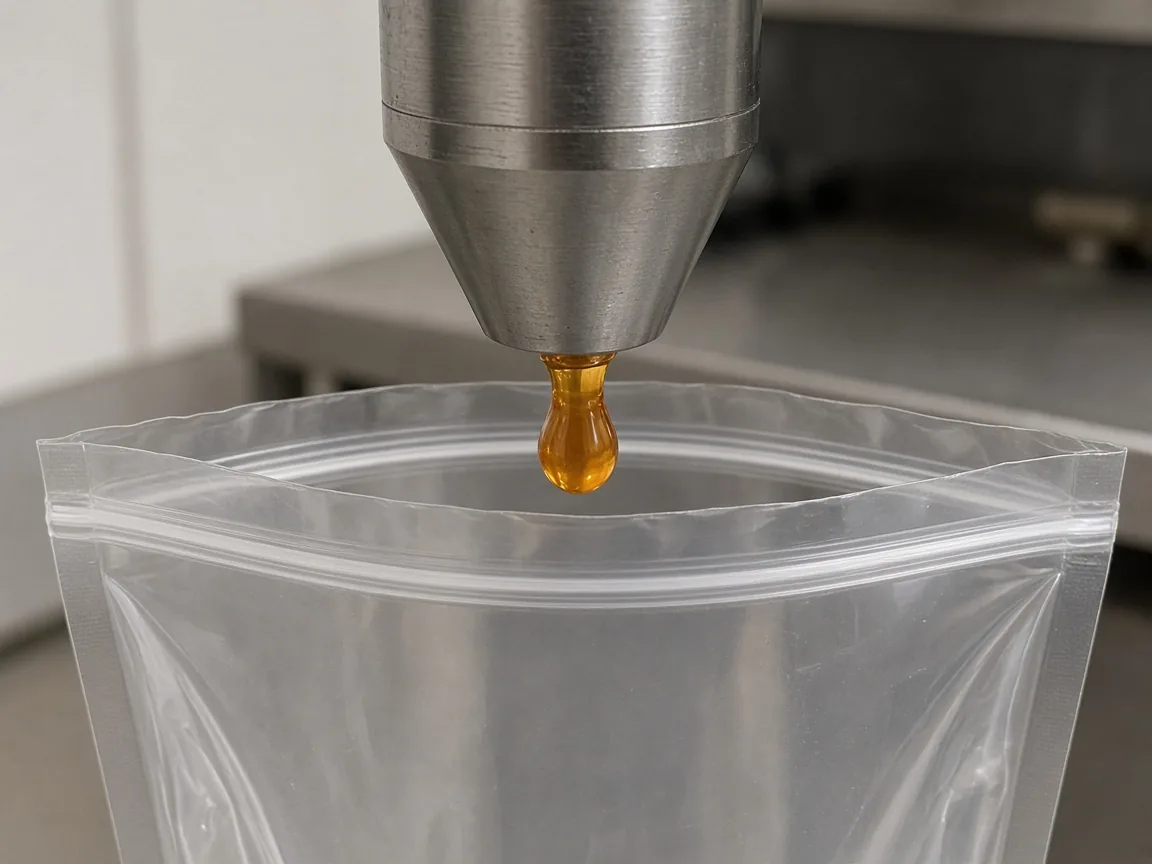
Rich Packing says some products need gentle warming or mixing before filling, and that others need a cleaner cutoff at the nozzle so the sealing area stays clean. No temperature is stated. The photograph shows a drop still on the nozzle and an empty pouch mouth. It is not a filled pack and it is not a result from a line.
What honey state goes on the trial record?
Write the honey you will fill. Rich Packing names thick honey, crystallized honey, whipped honey and flavored honey as products that can behave differently in a hopper, a pump, a pipe and a nozzle. It also says honey is thick, slow to flow, sensitive to moisture and affected by temperature, without a viscosity value or a temperature. Turpack says viscosity changes with temperature and composition. It separates low-viscosity honey, which flows easily, from high-viscosity honey, which can slow filling and lead to underfilling, dripping and interruptions. Neither page gives a number, a unit or a test method.
Copy one record per batch, per path and per dose. Leave a cell empty when this batch has not been measured. An empty cell is more useful than a number taken from a different pack.
Scroll horizontally for hidden columns. The first column stays in view.
| Field | Write this from the honey you will fill | Leave it empty when |
|---|---|---|
| Product | Honey name and the batch you will pack | The trial honey is a different batch |
| State | Thick, crystallized, whipped, flavored, or the words your plant already uses | You would be copying a label from a machine page |
| Viscosity | The value, unit and method you already use | You have not measured this batch |
| Temperature held | The temperature you already hold this batch at, with the unit you use | You have not recorded one. No source here states a filling temperature |
| Warming or mixing already used | Yes or no, for what this batch already received | You would be adding a step the batch did not have |
| Path | Premade pouch, stick or formed sachet | The pack in the trial is a jar or a bottle |
| Dose | The mass you will fill. Use 5 g, 10 g or 15 g only when the trial is the TP-L001 dose you will run | The path is not that stick model, or you have not chosen a dose |
| Seal after a short fill | Whether honey sits on the seal area | The fill has not been done |
| Machine you will run | The machine name on the line | A catalog title is not the machine in the room |
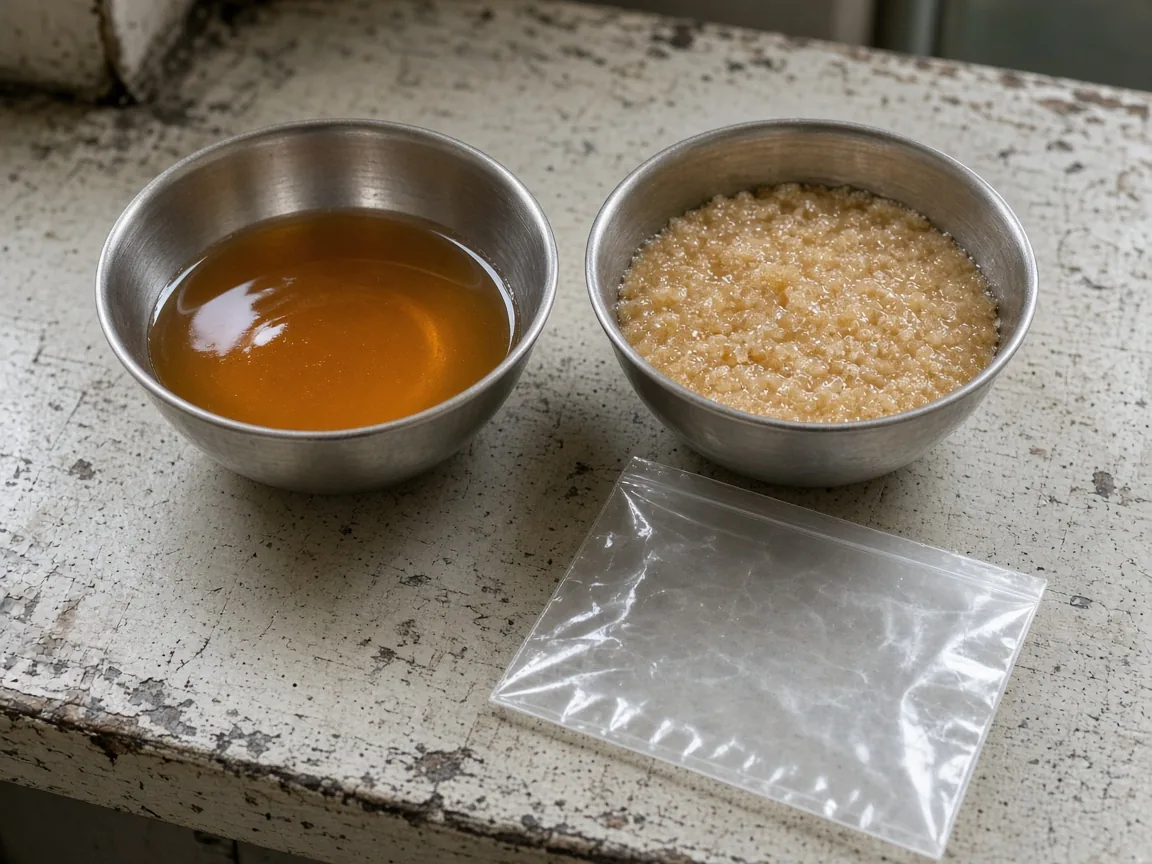
Takeaway: A filled cell comes from this batch, or from the 5 g, 10 g and 15 g statement when the trial is that stick model. Every other number stays empty.
A fruit-piece record for jam is a different sheet. Jam packaging formats compares a jar, a cup and a formed sachet for a jam recipe. It does not name a honey state, and a jam piece size does not belong on this record.
Which interface is still open after these listings?
The listings name the paths. They do not close them for your honey. Read each row as a question the trial still has to answer.
Scroll horizontally for hidden columns. The first column stays in view.
| Interface | What the fetched pages support | Still empty for your honey |
|---|---|---|
| Pack path | Three flexible routes in the Rich Packing article. Bottling is a separate route on that article and on the Landpack category | Whether the pack you will run is a premade pouch, a stick or a formed sachet |
| Dose | 5 g, 10 g and 15 g on the Turpack TP-L001 only | Dose for a premade pouch, a formed sachet, or any stick that is not that model |
| Flow | State names only. No viscosity number and no temperature | Your measurement, or an empty viscosity cell and an empty temperature cell |
| Close | Heat sealing for sachets and sticks. Top sealing for pouches, and spout handling when the pouch has a spout. Caps for jars and bottles | Whether honey sits in the seal on your film and your nozzle |
| Rate | No rate is used from these pages | The rate cell stays empty |
The closing row follows Rich Packing. Sachets and stick packs need heat sealing. Pouches are described with top sealing, and with spout handling when the pouch has a spout. Jars and bottles need caps, liners or another bottle seal. A poor closure is what the customer sees. The article states no seal temperature, no seal time and no leak test.
Liquid filling machine selection is the general page for choosing a liquid filler. It does not choose among a premade honey pouch, a stick and a formed sachet. Use it after this record names the path, not instead of the record.
Takeaway: Schedule the trial when each empty cell is either filled from this batch or left empty on purpose. A rate from another listing does not close a cell.
Keep the honey and the record together. The trial compares that pair. A sheet without the honey, or a pouch without the sheet, is not ready to book.
Method and sources
The path, dose and closing descriptions come from three public manufacturer pages.
Rich Packing’s article was published on 3 July 2026 and fetched on 8 October 2026. It is one manufacturer’s explanation of pack types and the machines behind them. Agreement between its jar paragraph and its pouch paragraph is not two independent trials. This site has not filled honey on any of the machines it names.
Turpack’s article was published on 20 April 2026 and fetched on 8 October 2026. The 5 g, 10 g and 15 g figures, and the model name TP-L001, are that supplier’s statements about stick packs. They are not a size standard for premade pouches or formed sachets, and they are not a speed. The page’s remarks on low-viscosity and high-viscosity honey do not include a measured value.
Landpack’s honey category was fetched on 7 October 2026. The stored version has no publication date. It is used only to show that the category links a volumetric piston bottling, filling and capping page. That link is not evidence that the bottling machine runs a premade pouch.
No US price, no machine speed, no single warming temperature for crystallized honey, and no process-safety result is stated. Those items are outside the pages used here. Honeycomb and honeydew are not honey packs and are not used. The US desktop results saved on 7 October 2026 for the query “pouch filling machine for honey” mix spoon machines, bottling clips, videos and seller listings with pouch pages. Those results were used as a map of the query. Their prices and rates are not in the tables above.
Real fit of your honey, your pack and your film still requires the trial on the record.
Sources and method
This article is based on documentary research of the sources listed. It is not a hands-on equipment test. Supplier statements and editorial judgement are identified in the text.
- Honey Packaging Explained: Popular Types and the Machines Behind Them Supports the three flexible paths and the separate jar and bottle path. Premade pouches are opened, filled, sealed and discharged. Sachets and sticks are formed from roll film, then filled, sealed and cut. Jars and bottles use a piston or pump filling system, with no volume, speed or viscosity value stated. Thick, crystallized, whipped and flavored honey are named as behaving differently in a hopper, pump, pipe and nozzle. No warming temperature is stated. Published 3 July 2026. Fetched 8 October 2026.
- Single-Use Honey Stick Packaging Solutions Supports the stick-pack mass cells only. The page says stick packs in 5 g, 10 g and 15 g formats are widely preferred, and that the TP-L001 is designed to fill those three masses. Viscosity is described as changing with temperature and composition, with no number. Published 20 April 2026. Fetched 8 October 2026.
- Honey Packing Machine Supports the bottling boundary only. The honey category links a volumetric piston bottling, filling and capping page. That link does not state a premade-pouch size, a stick mass or a speed, and it does not show premade-pouch compatibility. No publication date was stored with the fetch on 7 October 2026.
Next reading
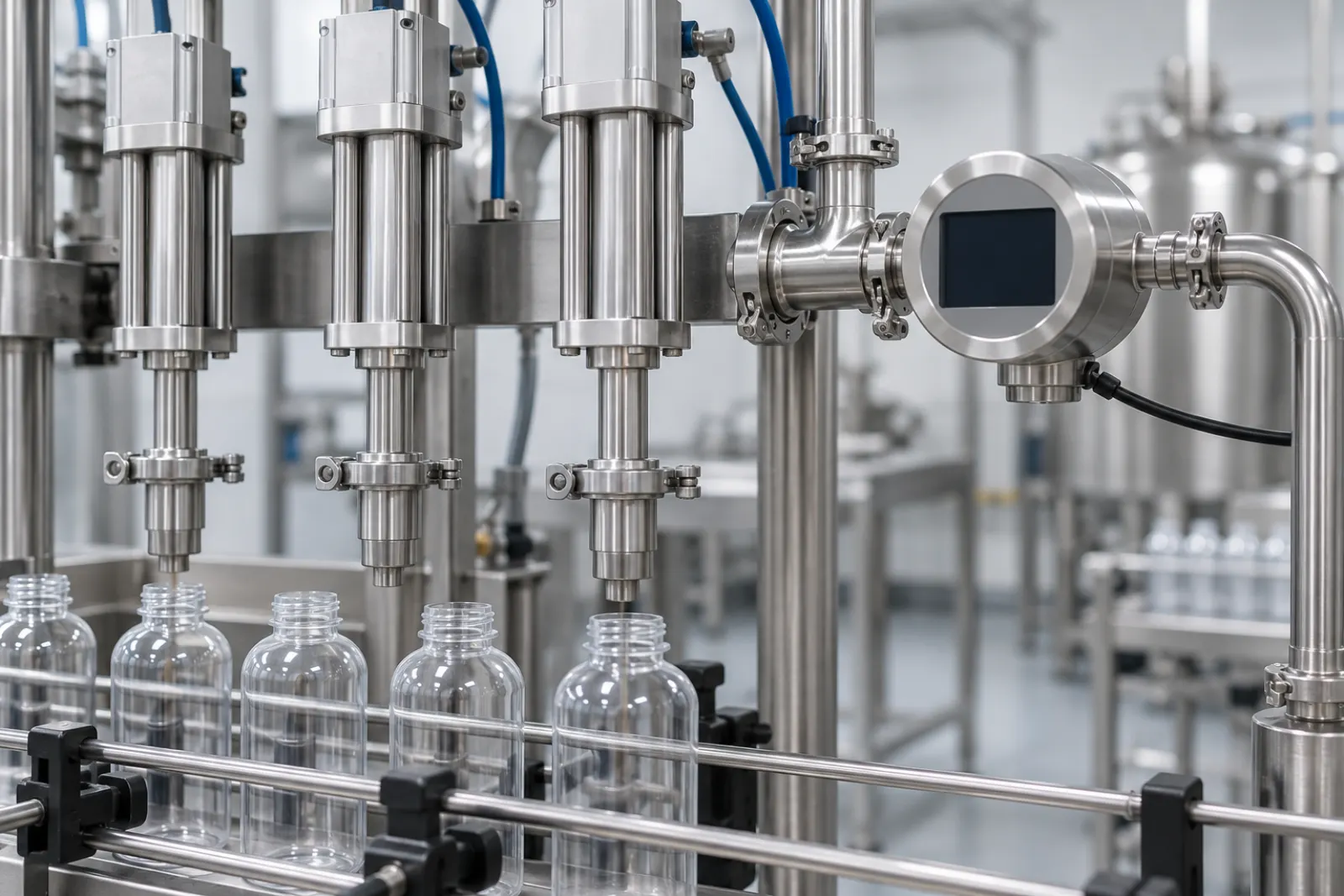
Liquid Filling Methods Compared: Gravity, Piston and Flowmeter-Based Systems
Compare liquid filling methods by metering principle, product feed and machine structure: gravity, overflow, piston and flowmeter systems and their limits.
Read the guide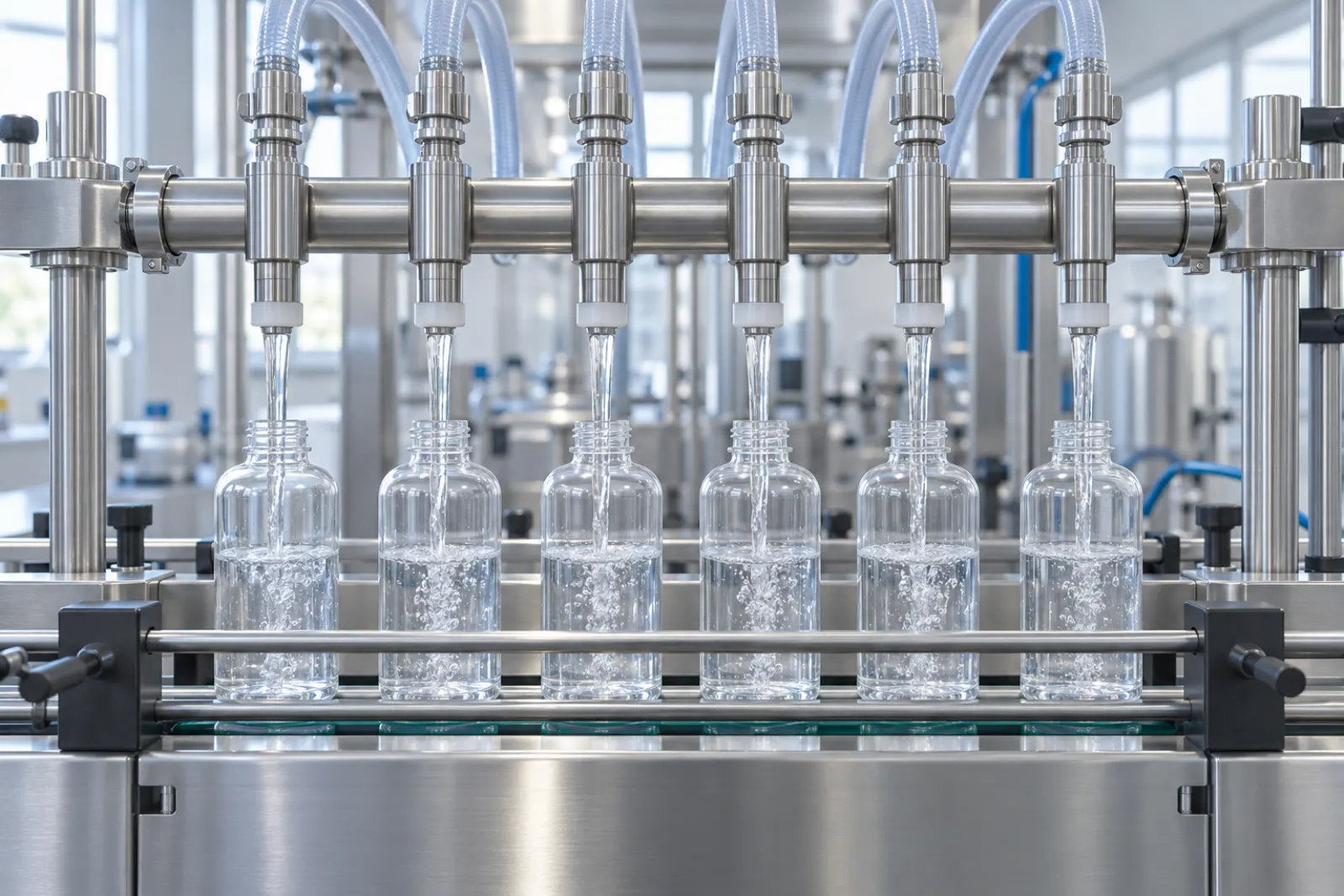
How to Choose a Liquid Filling Machine for Food and Beverages
A buyer's framework for choosing a liquid filling machine: project inputs, filling approaches compared, what to validate with samples, and supplier questions.
Read the guide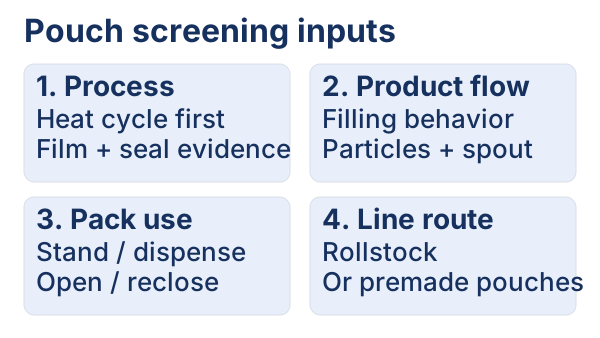
Pouch Packaging for Food: Stand-Up, Retort, Spouted and Pillow Pouches by Product
A pouch unsuited to heat processing can fail. Select by preservation route, product flow and use, then check film, fitment and filling compatibility.
Read the guide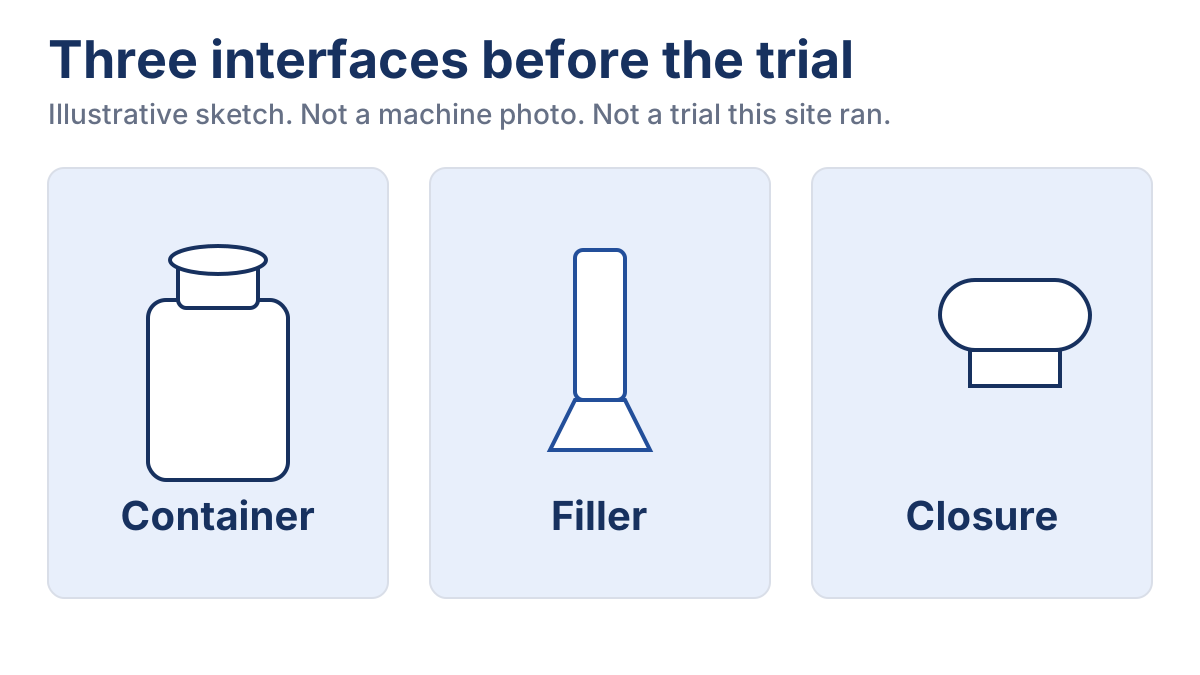
Jam Packaging: Jars, Portion Cups and Sachets for the Recipe You Fill
Match a jam jar, portion cup or sachet to the filler and closure you already run. Record fruit pieces and viscosity before booking a sample trial.
Read the guideMore in Applications
Milk Packaging Formats: Bottles, Cartons and Pouches
How to choose a milk packaging format by heat treatment, cold chain and light exposure, and what bottle, carton and pouch formats mean for filling equipment.
Read the guide
Yogurt Packaging: Cups, Bottles and Pouches for Different Products
Match yogurt packaging to product type: set, stirred, drinkable or squeeze. Compare cups, bottles and spouted pouches and their filling and sealing needs.
Read the guide
Bottled Water Packaging Lines: From Prepared Containers to Packed Cases
Plan a bottled water packaging line from container supply to palletizing: rinsing, filling, capping, labeling, coding and the interfaces between stations.
Read the guide